In the rapidly evolving landscape of industrial automation and smart systems, proximity sensors stand as critical components for non-contact detection, enabling precision, safety, and efficiency. This article delves into the current market hierarchy, examining which sensors top the charts and why, based on performance metrics, application versatility, and technological innovation.
When discussing "rankings," it's crucial to define the criteria. No single sensor universally holds the "number one" spot across all parameters. Rankings are context-dependent, segmented by technology type, application sector, and key performance indicators like sensing distance, response time, environmental durability, and cost-effectiveness.
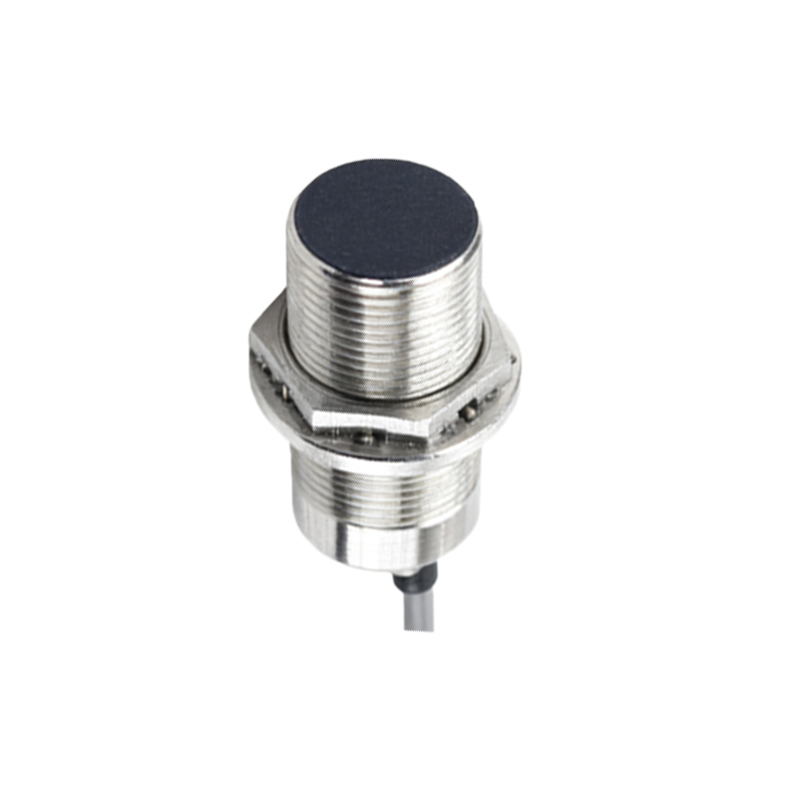
Currently, in terms of widespread adoption and reliability in harsh industrial environments, inductive proximity sensors frequently rank at the very top for metal detection tasks. Their robustness, immunity to environmental factors like dust and oil, and fast switching speeds make them the undisputed leader in manufacturing and automotive assembly lines. Brands like Siemens, Omron, and Pepperl+Fuchs are consistently rated highest in this category due to their superior build quality, extensive product ranges, and global support networks.
For detecting non-metallic objects, capacitive proximity sensors take the lead. Their ability to sense materials like plastics, liquids, and wood through non-metallic barriers places them first for packaging, level detection, and material handling applications. Their ranking is bolstered by continuous improvements in noise immunity and sensing range stability.
In the realm of long-range and precise position sensing, ultrasonic sensors and LiDAR-based sensors are climbing the rankings rapidly. While not always the "first" choice for simple presence detection, they are top-ranked for complex applications requiring precise distance measurement and contour recognition, especially in logistics automation and autonomous guided vehicles (AGVs).
Photoelectric sensors, particularly diffuse and through-beam types, maintain a top-tier ranking for versatility and flexible installation. They are often the go-to solution for detecting a vast array of objects at varying distances. Innovations in background suppression and miniaturization keep them highly competitive.
The ranking is also influenced by emerging trends. IO-Link enabled sensors are now ranking highest for smart factory integration. This digital communication capability transforms standard sensors into intelligent data points, providing condition monitoring and parameterization on-the-fly, which is paramount for Industry 4.0 setups.
So, who is "number one"? For sheer volume and rugged metal detection, inductive sensors lead. For material versatility, capacitive sensors excel. For smart features, IO-Link sensors are top contenders. The market leaders—Sick AG, Balluff, ifm electronic, Keyence, and Rockwell Automation—consistently appear at the pinnacle of industry reviews and user surveys. Keyence, in particular, is often noted for its high-precision and innovative offerings in specialized fields, pushing the boundaries of what proximity sensing can achieve.
Ultimately, the "best" proximity sensor ranks first only when perfectly matched to the specific application's requirements. The industry's direction points towards smarter, more integrated, and more adaptive sensors. Future rankings will likely be dominated by those offering predictive diagnostics, enhanced connectivity, and resilience in increasingly complex operational environments. Engineers must prioritize a detailed needs analysis over a generic top-ten list to select the true champion for their system.