In the dynamic landscape of industrial automation and machine safety, proximity sensors stand as fundamental components. Among the diverse types available, non-embedded proximity sensors offer a unique set of advantages and application-specific solutions. Unlike their embedded counterparts, which are designed to be mounted flush within a metal bracket or housing, non-embedded sensors feature a sensing face that protrudes. This distinct design characteristic unlocks greater flexibility and performance in numerous challenging environments.
The core operating principle of a non-embedded proximity sensor remains based on electromagnetic fields, typically inductive or capacitive. Inductive sensors generate an oscillating electromagnetic field at the sensing face. When a metallic target enters this field, eddy currents are induced within the target, causing a change in the oscillation amplitude. The sensor's internal circuitry detects this change and triggers a switching output. The key differentiator is that the magnetic field of a non-embedded sensor is less restricted, extending further from the face. This results in a significantly longer sensing range compared to an embedded sensor of the same physical size. For instance, an 18mm cylindrical inductive sensor in a non-embedded style may offer a sensing range of 8mm, whereas its embedded equivalent might only achieve 5mm. This extended range provides a crucial buffer for machine setup, tolerates greater mechanical misalignment, and allows for the detection of smaller or oddly shaped targets.
The application spectrum for non-embedded proximity sensors is vast. They are exceptionally well-suited for scenarios where targets cannot approach the sensor flushly or where mounting space constraints prevent the creation of a proper recess. Common use cases include:
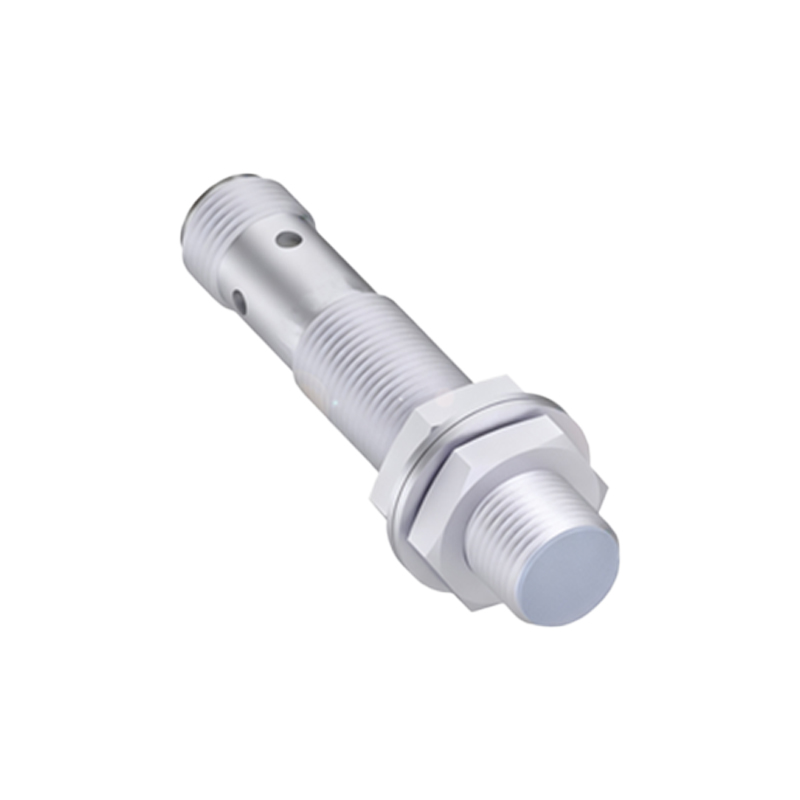
Detection of Non-Flat Surfaces: Gear teeth, chain links, cam lobes, and other irregular metallic profiles are reliably detected as each feature breaks the sensor's field.
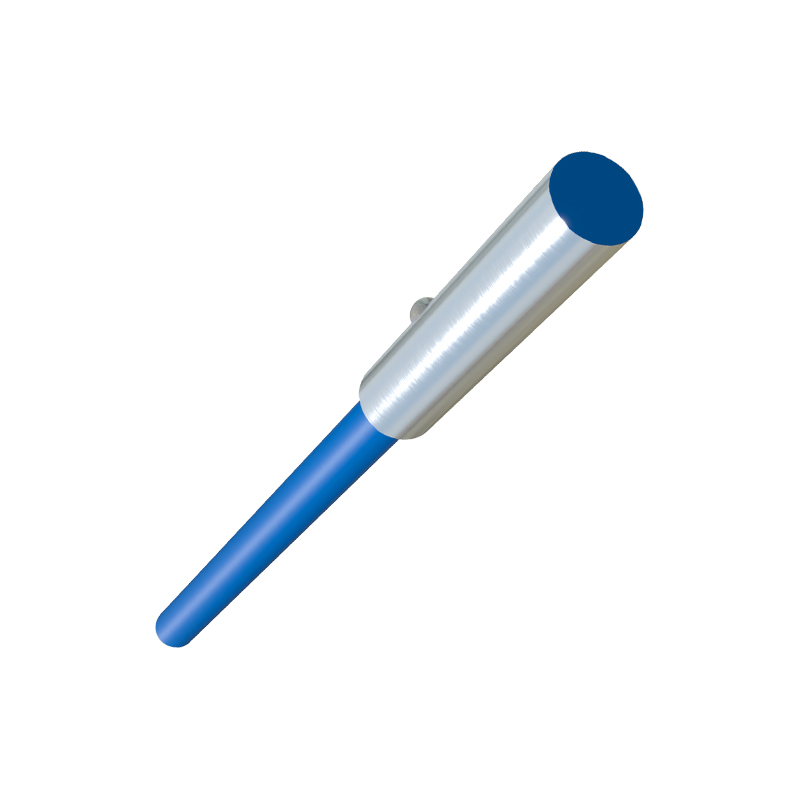
Positioning of Cranes and Lifters: The extended range allows for precise positioning control even with slight sway or misalignment.
Material Handling: Detecting the presence of metallic containers, pallets, or parts on conveyors where the exact distance may vary.
Packaging Machinery: Monitoring the position of metallic components in complex mechanical assemblies.
Applications with Build-Up: In environments prone to dust, chips, or light coating accumulation on the sensor face, the protruding design can sometimes mitigate false triggers, as the field extends beyond a thin layer of non-conductive material.
Selecting the appropriate non-embedded sensor requires careful consideration of several technical parameters beyond just the sensing range. The housing material is critical; stainless steel housings provide superior resistance to corrosive chemicals, washdown environments, and physical impact. Sensing distance, as defined by the manufacturer's specifications, must be derated for different target materials (steel, aluminum, copper) and shapes. The electrical output type (PNP/NPN, NO/NC) must be compatible with the controller's input module. Environmental ratings, particularly Ingress Protection (IP) codes like IP67 or IP69K, are non-negotiable for applications exposed to coolants, oils, or high-pressure cleaning. Additionally, factors like switching frequency, temperature tolerance, and output current capacity must align with the operational demands.
Installation and maintenance practices are straightforward but vital for optimal performance. While they do not require a precise metal-free zone around the sensing face like embedded sensors, it is still good practice to maintain clearance from other metal structures to prevent mutual interference. Secure mounting is essential to withstand vibration. Regular cleaning of the sensing face from heavy accumulations of conductive material (like metal shavings) will maintain rated performance. Diagnostic features, such as a built-in LED status indicator, are invaluable for quick troubleshooting and verifying target detection.
In conclusion, non-embedded proximity sensors are indispensable tools in an engineer's arsenal. Their extended sensing range, derived from a simple yet effective protruding design, solves a myriad of positioning, detection, and safety challenges where embedded sensors fall short. By understanding their operating principles, key advantages in sensing distance and application flexibility, and critical selection criteria, automation professionals can leverage these robust devices to enhance machine reliability, increase operational efficiency, and implement effective safety systems. As industrial applications grow more complex, the role of the versatile non-embedded proximity sensor continues to expand, solidifying its status as a cornerstone of modern electromechanical design.