In the world of industrial automation and machinery, precision and reliability are non-negotiable. Among the myriad of components that ensure systems operate flawlessly, proximity sensor retaining rings play a surprisingly critical role. Often overlooked, these small, circular fasteners are fundamental to the secure installation and long-term performance of inductive, capacitive, and photoelectric proximity sensors.
A proximity sensor retaining ring, also known as a mounting clip or snap-in ring, is a specialized fastener designed to hold a cylindrical proximity sensor securely within a pre-drilled mounting hole. The primary function is simple yet vital: to prevent axial movement of the sensor, ensuring its sensing face remains at the correct, predetermined position relative to the target object. Without a properly installed and suitable retaining ring, a sensor could shift, vibrate loose, or even become dislodged, leading to inaccurate readings, machine downtime, or safety hazards.
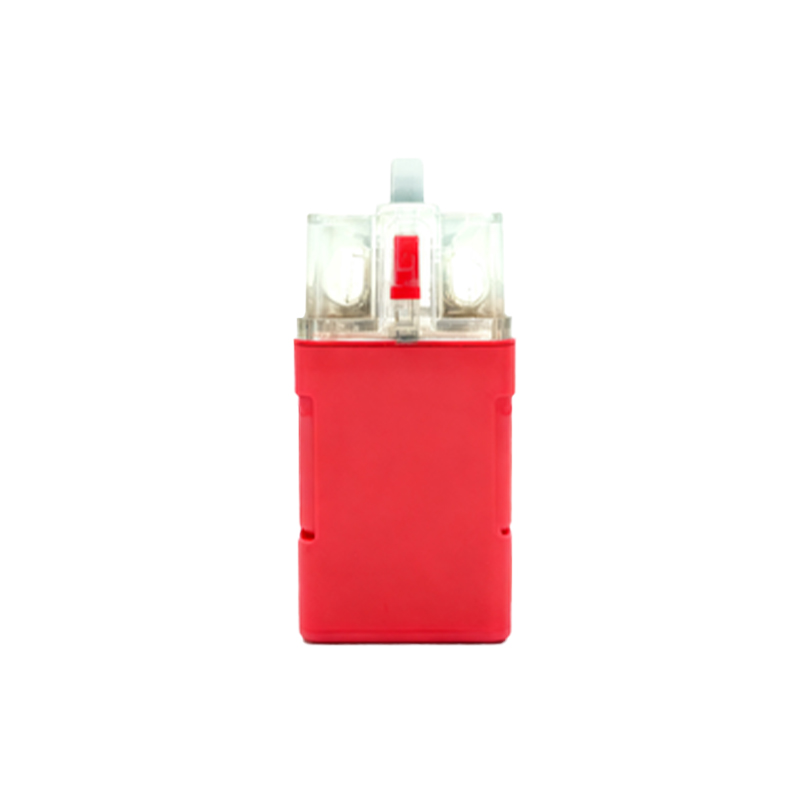
These rings are typically manufactured from spring steel or stainless steel, materials chosen for their durability, corrosion resistance, and ability to maintain constant tension. The design is ingeniously simple, featuring a circular body with protruding tabs or ears. During installation, the ring is compressed and inserted into a groove machined onto the body of the proximity sensor. Once the sensor and ring assembly is pushed into the mounting hole, the ring's tabs spring outward, locking firmly against the back face of the mounting panel. This creates a secure, vibration-resistant fit that is also often tool-free for easy installation and removal, facilitating maintenance and sensor replacement.
Selecting the correct retaining ring is not a trivial task. It requires careful consideration of several key parameters to ensure compatibility and performance. The most crucial specification is the mounting hole diameter, which must match the sensor and ring size precisely. Standard sizes, such as 8mm, 12mm, 18mm, and 30mm, are common, but many variations exist. The thickness of the mounting panel is another critical factor; rings are designed to accommodate a specific panel thickness range. Using a ring with a panel that is too thick may prevent proper locking, while a panel that is too thin might not provide sufficient support, risking sensor instability. Environmental conditions also dictate material choice. For harsh environments involving moisture, chemicals, or extreme temperatures, stainless steel rings offer superior corrosion resistance compared to standard spring steel.
The benefits of using dedicated proximity sensor retaining rings extend far beyond simple fixation. They ensure consistent sensing distance, which is paramount for applications requiring high repeatability, such as in robotic assembly lines, packaging machinery, or precision counting systems. By eliminating sensor movement, they also protect the sensor's internal electronics from the stresses of vibration and shock, thereby extending the component's operational lifespan. Furthermore, their standardized design simplifies inventory management for maintenance engineers, as a single ring type can often be used across multiple sensor models from the same manufacturer.
In practice, the installation process underscores the component's user-friendly design. After ensuring the sensor body's groove is clean, the retaining ring is aligned and pressed onto the sensor until it snaps into the groove. The sensor-ring assembly is then inserted into the clean, burr-free mounting hole from the front. A firm push until the ring clicks and seats against the panel completes the installation. Removal is equally straightforward, usually requiring only a small screwdriver or pick tool to depress the locking tabs from the rear of the panel, allowing the sensor to be pulled free.
Despite their simplicity, failure to adhere to best practices can lead to significant issues. Common mistakes include forcing an incorrect size ring onto a sensor, which can damage the sensor's groove or the ring itself, compromising holding power. Installing a sensor in a rough or irregular mounting hole can cause uneven pressure on the ring, leading to a tilted sensor or poor retention. Neglecting to consider thermal expansion in high-temperature applications can also result in a ring losing its tension over time.
In conclusion, the proximity sensor retaining ring is a quintessential example of a component whose importance far exceeds its size and cost. It is a fundamental enabler of sensor reliability, system accuracy, and operational safety in automated environments. By understanding its function, proper selection criteria, and installation methodology, engineers and technicians can ensure that these unsung heroes of industrial sensing continue to perform their duty, holding the line for precision in an ever-moving mechanical world.