Human proximity sensors are indispensable components in modern industrial automation, serving as the primary interface for detecting the presence or absence of personnel within a defined zone without physical contact. Their core function is to enhance safety, optimize processes, and enable sophisticated human-machine interaction. This article delves into the operational principles of major sensor types, their practical applications, and key considerations for selection and integration.
The fundamental working principle revolves around emitting a field or beam and detecting changes in its return signal caused by a human target. The most prevalent technologies include:
1. Capacitive Sensors: These sensors generate an electrostatic field. A human body, being conductive and dielectric, alters the capacitance of this field when it enters the detection zone. This change is measured by the sensor's circuitry, triggering an output signal. They are excellent for detecting non-metallic objects and humans through thin non-metallic barriers, making them suitable for applications like touch-activated controls or liquid level detection through tank walls.
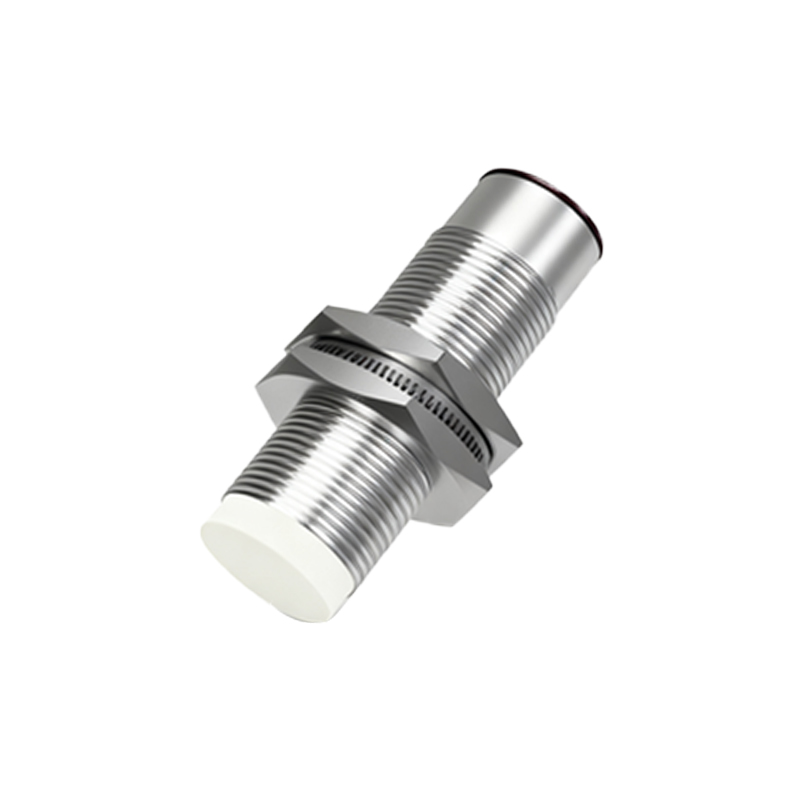
2. Inductive Sensors: These are workhorses for detecting metallic objects. They operate by generating a high-frequency electromagnetic field from a coil. When a conductive metal (like a tool or machine part) enters this field, eddy currents are induced, which load the oscillator circuit, causing a change in amplitude. This change is evaluated to switch the output. While not typically used for direct human detection (as the human body is a poor conductor at these frequencies), they are critical in safety interlocks where machine guard position (metal) is monitored.
3. Ultrasonic Sensors: These emit high-frequency sound waves (inaudible to humans) and measure the time taken for the echo to return. The presence of a person within the beam path alters the echo return time or pattern. They offer relatively long detection ranges and are less affected by color, transparency, or ambient light, making them useful for presence detection in challenging environments like parking garages or for bulk level sensing.
4. Photoelectric Sensors (Safety Light Curtains & Laser Scanners): These are paramount for personnel safety. A safety light curtain projects an array of infrared light beams across an access hazard zone. If a person interrupts any beam, a stop signal is sent to the guarded machinery. Area scanners (2D or 3D LiDAR) use rotating laser beams to create a protective field map, allowing for more complex zone definitions (warning and stop zones) around robots or automated guided vehicles (AGVs).
Primary Industrial Applications:
Machine Guarding and Safety: The most critical application. Light curtains, safety mats (a form of capacitive sensor), and laser scanners create perimeter guards around presses, robots, and assembly lines, ensuring immediate machine halt upon intrusion.
Access Control and Presence Detection: Used to automate doors, gates, or to detect personnel in restricted or hazardous areas. Ultrasonic or passive infrared (PIR) sensors are common here.
Human-Robot Collaboration (HRC): In collaborative robot (cobot) workcells, capacitive skin on the robot arm or area scanners enable speed and separation monitoring. The system can slow down or stop the robot based on the proximity and velocity of the approaching human worker.
Process Automation: Capacitive sensors can activate processes when an operator's hand is present, such as starting a glue dispensing cycle or a measurement sequence, improving ergonomics and consistency.
Energy Savings: In facilities like warehouses or offices, PIR or ultrasonic sensors detect human presence to control lighting, HVAC, or conveyor systems, reducing energy consumption during inactive periods.
Selection and Integration Guidelines:
Choosing the right sensor requires a systematic analysis of the application requirements:
1. Detection Object: Is the target the human body itself, their metallic tool, or their interaction with a machine? This dictates the technology (capacitive for body, inductive for metal tools).
2. Detection Range and Field Shape: Define the required operating distance. Consider the sensor's field characteristics: a precise point, a conical area, or a planar curtain. Ensure the field covers the hazard zone completely without nuisance trips.
3. Environmental Factors: Account for temperature extremes, humidity, dust, oil, coolant mists, or ambient sound/light noise. Sensors require appropriate Ingress Protection (IP) ratings (e.g., IP67 for washdown environments) and noise immunity.
4. Output Type and Wiring: Determine the needed output signal (digital PNP/NPN, analog 4-20mA, IO-Link for smart sensors, or safety-rated OSSD outputs). Ensure compatibility with the PLC or safety controller.
5. Safety Integrity: For safety-related functions, only use sensors certified to relevant standards (e.g., IEC 61496 for electro-sensitive protective equipment, IEC 61508