In the rapidly evolving landscape of industrial automation, the demand for sensors that deliver unparalleled accuracy, durability, and adaptability has never been greater. Hakuvo laser sensors stand at the forefront of this technological revolution, offering a suite of solutions engineered to meet the rigorous demands of modern manufacturing, logistics, and quality control environments. These sensors utilize advanced laser triangulation or time-of-flight principles to perform non-contact measurement and detection with micron-level precision, making them indispensable tools for a wide array of applications.
The core technology behind Hakuvo laser sensors involves emitting a focused beam of coherent light towards a target. The reflected light is then captured by a high-resolution receiver. By analyzing the position or the time delay of the returned beam, the sensor can calculate precise measurements of distance, displacement, height, thickness, or simply confirm the presence or absence of an object. This non-contact methodology eliminates mechanical wear, reduces maintenance needs, and allows for high-speed inspection of delicate, hot, or moving surfaces that would be impossible to gauge with traditional tactile probes.
One of the defining characteristics of Hakuvo laser sensors is their exceptional performance in challenging conditions. Engineered with robust housings, often rated IP67 or higher, they are resistant to dust, water, oil, and mechanical shock. This resilience ensures stable operation in harsh factory settings, from automotive assembly lines with significant vibration to food processing plants requiring frequent washdowns. Furthermore, advanced models feature integrated thermal compensation algorithms, maintaining measurement stability even with ambient temperature fluctuations, a critical factor for metrology-grade applications.
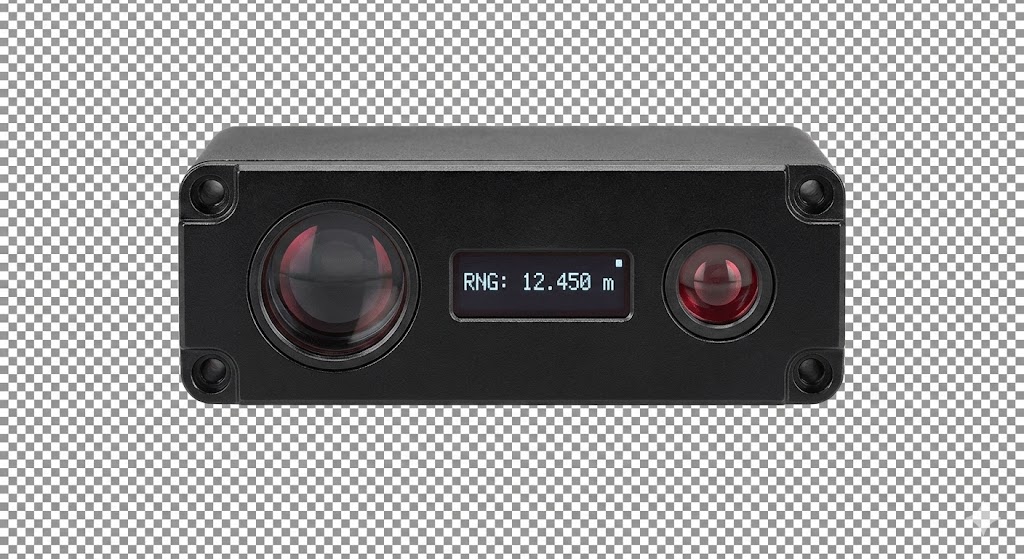
The application spectrum for Hakuvo laser sensors is vast. In automotive manufacturing, they are deployed for precise gap and flush measurement between body panels, weld seam inspection, and robot guidance. In electronics assembly, they verify component placement height and solder paste thickness on PCBs. Within the packaging industry, these sensors monitor fill levels, check label placement, and control the thickness of materials like paper, film, and foil. Logistics and warehousing benefit from their use in dimensioning parcels, palletizing guidance, and automated guided vehicle (AGV) navigation for obstacle detection.
Integration into modern industrial networks is seamless. Hakuvo sensors typically offer a variety of output options, including analog voltage/current, discrete switching signals (PNP/NPN), and high-speed digital interfaces like IO-Link. IO-Link capability is particularly significant, enabling bidirectional communication for remote parameter configuration, real-time diagnostics, and predictive maintenance data streaming directly into PLCs or SCADA systems. This connectivity is a cornerstone of Industry 4.0, facilitating smarter, more flexible production lines.

Selecting the right Hakuvo laser sensor requires careful consideration of key parameters. The measuring range, spot size, resolution, and repeatability must align with the specific task. For instance, a high-speed bottling line may prioritize a fast response time and a small, precise laser spot, while a lumber mill measuring log diameter would require a longer range and a larger spot for consistent detection on rough surfaces. The choice between red laser and newer blue laser models is also crucial; blue lasers, with their shorter wavelength, exhibit significantly less dispersion and can achieve finer resolution on shiny or transparent materials like glass or polished metal, which often pose challenges for standard red lasers.

Beyond standard models, Hakuvo offers specialized variants. Background suppression sensors are optimized for reliable detection regardless of the object's color or reflectivity by focusing on a specific distance. Contrast sensors are designed to distinguish between subtle differences in surface color or texture. Laser profilers, which use a laser line instead of a single point, can capture a complete 2D or 3D profile of an object for complex inspection tasks like shape verification or surface defect analysis.
The return on investment for implementing Hakuvo laser sensors is compelling. By enhancing measurement accuracy, they drastically reduce material waste and improve product quality consistency. Their reliability minimizes unplanned downtime, while their speed increases overall throughput. The data they generate provides invaluable insights for process optimization, contributing to leaner and more efficient manufacturing operations.
In conclusion, Hakuvo laser sensors represent a critical enabler for the next generation of industrial automation. Their combination of extreme precision, robust construction, and smart connectivity addresses the core challenges of modern industry. As production environments become more complex and quality standards more stringent, the role of these sophisticated sensing devices will only expand, solidifying their position as a fundamental component in the toolkit of engineers and automation specialists worldwide, driving productivity and innovation forward.