In the realm of industrial automation, precision and reliability are paramount. Laser positioning sensors have emerged as indispensable tools, offering non-contact, high-accuracy measurement and positioning capabilities. This guide delves into the key models, their operating principles, and selection criteria to empower engineers and system integrators in making informed decisions.
Core Operating Principle
At their heart, most laser positioning sensors operate on triangulation or time-of-flight (ToF) principles. Triangulation-based sensors project a laser spot onto a target. The reflected light is captured by a receiver at a known angle. Displacement of the target causes the spot's position on the receiver to shift, allowing precise calculation of distance or position. This method excels in short to medium-range applications requiring micron-level resolution, such as part inspection or thickness gauging.
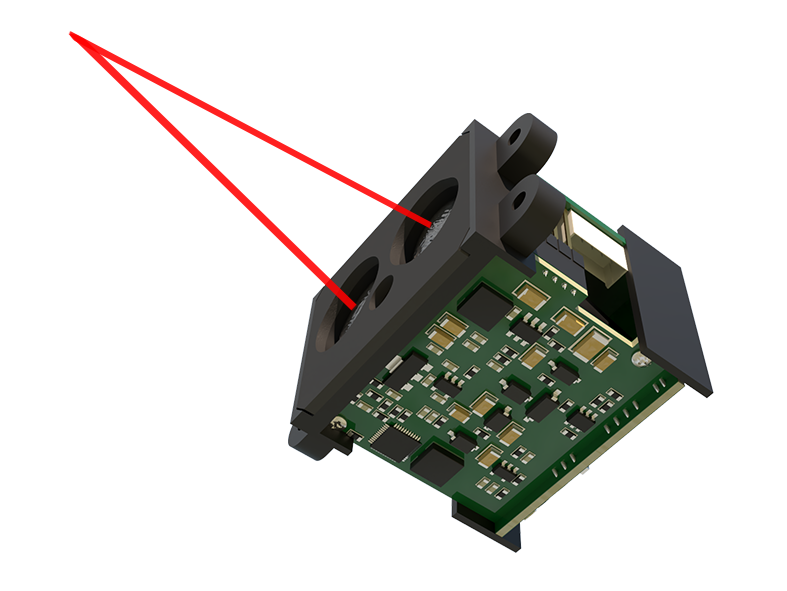
Time-of-flight sensors measure the round-trip time for a laser pulse to reflect off a target. This technology is ideal for longer ranges, from a few meters to several hundred meters, commonly used in logistics for pallet positioning or in large-scale warehouse automation. While offering slightly lower resolution than triangulation, ToF sensors provide excellent performance over extended distances.

Key Model Categories and Applications
Laser positioning sensors are categorized by their output type and specific function.
1. Analog Output Models (e.g., Keyence IL Series, Banner Q4X): These sensors provide a continuous voltage or current signal proportional to the measured distance. They are versatile for tasks like edge detection, width measurement, or controlling servo motors for precise part placement. Their output can be directly interfaced with PLC analog input modules.
2. Digital/Discrete Output Models (e.g., SICK DT20, Omron ZX-L): Designed for binary decisions, such as pass/fail inspection or presence detection at a specific threshold. They often feature teach-in functionality for easy setup, allowing users to program the sensing window by simply positioning the target at the desired "ON" points.
3. 2D Profile/Scanner Models (e.g., Micro-Epsilon scanCONTROL, LMI Gocator): These advanced sensors use a laser line instead of a single point. By capturing the deformation of this line across a target, they generate a detailed 2D cross-sectional profile. This is critical for applications like weld seam tracking, robotic guidance, or 3D contour inspection of complex components.
4. Long-Range ToF Models (e.g., SICK LMS100, Leuze RSL 400): Built for outdoor or large indoor environments, these sensors provide robust distance measurement for vehicle guidance, crane positioning, and bulk material level monitoring. They often feature IP67 or higher enclosures for harsh conditions.
Critical Selection Parameters
Choosing the correct model requires careful analysis of application requirements:
* Measuring Range: The distance over which the sensor operates reliably. Always consider a margin beyond the nominal working distance.
* Resolution: The smallest detectable change in position. Sub-micron resolution is available for精密 inspection.
* Repeatability: The sensor's ability to consistently return to the same measured value under identical conditions. This is often more critical than absolute accuracy for process control.
* Spot Size: A smaller spot allows for higher resolution on detailed features but may be affected by surface texture.
* Response Time/Sampling Rate: The speed at which the sensor takes measurements. High-speed processes like sorting on a conveyor belt demand fast response times (kHz range).
* Environmental Robustness: Factors like ambient light immunity, temperature stability, and ingress protection (IP rating) are vital for operation in industrial settings.
* Output Interface: Compatibility with existing control systems (e.g., analog 0-10V, IO-Link, Ethernet/IP, PROFINET) is essential for seamless integration.
Integration and Calibration Best Practices
Proper installation is crucial. Ensure the sensor is mounted securely to minimize vibration. The target surface material and color significantly affect performance; glossy or transparent materials may require special sensors with background suppression or dedicated filters. Regular calibration against a known reference is recommended to maintain long-term accuracy, especially for analog and profile sensors.
Future Trends
The evolution continues towards smarter, more integrated sensors. The adoption of IO-Link enables digital parameter setting, advanced diagnostics, and process data monitoring directly from the sensor. Furthermore, the integration of AI capabilities at the edge allows for in-sensor decision-making, such as classifying object types or identifying complex defects without sending raw data to a central controller.
In conclusion, selecting the optimal laser positioning sensor model is a systematic process that balances technical specifications with practical application needs. By understanding the strengths of triangulation versus ToF, analog versus digital outputs, and point versus profile measurement, engineers can leverage these powerful tools to enhance automation system accuracy, efficiency, and intelligence. Always consult specific manufacturer datasheets and application engineers for final model validation in your unique operational environment.