In the realm of industrial automation, construction, and high-precision manufacturing, achieving and maintaining true vertical alignment is a fundamental requirement. Traditional methods, such as plumb bobs or spirit levels, while conceptually simple, often fall short in terms of speed, accuracy, and applicability in dynamic or large-scale environments. This is where laser vertical sensors emerge as a transformative technology. A laser vertical sensor is a sophisticated optoelectronic device designed to project a highly visible, stable laser beam that defines a precise vertical reference line or plane. At its core, the system utilizes a pendulum or electronic self-leveling mechanism. In pendulum-based systems, a laser diode is suspended, allowing gravity to naturally orient the beam along the plumb line. More advanced models employ electronic servo-leveling, using internal sensors to detect tilt and automatically adjust the laser emitter to maintain verticality, often within a compensation range and with arc-second accuracy.
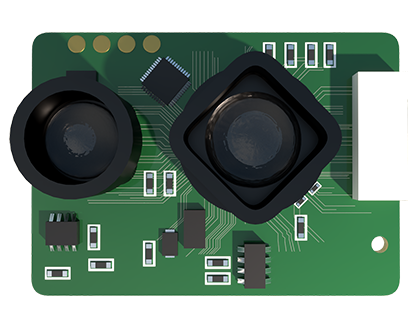
The operational principle hinges on generating a consistent, collimated laser line. The internal components—typically a laser diode, collimating optics, a leveling mechanism (pendulum or electronic), and control circuitry—work in unison. When activated, the device self-levels and projects a sharp, bright line onto a target surface. This line serves as an unambiguous datum for alignment. Key performance metrics include leveling accuracy (e.g., ±1/16 inch at 100 feet), self-leveling range (typically ±3 to ±5 degrees), laser class (usually Class II for safety), working range (which can exceed several hundred feet with a detector), and durability factors like Ingress Protection (IP) ratings for dust and water resistance.

The applications for laser vertical sensors are vast and critical across multiple sectors. In construction and civil engineering, they are indispensable for tasks such as aligning structural steel frames, setting concrete formwork, installing elevator shafts, and ensuring the plumbness of walls and partitions. Surveyors rely on them for establishing control points and transferring benchmarks vertically between floors. In industrial plant setup and machinery installation, these sensors ensure that heavy equipment, presses, and assembly lines are installed perfectly vertical, which is essential for operational efficiency, safety, and reducing wear. Furthermore, they play a vital role in installing tall communication towers, wind turbines, and in shipbuilding for keel alignment.
Selecting the appropriate laser vertical sensor requires careful consideration of the project's specific demands. For routine indoor construction, a robust pendulum-type laser with a visible red beam may suffice. For long-range outdoor applications or bright environments, a green laser (more visible to the human eye) paired with a remote detector becomes necessary. High-stakes industrial installations demand sensors with superior accuracy, electronic self-leveling, and data output capabilities for integration with measurement systems. Durability is paramount; a high IP rating (e.g., IP54 or higher) ensures reliable operation in harsh conditions. Battery life, ease of mounting, and the availability of compatible accessories like tripods, wall mounts, and targets also influence the decision.
Looking ahead, the integration of laser vertical sensors with digital technologies is shaping the future. Connectivity features such as Bluetooth enable wireless control and data logging via smartphone apps. Some advanced models can interface with Building Information Modeling (BIM) systems, allowing for real-time verification against digital plans. The development of multi-functional laser tools that combine vertical, horizontal, and dot projection in a single unit enhances versatility on the job site. As the demand for precision and efficiency continues to grow across global industries, the laser vertical sensor remains a cornerstone tool, evolving from a simple alignment aid to an intelligent node in the connected job site ecosystem, driving accuracy, reducing rework, and optimizing project timelines.