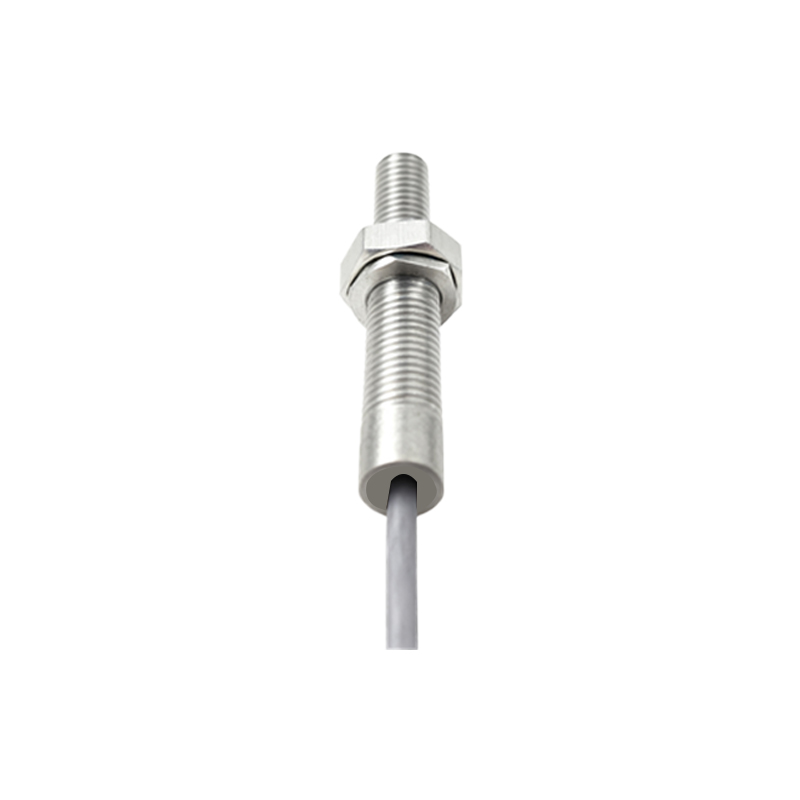
In the realm of industrial automation and electronic control, proximity sensors play a pivotal role in detecting the presence or absence of an object without physical contact. Among the various types, the NPN proximity sensor stands out as a fundamental and widely adopted component. Its operation, configuration, and integration form the backbone of countless automated systems, from assembly lines to safety mechanisms. This article delves into the core principles of NPN proximity sensors, explaining their functionality, typical characteristics, and practical applications in a clear, technical manner.
At its heart, an NPN proximity sensor is a solid-state electronic device. The "NPN" designation refers to the type of transistor output it employs, specifically an NPN bipolar junction transistor. This terminology is crucial for understanding how the sensor interfaces with control systems like Programmable Logic Controllers (PLCs). In an NPN sensor, the output transistor is connected between the load and the ground (0V or negative supply). When the sensor is inactive (no target detected), the output transistor is in an "off" state, presenting a high impedance. Upon detecting a target within its sensing range, the internal circuitry switches the NPN transistor "on," effectively connecting the output signal line to ground. This action allows current to sink from the load, through the sensor's output, to the ground. Therefore, an NPN output is often described as a "sinking" output. The load (e.g., a PLC input module) must be connected between the positive supply voltage and the sensor's output wire. When the sensor activates, it completes the circuit to ground, allowing current to flow and signaling a detection event.
The sensing technology itself is independent of the output type. NPN configurations are commonly found in inductive, capacitive, and ultrasonic proximity sensors. Inductive sensors, for instance, generate an electromagnetic field. When a metallic target enters this field, it causes a change in oscillation, which the sensor detects and converts into a switching signal via its NPN transistor. The key specifications include sensing distance, which is nominal and typically reduced for non-ferrous metals in inductive models, response frequency, and environmental ratings like IP (Ingress Protection) codes for dust and water resistance.
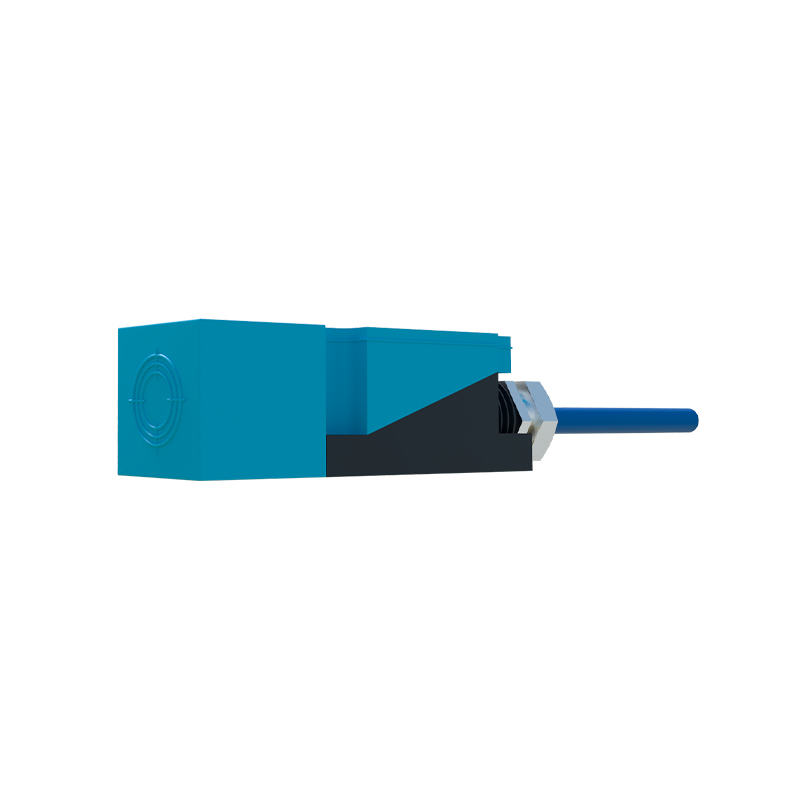
Wiring an NPN sensor is a straightforward process, but attention to polarity is essential. A standard three-wire DC sensor has brown (positive), blue (negative/ground), and black (output) wires. The brown wire connects to the positive DC supply (e.g., +24V), the blue wire to the common ground (0V), and the black output wire connects to the load. The other side of the load is then connected to the same positive supply. This forms the sinking circuit path. It is critical to note that the choice between NPN and its counterpart, PNP (sourcing output), is often dictated by regional conventions and the design of the control system. Many PLCs from European manufacturers are traditionally wired to accept PNP signals, while control systems in Asia and North America frequently use NPN wiring. However, modern PLC input cards are often designed to be compatible with both types by providing a configurable common terminal.
The advantages of NPN proximity sensors are numerous. They are known for their robustness, fast response times (often in microseconds), and long operational life due to the absence of mechanical moving parts. Their non-contact nature eliminates wear and tear from physical interaction with targets. In practical applications, NPN sensors are ubiquitous. On a packaging machine, an NPN inductive sensor might count metal cans on a conveyor. In a hydraulic press, it could act as a limit sensor to confirm the position of a metal platen for safety interlocking. Within automated storage systems, they detect the presence of pallets. Furthermore, in low-side switching applications in electronic circuits, the NPN sinking output is the natural and preferred choice.
When selecting an NPN proximity sensor, engineers must consider several factors beyond just the output type. The sensing distance should have a sufficient safety margin. The housing material (e.g., stainless steel, nickel-plated brass, or PBT plastic) must suit the environment, considering factors like chemical exposure, mechanical stress, and temperature fluctuations. Shielded (flush-mountable) or unshielded (non-flush) designs are chosen based on installation constraints and potential interference from adjacent metal. Understanding the NPN sinking logic is fundamental to troubleshooting. A common diagnostic step involves checking if the output voltage drops to near zero volts (a "low" signal) when a target is present, confirming the transistor is sinking current correctly.
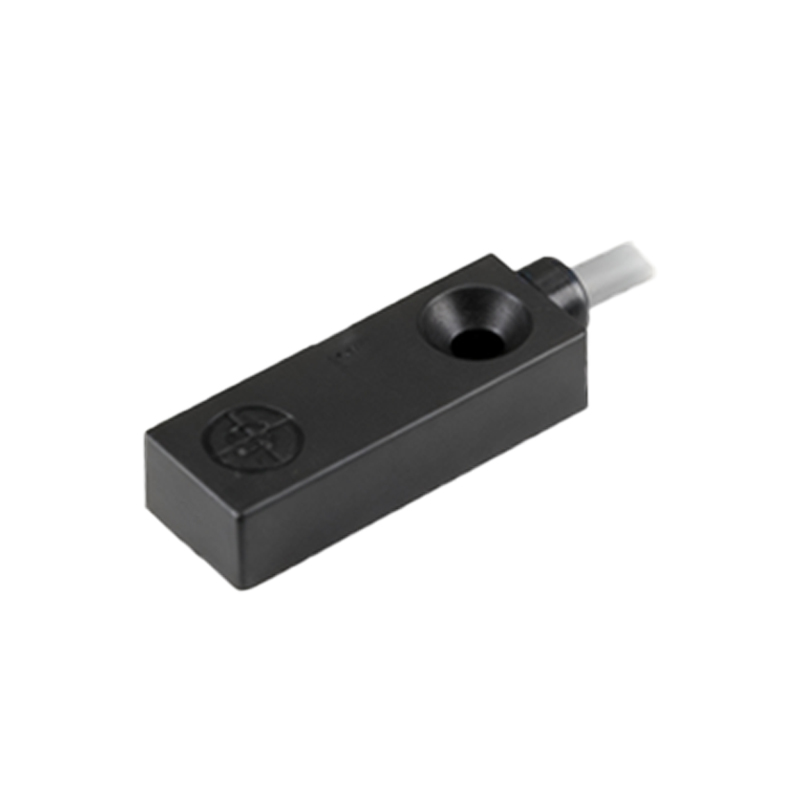
In conclusion, the NPN proximity sensor is a cornerstone of modern industrial electronics. Its sinking output configuration, based on a simple yet reliable transistor switch, provides a reliable method for converting physical presence into a clear electrical signal for control systems. A firm grasp of its working principle—where the active state connects the output to ground