In the realm of sensing technology, a quiet revolution is underway, powered by invisible beams of light. Infrared LiDAR sensors, once confined to specialized research labs and high-budget military applications, are now becoming the cornerstone of numerous everyday technologies. Their ability to map environments in three dimensions, day or night, with remarkable precision, is unlocking capabilities previously thought to be science fiction.
At its core, a LiDAR sensor—Light Detection and Ranging—measures distance by illuminating a target with light and analyzing the reflected signal. While early systems often used visible light, modern advancements have firmly settled on the infrared spectrum, typically using laser pulses at wavelengths like 905nm or 1550nm. This shift is strategic. Infrared light is invisible to the human eye, allowing for discreet operation. More importantly, it interacts differently with the atmosphere and objects, offering advantages in range, eye safety (especially at 1550nm), and performance under various lighting conditions. The sensor emits rapid pulses of IR laser light. Each pulse travels outward, hits an object, and bounces back. By precisely measuring the time-of-flight (ToF) of each pulse—the interval between emission and detection—the sensor calculates the distance to that point with centimeter-level accuracy. Repeating this process millions of times per second creates a dense, real-time 3D point cloud map of the surrounding world.
The architecture of a typical infrared LiDAR system is a marvel of miniaturization and integration. It consists of a laser emitter, a sensitive photodetector (often an avalanche photodiode or SPAD array), and sophisticated scanning mechanics or solid-state beam steering. Mechanical spinning LiDARs, with their iconic rotating domes, provided the first wave of high-resolution mapping. However, the industry is rapidly evolving towards solid-state LiDAR. These systems have no moving parts, using technologies like Optical Phased Arrays (OPA) or Micro-Electro-Mechanical Systems (MEMS) mirrors to steer the laser beam electronically. This leap forward results in sensors that are more compact, robust, reliable, and ultimately cheaper to manufacture—key factors for mass-market adoption.
The applications for this technology are vast and growing. The most prominent driver today is the automotive industry. Autonomous vehicles and advanced driver-assistance systems (ADAS) rely on infrared LiDAR as a primary perception tool. It provides crucial depth information that cameras and radar cannot match, accurately identifying pedestrians, cyclists, vehicles, and road boundaries in 3D, even in low-light or complex weather scenarios like light fog. This data is fundamental for path planning and collision avoidance.
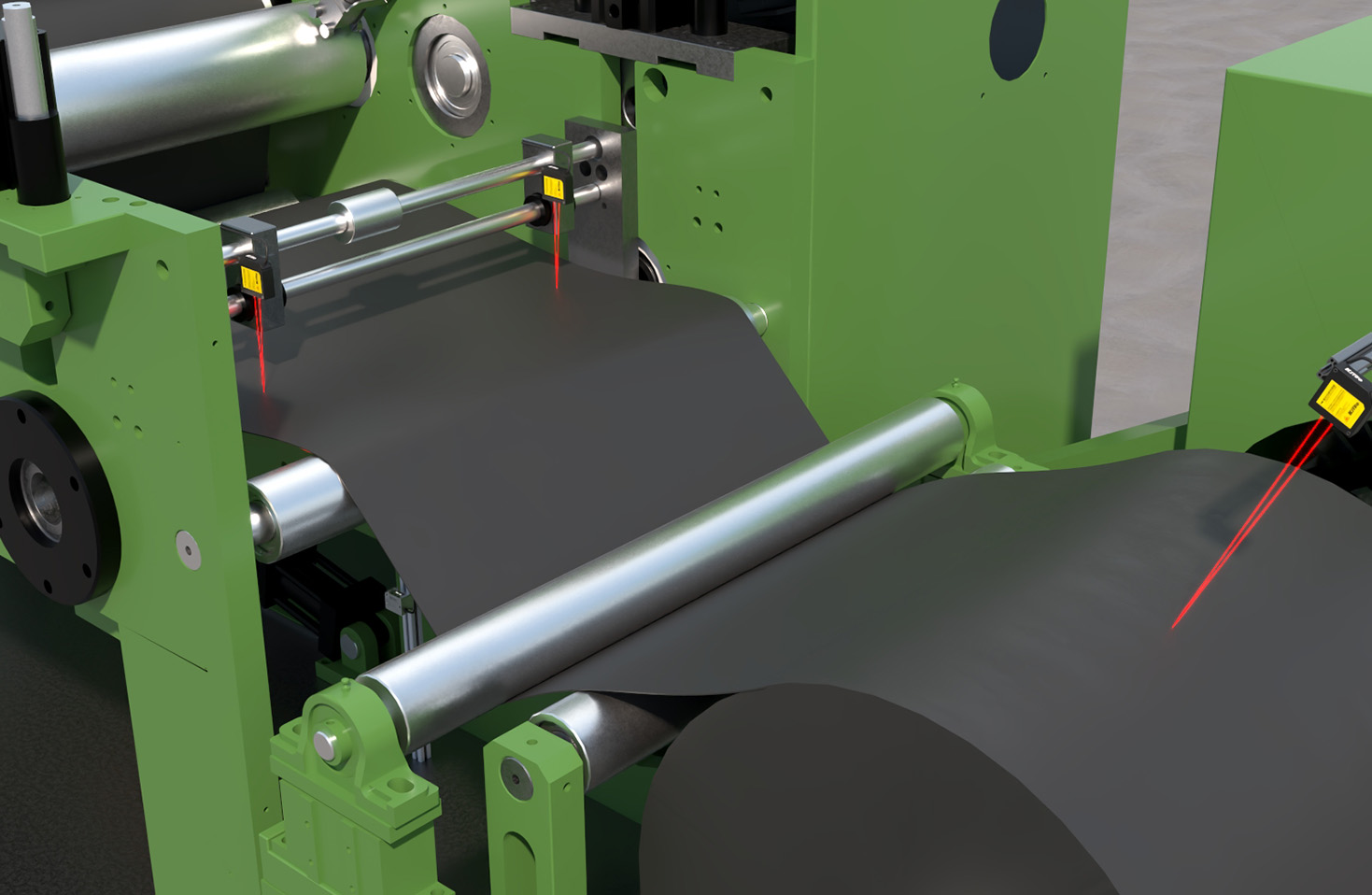
Beyond the road, these sensors are transforming other fields. In robotics, from warehouse logistics robots to domestic vacuum cleaners, LiDAR enables precise navigation and obstacle avoidance in dynamic environments. In smart infrastructure and city planning, it is used for topographic surveying, monitoring structural health of bridges and buildings, and managing forestry and agricultural resources. The industrial sector employs it for precision measurement, volumetric analysis, and guiding autonomous machinery in factories and ports. Even consumer electronics are getting a taste; modern smartphones and tablets use miniaturized infrared LiDAR scanners for augmented reality experiences, improving photo focus, and creating accurate 3D models of rooms for interior design.
Despite its promise, the technology faces hurdles. Cost, though falling, remains a barrier for ultra-widespread deployment. Performance can be challenged by extreme weather conditions, such as heavy rain, snow, or dense fog, which can scatter or absorb the infrared signals. Furthermore, as more LiDAR-equipped devices populate shared spaces, managing potential interference between sensors and establishing industry-wide performance and safety standards are ongoing challenges.
Looking ahead, the trajectory for infrared LiDAR is one of continuous refinement and integration. Key trends include the push for higher resolution and longer range from smaller, lower-power form factors. The development of true solid-state and even chip-scale LiDAR is a major focus. Sensor fusion—seamlessly combining LiDAR data with camera, radar, and ultrasonic sensor inputs—will create perception systems that are far more robust and intelligent than any single technology alone. As costs continue to decrease and performance scales, we can expect infrared LiDAR to become as ubiquitous as the camera, serving as the fundamental 3D vision system for the intelligent machines and systems of the future, quietly painting our world in a canvas of invisible light.