In the realm of industrial automation and machine safety, proximity sensors are indispensable components for non-contact object detection. Among the various types available, shielded or flush-mountable proximity sensors represent a specialized and crucial category. These sensors are engineered with a metal band surrounding their sensing face, which effectively contains and focuses the electromagnetic field. This shielding technology is not merely a design feature; it is a fundamental solution to a common challenge in dense installation environments.
The core principle of a shielded inductive proximity sensor revolves around its ability to generate a damped oscillating electromagnetic field directly at its active face. The internal coil, when energized, creates this field. The presence of a metallic target within this field induces eddy currents on the target's surface. These eddy currents draw energy from the sensor's oscillator, causing its amplitude to decrease. This reduction is detected by the sensor's evaluation circuit, triggering a switching signal. The critical role of the shielding—typically a ferrite core or a metal collar—is to shape this electromagnetic field. It confines the field to the front of the sensor, preventing it from spreading laterally. This confinement offers two primary advantages: it allows for flush installation in metal mounting surfaces without the risk of the sensor being triggered by the surrounding metal (a phenomenon known as "side-sensing"), and it enables tighter mounting pitches where multiple sensors are placed adjacent to each other without mutual interference.
In contrast, unshielded (non-flush) sensors have a more expansive, radial electromagnetic field. While this grants them a slightly longer sensing range, it mandates a mandatory clearance zone around the sensor when installed in metal. Installing an unshielded sensor flush in a metal bracket would cause it to latch on to the bracket itself, rendering it ineffective for detecting intended targets. Therefore, the choice between shielded and unshielded is the first and most critical decision in the selection process.
The applications for shielded proximity sensors are vast and critical. They are the default choice for any application requiring embedding into metal machinery, such as in hydraulic cylinders for end-position detection of pistons, within automated tool changers on CNC machines, or as part of safety interlocks on metal guards and doors. Their immunity to adjacent metal and to each other makes them ideal for multi-sensor fixtures, like in palletizing systems or complex assembly jigs where detection points are densely packed. Furthermore, their robust design, often featuring stainless steel housings, makes them suitable for harsh environments with exposure to coolants, oils, and metal chips common in machining centers.
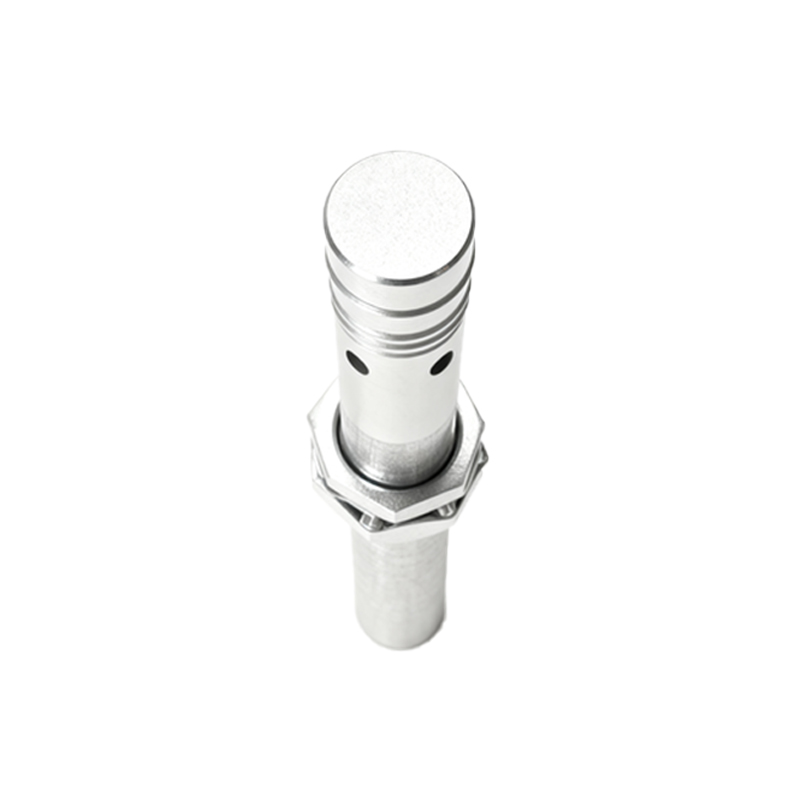
When selecting a shielded proximity switch, several technical parameters must be meticulously evaluated. First is the nominal sensing distance (Sn), which is standardized and typically shorter for shielded models compared to their unshielded equivalents of the same size. Designers must account for this reduced range. The operating distance is the practical switching distance under specified conditions, usually between 90% and 110% of the nominal sensing distance, accounting for manufacturing tolerances and temperature effects. Hysteresis, the difference between the switch-on and switch-off points, is essential for providing stable switching and preventing chatter when a target is at the detection boundary.
Mounting considerations are paramount. Shielded sensors can be installed flush without any loss of sensing range. However, it is recommended to maintain a small clearance between adjacent shielded sensors to avoid physical damage during installation; a distance of at least twice the sensor's diameter is a common rule of thumb for electrical non-interference. The target material also affects performance. Standard sensors are calibrated for mild steel (Fe360). For other metals like stainless steel, aluminum, or copper, a correction factor (often reducing the effective sensing range) must be applied, which is usually provided in the sensor's datasheet.
Other vital specifications include the switching frequency, which determines how quickly the sensor can detect passing objects; the output configuration (PNP/NPN, NO/NC) which must match the control system's input card; the housing material and IP rating for environmental protection; and the voltage range for stable operation. For advanced applications, analog output or IO-Link enabled sensors provide not just a switch signal but also valuable diagnostic data and parameterization capabilities.

In conclusion, shielded proximity sensors are a precision tool in the automation engineer's arsenal. Their defining characteristic—the focused electromagnetic field—solves installation challenges in metal-rich environments, enabling reliable, space-efficient, and robust sensing solutions. A thorough understanding of their operating principles, coupled with a disciplined approach to reviewing application requirements against sensor specifications, is key to deploying them successfully. They ensure that machines see, react, and operate with the reliability and precision demanded by modern industrial processes.