Laser guide sensors have become indispensable components in modern industrial automation, offering unparalleled precision and reliability in a wide range of applications. These sensors operate by emitting a focused laser beam towards a target object. The reflected light is then captured and analyzed by the sensor's receiver. By measuring the properties of this reflected light, such as time-of-flight, triangulation, or phase shift, the sensor can accurately determine the presence, position, distance, or profile of an object. This fundamental principle enables non-contact measurement with high speed and micron-level accuracy, a critical advantage over traditional mechanical or ultrasonic methods.
The core technology behind these sensors often involves laser diodes that produce coherent, monochromatic light. This coherent light allows for the creation of a very thin, intense beam that can be precisely focused over long distances, even in challenging environmental conditions. Common types include diffuse reflective sensors, which detect the light scattered directly back from an object, and through-beam sensors, which consist of separate emitter and receiver units, detecting an object when it interrupts the beam. More advanced versions, like laser distance sensors or profile scanners, use sophisticated algorithms to provide multi-dimensional data.
In practical industrial settings, laser guide sensors are the workhorses of automation. On assembly lines, they perform precise object detection for counting, sorting, and quality control. In robotics, they provide essential feedback for guidance, positioning, and obstacle avoidance, enabling collaborative robots to work safely alongside humans. Material handling systems rely on them for accurate palletizing, dimensioning, and warehouse automation. Furthermore, in the semiconductor and electronics manufacturing industries, the extreme precision of laser sensors is crucial for alignment, inspection, and placement tasks where tolerances are microscopic.
Selecting the right laser sensor requires careful consideration of several key parameters. The sensing range, or the maximum distance at which the sensor can reliably detect an object, is primary. The spot size, or the diameter of the laser beam at the target, determines the minimum detectable object size and edge detection resolution. Response time is critical for high-speed applications, while environmental factors like ambient light, dust, fog, or target surface properties (color, reflectivity, texture) can significantly impact performance. Modern sensors often incorporate features like background suppression, which allows them to ignore objects beyond a set distance, and teach-in functions for easy configuration.
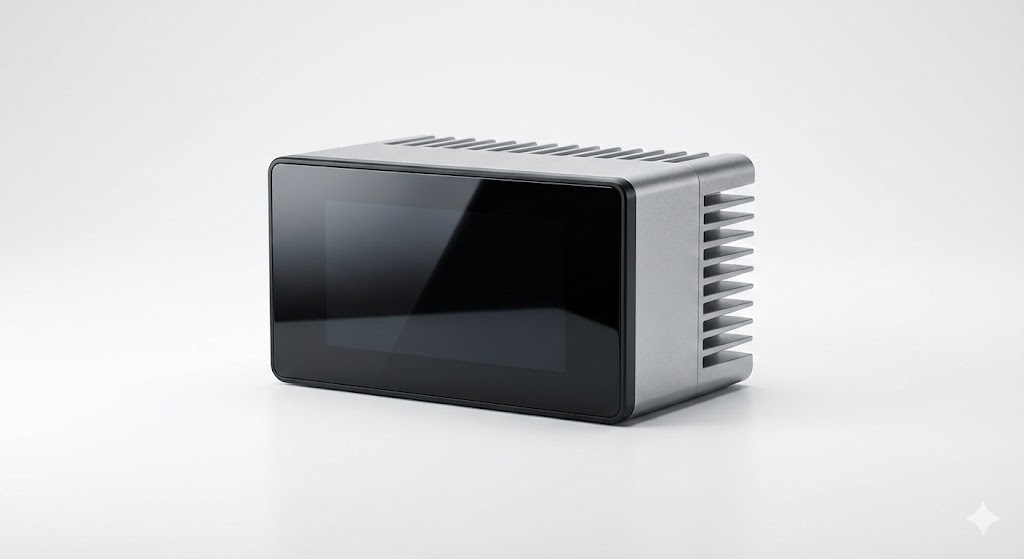
The integration of Industry 4.0 and IoT principles is pushing laser sensor technology forward. Smart sensors now come equipped with industrial communication protocols like IO-Link, which enables bidirectional data exchange. This allows for remote configuration, real-time diagnostics, predictive maintenance alerts, and the seamless integration of measurement data into higher-level control systems. This connectivity transforms the sensor from a simple switch into an intelligent data point within a networked factory.
Despite their robustness, laser sensors are not without limitations. Highly reflective or transparent materials can pose detection challenges, sometimes requiring special filters or sensor settings. The initial cost can be higher than other sensor types, though the long-term benefits in accuracy and reduced downtime often justify the investment. Safety is also a paramount concern; while most industrial laser sensors are Class 1 or Class 2, meaning they are eye-safe under normal operating conditions, proper installation and adherence to manufacturer guidelines are essential.
Looking ahead, advancements in miniaturization, power efficiency, and data processing capabilities will continue to expand the role of laser guide sensors. The fusion of laser measurement with machine vision and artificial intelligence is particularly promising, opening doors to more complex inspection and adaptive control systems. As industries strive for greater efficiency, flexibility, and quality, the laser guide sensor will remain a foundational technology, providing the precise, reliable sensory input that automated systems depend on to see and interact with the physical world.
