Hall effect proximity sensors are indispensable components in modern industrial automation, offering non-contact detection of ferromagnetic and permanent magnet targets. Unlike inductive sensors, they respond specifically to magnetic fields, making them ideal for applications requiring precise position sensing, speed measurement, and current detection. The selection of the correct model is critical for system reliability, efficiency, and longevity. This guide explores key Hall sensor proximity switch models, their specifications, and application considerations.
A primary classification is based on output type: digital and analog. Digital Hall sensors, such as the ubiquitous SS400 series and A3144 series, provide a simple ON/OFF signal. They typically feature open-collector or push-pull outputs. The SS400, for instance, is a unipolar switch that activates in the presence of a sufficient south magnetic pole. Its variants offer different operating point (Bop) and release point (Brp) thresholds, allowing engineers to tailor sensitivity. The A3144 is a latch-type (bipolar) sensor; it turns ON with a south pole and remains ON until a north pole is applied, perfect for counting revolutions or detecting direction. For harsh environments, models like the US5881 offer improved temperature stability and ruggedness.
Analog Hall sensors, like the SS49E linear sensor, output a voltage proportional to the magnetic flux density. This continuous signal is vital for precise displacement measurement or current sensing in motor control. Key parameters here include sensitivity (mV/G), linear range, and quiescent output voltage. For high-temperature applications up to 150°C, the HG-106C series is a robust choice.
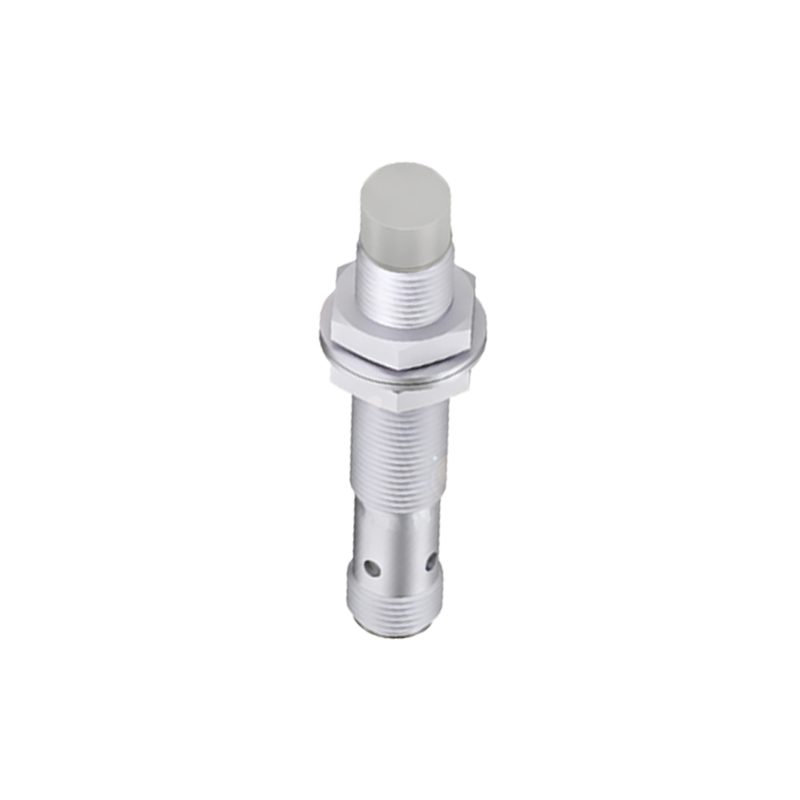
Packaging and form factors are equally important. Cylindrical housing models (e.g., M8, M12, M18 threaded barrels) are standard for mechanical durability and easy installation in machined fixtures. Flat-pack or surface-mount (SMD) models, such as the SM353LT, are designed for PCB integration in space-constrained devices like encoders. Some specialized models feature integrated amplifiers and protection circuits, like the OH090U, which provides a clean, amplified signal with reverse polarity and overvoltage protection.
When selecting a model, engineers must evaluate several technical specifications beyond just output type. Operating Voltage Range: Most industrial models operate from 3.8V to 30V DC, but some low-power variants function down to 2.7V. Switching Frequency/Response Time: Critical for high-speed applications. Digital models like the AH277 can achieve response times below 3µs, suitable for ultra-high-speed counting. Sensing Distance: This is not fixed like in inductive sensors but depends on magnet strength. Typical "switching distance" is specified with a standard magnet (e.g., 2-3 mm with a 25x10mm NdFeB magnet). Temperature Range: Standard commercial grade (0°C to 70°C) versus industrial/automotive grade (-40°C to 125°C or higher). Output Configuration: NPN vs. PNP sinking/sourcing must match the PLC or controller input card. Protection Ratings: IP67 or IP69K ratings are essential for washdown or outdoor environments to resist dust and water ingress.
Application scenarios dictate model priorities. In brushless DC (BLDC) motor commutation, three digital latch-type sensors (e.g., SS41) are spaced 120 degrees apart to detect rotor position. For current sensing in power monitoring, a linear sensor like the ACS712 (which integrates a Hall IC and conduction path) is mounted near a conductor. In fluid power systems, rugged M12 sensors with PNP outputs monitor piston position in hydraulic cylinders by detecting a ring magnet on the piston rod. For conveyor speed monitoring, a digital sensor paired with a gear tooth magnet provides precise RPM data.
Common pitfalls in selection include ignoring the magnetic circuit. The sensor's performance is a function of the magnet's size, strength, orientation, and air gap. Using an undersized magnet can lead to unreliable switching. Electrical noise in industrial settings also necessitates choosing models with built-in hysteresis and shielding to prevent false triggering. Always consult the manufacturer's datasheet for detailed magnetic and electrical characteristics.
In conclusion, the optimal Hall effect proximity sensor model balances electrical output, mechanical form, environmental robustness, and magnetic interface requirements. A thorough analysis of the application's speed, precision, temperature, and physical constraints will lead to a reliable and maintenance-free installation. As Industry 4.0 advances, smart sensors with IO-Link capability are emerging, adding digital parameterization and diagnostics to these versatile magnetic field detectors, further enhancing their role in predictive maintenance and system intelligence.