Weighing sensor laser technology represents a significant advancement in precision measurement and industrial automation. This innovative approach integrates laser-based sensing mechanisms with traditional load cell systems, offering enhanced accuracy, reliability, and efficiency in various industrial settings. The core principle involves using laser displacement sensors to measure minute deformations or movements in weighing sensor elements, which are then correlated with applied forces or weights. This method provides non-contact measurement capabilities, reducing mechanical wear and increasing the longevity of the weighing system.
In industrial environments, such as manufacturing, logistics, and process control, weighing sensor laser systems are crucial for ensuring product quality, optimizing material handling, and maintaining safety standards. For instance, in conveyor belt systems, laser-enhanced sensors can continuously monitor the weight of transported materials without physical contact, enabling real-time adjustments and preventing overloads. Similarly, in batch processing industries like pharmaceuticals or food production, these sensors ensure precise ingredient measurements, adhering to strict regulatory requirements and minimizing waste.
The technology leverages advanced laser interferometry or triangulation techniques to achieve micrometer-level resolution. Laser beams are directed at the weighing sensor's strain gauge or deformation point, and reflected signals are analyzed to determine displacement. This data is processed through sophisticated algorithms, converting displacement into accurate weight readings. Key advantages include high-speed response, immunity to electromagnetic interference, and the ability to operate in harsh conditions, such as extreme temperatures or corrosive atmospheres, where traditional sensors might fail.
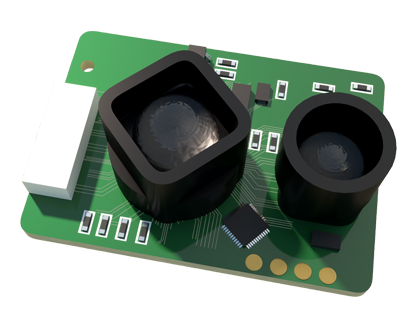
Moreover, weighing sensor laser systems often incorporate smart features, such as IoT connectivity and data analytics, allowing for predictive maintenance and integration with Industry 4.0 frameworks. By monitoring sensor performance trends, potential failures can be anticipated, reducing downtime and maintenance costs. This aligns with the growing demand for automated, data-driven industrial solutions that enhance productivity and competitiveness.
Despite its benefits, implementing weighing sensor laser technology requires careful consideration of factors like initial investment, calibration needs, and compatibility with existing infrastructure. However, as costs decrease and technology matures, adoption is expected to rise across sectors like aerospace, automotive, and energy, where precision weighing is critical. Future developments may focus on miniaturization, enhanced multi-sensor fusion, and improved energy efficiency, further expanding applications.
In summary, weighing sensor laser technology is transforming industrial weighing by combining non-contact laser sensing with robust load cell designs. It offers unparalleled accuracy and durability, supporting automation and quality control in diverse industries. As innovation continues, this technology will likely become a standard in high-precision measurement systems, driving efficiency and reliability in global industrial operations.