Precision laser sensors represent a cornerstone of modern industrial automation and measurement technology. Their operation is fundamentally based on the principles of optical triangulation or time-of-flight (ToF) measurement, enabling non-contact, high-accuracy detection of distance, position, and profile.
In the widely adopted triangulation method, a laser diode emits a focused beam of coherent light onto the target surface. The reflected or scattered light is then captured by a sensitive receiver element, typically a Position Sensitive Detector (PSD) or a Charge-Coupled Device (CCD) array, positioned at a known angle relative to the emitter. The key principle is geometric: the spot position on the receiver shifts proportionally to the change in the target's distance. This displacement is analyzed by an integrated processor to calculate the exact distance with micron-level resolution. This method excels in short to medium-range applications requiring extreme precision, such as semiconductor wafer inspection, precision assembly, and thickness gauging.
Time-of-flight sensors, in contrast, measure the round-trip time for a laser pulse to travel to the target and back. The distance is calculated using the constant speed of light. While traditionally offering slightly lower resolution than triangulation over short distances, modern ToF sensors provide excellent performance for long-range measurements and are integral in applications like bulk level monitoring, vehicle guidance, and large-scale 3D scanning.
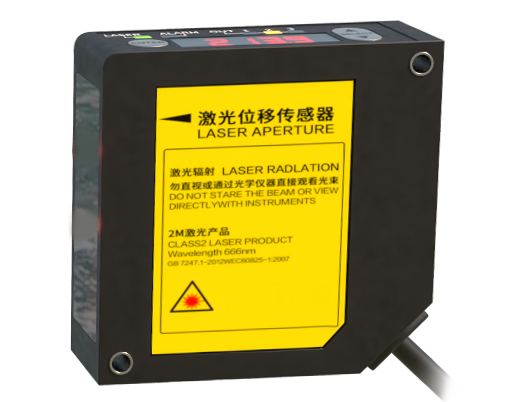
A critical component is the laser source itself. Industrial sensors predominantly use visible red lasers or Class 2 infrared lasers, chosen for their coherence, monochromaticity, and ability to form a precise spot. The choice of wavelength affects performance; for instance, blue lasers may be used for specific materials like hot metals or transparent objects where red light penetrates or reflects poorly.
Signal processing is what transforms raw optical data into reliable measurement. Advanced algorithms filter out ambient light noise, compensate for surface color and texture variations (using techniques like automatic exposure control), and handle challenging conditions such as specular reflections or steep angles. Many sensors incorporate teach-in functions or digital interfaces (e.g., IO-Link, Ethernet/IP) for easy configuration and integration into control networks.
The applications are vast. In automotive manufacturing, laser sensors ensure precise gap and flush measurement between body panels. In electronics, they verify component placement on PCBs. In logistics, they guide robots for palletizing. Their robustness, immunity to electrical interference, and fast response times make them superior to traditional contact probes or ultrasonic sensors in demanding environments.
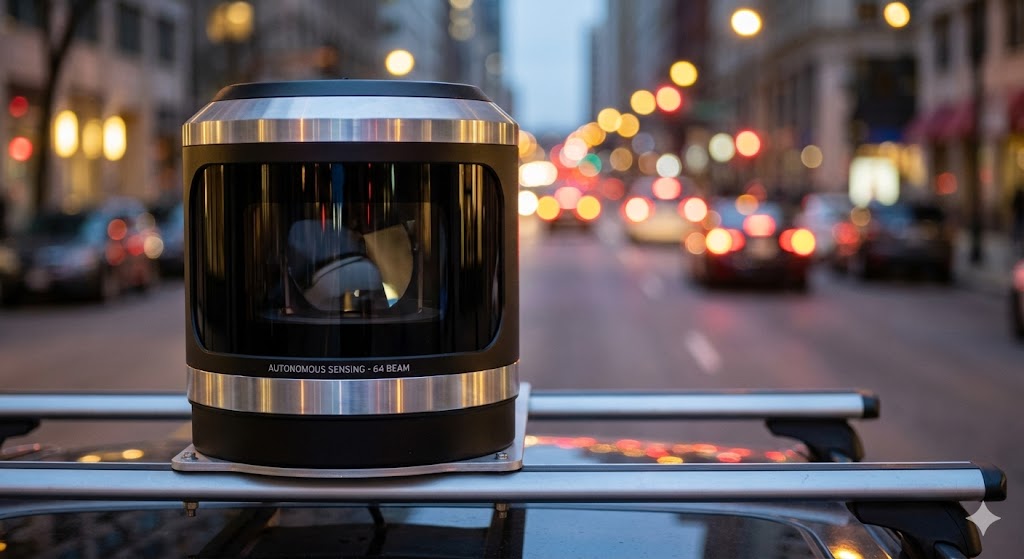
Future trends point toward miniaturization, higher speeds, and the integration of multi-point or line laser profiling for full 3D contour analysis. The convergence of precise optics, stable laser technology, and sophisticated digital processing continues to push the boundaries of what is measurable, driving efficiency and quality in Industry 4.0.
