In the realm of industrial automation, the demand for robust, precise, and reliable sensing solutions is paramount. Beckhoff Automation, a global leader in PC-based control technology, offers a comprehensive range of inductive proximity sensors that stand at the forefront of this critical field. These sensors are engineered to deliver exceptional performance in the most demanding environments, ensuring seamless integration and operational efficiency across diverse applications.
Inductive proximity sensors operate on a fundamental principle: they generate an electromagnetic field from a coil within an oscillator circuit. When a metallic object enters this field, eddy currents are induced on the object's surface, causing a change in the oscillation amplitude. This change is detected by the sensor's evaluation circuit, which subsequently triggers a switching signal. Beckhoff's design optimizes this process, providing high switching frequencies and exceptional repeat accuracy. A key advantage is their ability to detect all metals, including steel, aluminum, copper, and brass, though with varying sensing distances due to material-specific damping factors.
Beckhoff's metal proximity sensor portfolio is characterized by its versatility and rugged construction. The sensors are available in various form factors, including cylindrical M8, M12, M18, and M30 housings, as well as rectangular designs, catering to diverse mounting and space constraints. They are typically manufactured from high-grade stainless steel or nickel-plated brass, offering superior resistance to mechanical stress, shock, and vibration. Furthermore, the sensing faces are made of robust materials like PBT or PPS, ensuring longevity even when exposed to chips, coolants, or other harsh industrial contaminants.
One of the standout features of Beckhoff inductive sensors is their integration capability within the broader Beckhoff control ecosystem. Utilizing standard industrial interfaces such as IO-Link, these sensors transcend simple binary switching functions. IO-Link enables bidirectional communication, allowing for the parameterization of switching points, hysteresis, and output modes directly from the controller. Moreover, it facilitates the transmission of diagnostic data, such as operating hours, temperature readings, and signal quality metrics, enabling predictive maintenance strategies and reducing unplanned downtime. This level of smart functionality transforms a simple proximity switch into an intelligent data point within the Industrial Internet of Things (IIoT) framework.
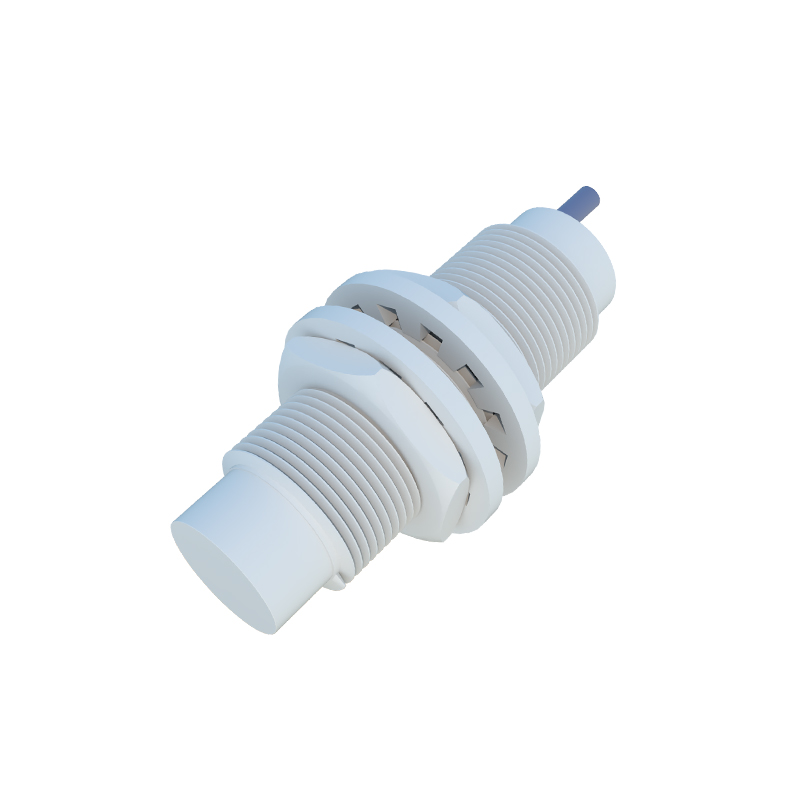
The application spectrum for Beckhoff inductive proximity sensors is vast. They are indispensable in machine tools for monitoring tool presence, position verification, and end-position detection. In material handling and packaging machinery, they reliably detect metallic components on conveyors or confirm the closure of metal flaps and doors. Within automotive assembly lines, these sensors ensure precise positioning of robotic arms and verify the placement of engine blocks or chassis parts. Their immunity to ambient light, dust, and non-metallic objects makes them far more reliable than optical alternatives in dirty or oily environments.
When selecting a Beckhoff inductive sensor, engineers must consider several technical parameters. The nominal sensing distance (Sn) is a critical specification, defining the standard detection range for a defined target. Factors like the target material, size, and shape can influence the effective sensing distance. Temperature stability is another crucial aspect; Beckhoff sensors are designed to maintain consistent performance across a wide temperature range, typically from -25°C to +70°C. The protection rating, often reaching IP67 or IP69K, guarantees reliable operation under conditions involving water jets, high-pressure cleaning, or temporary immersion.
Installation and wiring are streamlined for efficiency. Beckhoff offers both pre-wired connectors and quick-disconnect versions, significantly reducing commissioning time. Proper mounting is essential to avoid mutual interference when multiple sensors are installed in close proximity. Adhering to the specified lateral and axial spacing recommendations ensures optimal performance and prevents false triggering.
In conclusion, Beckhoff inductive proximity sensors represent a synthesis of precision engineering, durability, and intelligent connectivity. They provide a fundamental sensing solution that enhances machine safety, optimizes production processes, and contributes to the data-driven landscape of modern smart factories. By choosing Beckhoff, automation professionals invest not only in a component but in a reliable, future-proof node within a seamlessly integrated control architecture, driving productivity and innovation on the factory floor.