In modern industrial automation systems, proximity sensors play a critical role in detecting the presence or absence of objects without physical contact. These sensors, including inductive, capacitive, and photoelectric types, provide reliable input signals to Programmable Logic Controllers (PLCs) for precise control of machinery and processes. Effective integration and programming of proximity sensors with PLCs are essential for optimizing efficiency, safety, and productivity in manufacturing environments.
Proximity sensors operate by emitting an electromagnetic field or beam and detecting changes caused by target objects. Inductive sensors are ideal for metal detection, while capacitive sensors can handle non-metallic materials, and photoelectric sensors use light beams for long-range detection. When connected to a PLC, these sensors act as digital or analog input devices, triggering logical operations within the control program. Proper wiring is the first step: typically, a three-wire sensor (with power, ground, and signal lines) is connected to the PLC's input module. The sensor's output signal, often in the form of a PNP (sourcing) or NPN (sinking) configuration, must match the PLC input specifications to ensure compatibility and avoid damage.
PLC programming for proximity sensors involves configuring the input addresses and writing ladder logic or structured text to process sensor data. In ladder logic, a typical approach is to use the sensor input as a contact condition to control outputs such as actuators, motors, or indicators. For example, an inductive sensor detecting a metal part on a conveyor might trigger a pneumatic cylinder to push the part into a processing station. The program would include timers, counters, and interlocks to manage sequences and prevent errors. Advanced applications may involve analog sensors providing variable distance measurements, requiring scaling functions in the PLC to convert analog signals into usable values for precision control.
Best practices in programming include implementing debounce logic to filter out signal noise, using edge detection instructions (e.g., rising or falling edge triggers) for accurate event timing, and incorporating fault diagnostics. Safety considerations are paramount: emergency stop circuits should be hardwired independently of the PLC, and sensors used in safety-critical roles (e.g., machine guarding) must comply with standards like ISO 13849. Regular maintenance, such as checking sensor alignment and cleaning lenses, ensures long-term reliability.
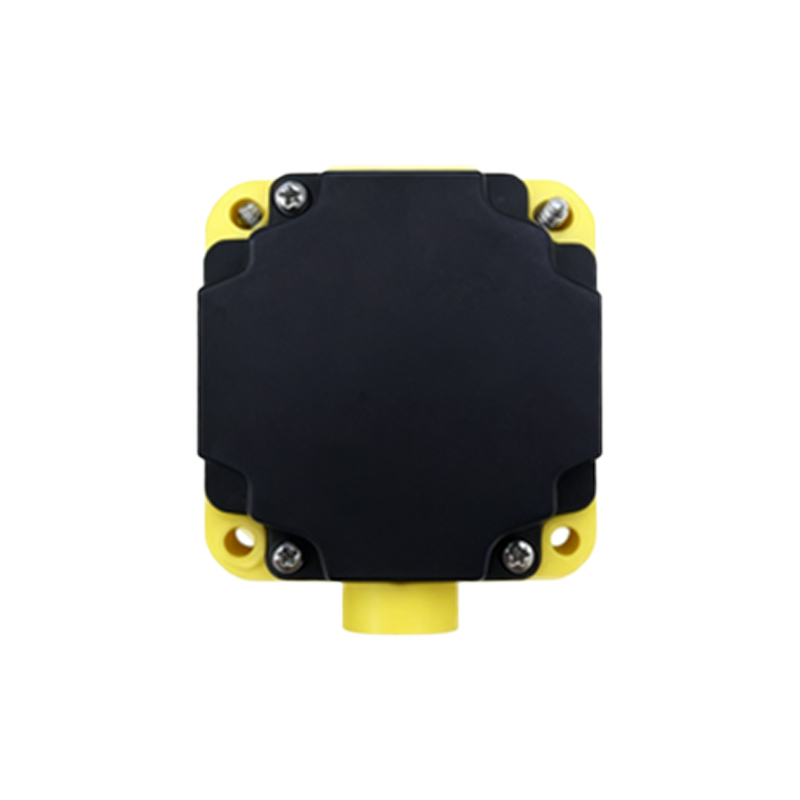
As Industry 4.0 advances, proximity sensors are increasingly integrated into networked systems via protocols like PROFINET or EtherNet/IP, enabling real-time data exchange with PLCs for predictive maintenance and analytics. By mastering sensor integration and PLC programming, engineers can design robust automation solutions that enhance operational flexibility and reduce downtime. This knowledge is fundamental for professionals in automotive, packaging, and material handling industries, where seamless sensor-PLC communication drives innovation and competitiveness.