In the world of industrial automation and smart systems, the ability to detect the presence or absence of an object without physical contact is fundamental. Among the various technologies enabling this capability, the metal proximity sensor stands out for its reliability and specificity. This article delves into the workings, types, and practical uses of these essential electronic components.
At its core, a metal proximity sensor is a non-contact electronic device designed to detect the presence of metallic objects within its sensing range. Unlike photoelectric or ultrasonic sensors, which can detect a wide variety of materials, these sensors are specifically tuned for metals. The most common operating principle is based on electromagnetic induction. The sensor contains an oscillator circuit that generates a high-frequency electromagnetic field at its active face. When a metallic object enters this field, eddy currents are induced on the surface of the metal. These currents draw energy from the oscillator, causing a change in its amplitude or frequency. The sensor's detection circuit monitors this change and triggers a solid-state output switch, signaling the object's presence.
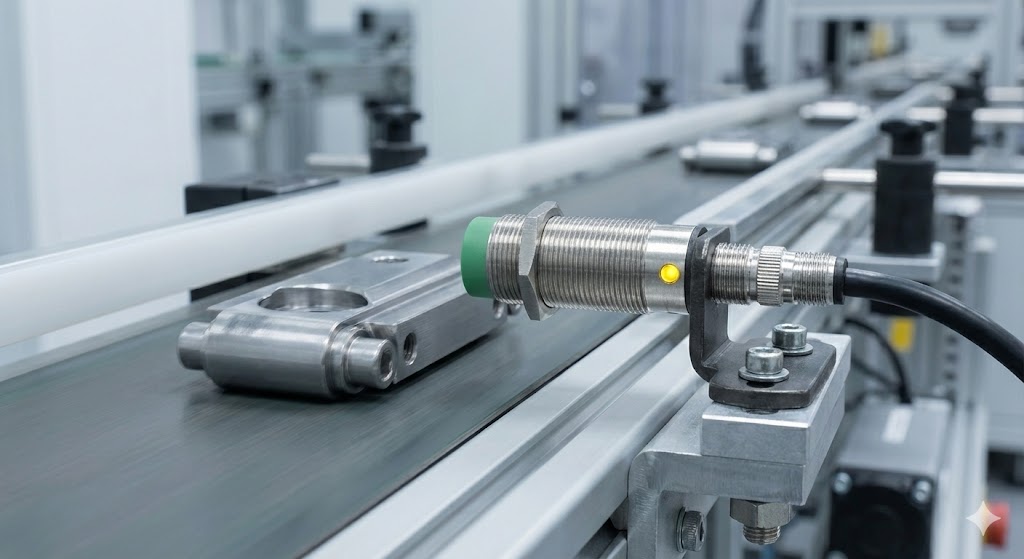
There are several key types of metal proximity sensors, primarily distinguished by their sensing technology. Inductive proximity sensors are the most prevalent. They are excellent for detecting all types of metals, including ferrous metals like iron and steel, as well as non-ferrous metals like aluminum, copper, and brass, though with varying sensing distances. Typically, the sensing distance for ferrous metals is greater. Another type is the capacitive proximity sensor. While they can detect both metallic and non-metallic materials, they are often used for metals when other environmental factors like dust or target composition are considerations. For specialized applications requiring extreme precision in detecting specific metals or their properties, sensors like All-Metal detectors and Ferrous-only detectors are available. The latter uses a coil and magnet system and only reacts to magnetic materials.
The advantages of using metal proximity sensors are numerous. Their non-contact nature means no mechanical wear, leading to a long operational life and minimal maintenance. They are highly reliable and can operate at high switching speeds, making them ideal for fast-paced production lines and counting applications. They are also robust, often housed in rugged metallic or polymer casings with high Ingress Protection (IP) ratings, allowing them to function in harsh industrial environments with exposure to coolants, oils, dust, and vibrations. Furthermore, they are immune to many environmental factors that plague optical sensors, such as ambient light, color, or transparency of the target object.
The applications for metal proximity sensors are vast and span across numerous industries. In manufacturing and assembly lines, they are used for part detection, verifying the presence of a metal component before a machining operation, or counting metallic products on a conveyor. In the automotive industry, they monitor the position of pistons, gears, and other critical metal parts. They play a crucial role in machine safety, acting as interlock switches on guards and doors to ensure machinery only operates when access panels are securely closed. Beyond heavy industry, they are found in everyday devices; for instance, detecting whether a smartphone's flip cover (with a small metal tag) is open or closed, or in vending machines to sense coins.
Selecting the right metal proximity sensor requires careful consideration of several parameters. The first is the sensing distance, which is rated for a standard target (usually mild steel). It's crucial to note that the effective sensing distance can be less for non-ferrous metals. The second is the sensor's housing shape and size—tubular (cylindrical) sensors are common, but rectangular and ring-shaped formats exist for specific mounting needs. The output type is also critical: NPN (sinking) or PNP (sourcing) transistor outputs are standard for connecting to Programmable Logic Controllers (PLCs). Environmental factors like temperature range and required IP rating for dust and water resistance must match the operating conditions. Finally, considering the target metal itself is essential; if the application involves only steel, a standard inductive sensor is perfect, but for mixed or non-ferrous metals, checking the manufacturer's reduction factor charts is necessary to ensure reliable detection.
In conclusion, the metal proximity sensor is a cornerstone of modern automation. Its precise, rugged, and contactless method of detecting metallic objects enables smarter, faster, and more reliable systems across countless sectors. From controlling complex robotic arms to ensuring the simple lid of a laptop is closed, these sensors work silently and efficiently, forming an invisible yet critical layer of interaction between the digital control world and the physical metal objects it seeks to manage.