In the realm of industrial automation, proximity sensors are indispensable components, providing non-contact detection of objects to enhance efficiency, safety, and reliability. Among the diverse types available, concave proximity sensors stand out as specialized devices engineered to address unique challenges in complex detection scenarios. Unlike standard cylindrical or rectangular sensors, concave sensors feature a distinctive recessed or grooved sensing face. This design is not merely aesthetic; it is a calculated response to specific application demands where traditional sensors may fall short.
The fundamental operating principle of concave proximity sensors aligns with standard inductive or capacitive technologies. Inductive sensors generate an electromagnetic field to detect metallic targets, while capacitive sensors can detect both metallic and non-metallic materials by sensing changes in capacitance. The critical differentiator lies in the concave shape of the sensing surface. This recessed area allows the sensor to partially envelop or align precisely with the target object. In practice, this design offers superior performance in applications involving detection of small metallic parts, such as bolts, nuts, screws, or the heads of fasteners on a conveyor line. The concave face can be machined to match the contour of the target, focusing the electromagnetic field and significantly improving sensing accuracy and repeatability. It minimizes the effects of lateral displacement or slight misalignment, which are common pain points in high-speed assembly or machining processes.
One of the primary advantages of concave proximity sensors is their exceptional immunity to surrounding metal interference. In densely packed machinery or metal enclosures, standard sensors might experience false triggering due to adjacent metal structures. The recessed sensing face of a concave sensor helps to shield the active sensing area, directing sensitivity forward and reducing the influence of background metal. This characteristic is invaluable in robotic welding cells, metal stamping presses, or within the tool changers of CNC machines, where precision is paramount.
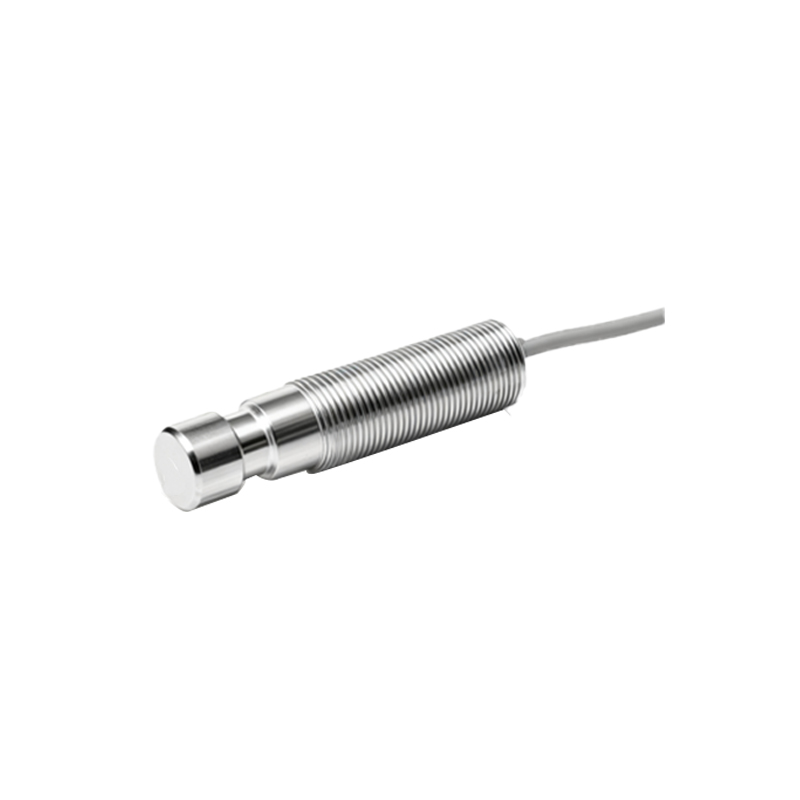
Furthermore, these sensors excel in environments with limited mounting space. Their design often allows for flush or near-flush installation in situations where a protruding sensor would be mechanically vulnerable or obstructive. For instance, in automated guided vehicles (AGVs) used for material handling, concave sensors can be integrated into the vehicle's frame to detect docking positions or pallet presence without increasing the unit's footprint. The robust housing, typically made from nickel-plated brass or stainless steel, ensures durability against mechanical impacts, vibrations, and harsh industrial contaminants like oil, coolant, and metal chips. Many models comply with IP67 or IP69K ingress protection ratings, guaranteeing reliable operation in washdown environments common in food and beverage or pharmaceutical manufacturing.
When selecting a concave proximity sensor, engineers must consider several technical parameters. Sensing range, while generally shorter than some standard models due to the focused field, must be precisely matched to the application. The material and size of the target object are critical; the sensor's concave dimensions should correspond closely to the target's profile for optimal performance. Output configuration (PNP/NPN, NO/NC) must align with the control system's PLC requirements. Additionally, factors like operating voltage (commonly 10-30V DC), switching frequency, and temperature range must be evaluated to ensure compatibility with the operational environment.
Installation and alignment are crucial for maximizing sensor performance. Proper mounting ensures the target enters the recessed zone consistently. While the design forgives minor misalignments, best practice involves securing the sensor in a fixed bracket or housing to maintain its positional integrity over time. Regular maintenance, though minimal, should include periodic cleaning of the sensing face to remove any accumulated debris that could attenuate the sensing field.
In conclusion, concave proximity sensors represent a sophisticated evolution in sensing technology, tailored for precision tasks where standard sensors are inadequate. Their unique geometry solves specific problems related to small part detection, interference rejection, and space-constrained mounting. As industries continue to push the boundaries of automation towards greater precision and miniaturization, the role of specialized components like the concave proximity sensor will only become more prominent, ensuring seamless and reliable operation in the most demanding industrial landscapes.