In modern industrial automation systems, the integration of proximity sensors for motor control represents a critical advancement in operational efficiency, safety, and reliability. Proximity sensors, being non-contact detection devices, are extensively employed to initiate motor start-up sequences, replacing traditional mechanical switches and manual interventions. This article delves into the technical principles, implementation strategies, and best practices for utilizing proximity sensors in motor control applications.
Proximity sensors operate by emitting an electromagnetic field or a beam of electromagnetic radiation, such as infrared light, and detecting changes in the field or return signal. Common types include inductive, capacitive, and photoelectric sensors. Inductive sensors are predominantly used for detecting metallic objects, making them ideal for motor control in metal-rich industrial environments. When a target, typically a metal flag or part of a rotating shaft, enters the sensor's detection range, it causes a disturbance in the electromagnetic field. This disturbance is converted into an electrical signal by the sensor's internal circuitry.
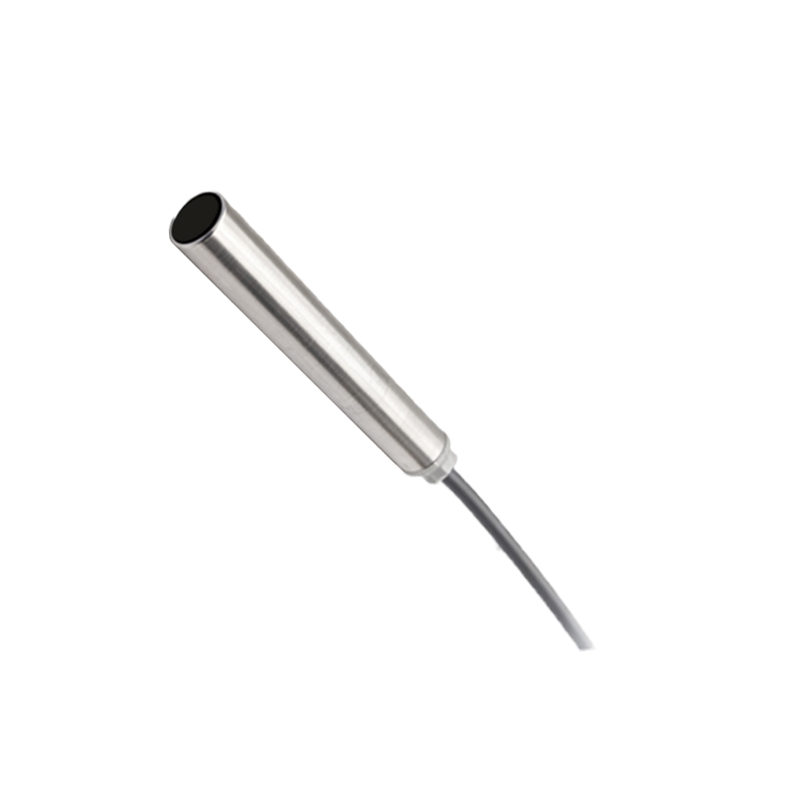
The output signal from the proximity sensor is then transmitted to a control unit, such as a Programmable Logic Controller (PLC) or a motor starter. In a typical setup, the sensor's signal serves as an input to the PLC. The PLC, programmed with specific logic, processes this input to determine when to energize the motor starter. For instance, in a conveyor belt system, an inductive proximity sensor can be positioned to detect the presence of a product. Upon detection, the sensor sends a signal to the PLC, which subsequently activates the motor driving the conveyor, ensuring seamless and automated material handling.

Key advantages of using proximity sensors for motor start-up include enhanced safety and reduced mechanical wear. Since these sensors do not require physical contact with the target, the risk of mechanical failure due to switch degradation or contact arcing is minimized. This non-contact nature also allows for high-speed operation, as there are no moving parts to slow down the detection process. Moreover, proximity sensors offer high precision and repeatability, crucial for applications requiring exact positioning, such as in robotic assembly lines or precision machining centers.
Implementation requires careful consideration of several factors. Sensor selection must align with the application's environmental conditions, including temperature ranges, presence of contaminants, and the material of the target object. For example, capacitive sensors are suitable for non-metallic materials, while photoelectric sensors are effective over longer distances. Mounting and alignment are also critical; improper installation can lead to false triggers or missed detections, potentially causing operational disruptions or safety hazards. Shielding and grounding practices must be adhered to rigorously to mitigate electromagnetic interference, which can affect sensor performance.
Integration with motor control circuits involves ensuring compatibility between the sensor output type (e.g., NPN, PNP, or analog) and the control unit's input specifications. Many modern proximity sensors feature programmable outputs and diagnostic capabilities, facilitating easier setup and maintenance. Additionally, incorporating fail-safe mechanisms, such as redundant sensors or monitoring circuits, can further enhance system reliability, preventing unintended motor starts or stops.
In practice, a common application is in automated packaging machinery, where a photoelectric proximity sensor detects the arrival of an item on a feed track. The sensor signal triggers the motor that advances the packaging film, synchronizing the process accurately. Another example is in HVAC systems, where capacitive proximity sensors detect fluid levels in pumps, initiating motor start-up to maintain optimal flow rates without manual oversight.
Regular maintenance and calibration are essential to sustain performance. This includes cleaning sensor lenses or faces to prevent obstruction by dust or oil, checking wiring integrity, and verifying detection ranges. Advanced sensors with IO-Link or other industrial communication protocols enable predictive maintenance by providing real-time data on operational status, thereby reducing downtime.
In conclusion, the use of proximity sensors for controlling motor start-up is a cornerstone of industrial automation, offering a blend of precision, durability, and automation. By understanding the sensor types, proper integration techniques, and maintenance protocols, engineers can design robust systems that improve productivity while upholding safety standards. As technology evolves, the convergence of proximity sensing with IoT and smart factory initiatives promises even greater efficiencies in motor control applications.