Capacitive proximity sensors are versatile non-contact detection devices widely used across various industrial sectors. Unlike inductive sensors that only detect metals, capacitive sensors can detect a broad range of materials, including liquids, powders, plastics, glass, and wood, by measuring changes in capacitance. This guide provides a comprehensive overview of key selection criteria to ensure optimal performance and reliability in your application.
The operating principle of a capacitive proximity sensor involves generating an electrostatic field. When a target object enters this field, it alters the dielectric constant, leading to a measurable change in capacitance. The sensor's internal circuitry detects this change and triggers an output signal. Key performance specifications include sensing distance, which is typically rated for a standard target (often metal) and may vary with different materials. It is crucial to consider the reduction factor for non-metallic targets, as materials like plastics or liquids may require the target to be closer to achieve reliable detection.

When selecting a capacitive sensor, the first consideration is the sensing range. Standard sensing distances range from a few millimeters to about 40 millimeters. For applications requiring longer ranges, specialized models are available. Always account for the installation conditions, as flush-mounted sensors have a reduced sensing range compared to non-flush versions but are less susceptible to side interference. The target material significantly influences the effective sensing distance. For instance, detecting water or high-dielectric materials is easier than detecting low-dielectric substances like dry wood. Engineers should consult the sensor's datasheet for material-specific correction factors.
Output configuration is another critical factor. Common outputs include DC NPN/PNP (sourcing or sinking), analog (4-20 mA or 0-10 V), and IO-Link for smart sensor capabilities. The choice depends on the control system interface. For standard on/off detection, a discrete DC output suffices. For level sensing applications where continuous measurement is needed, such as monitoring fluid or granular material levels in a tank, an analog output provides a proportional signal. IO-Link sensors offer advanced diagnostics, parameterization, and process data integration into Industry 4.0 environments.
Environmental robustness is paramount in industrial settings. The sensor's housing material and ingress protection (IP) rating determine its suitability for harsh conditions. Stainless steel housings are preferred for corrosive or washdown environments (e.g., food and beverage, pharmaceutical). IP67 and IP69K ratings ensure protection against dust and high-pressure water jets. Operating temperature range, typically from -25°C to +70°C, must align with the application environment. For applications involving aggressive chemicals, verify the housing and sensing face material compatibility.
Electrical characteristics must match the supply voltage of the system. Common supply voltages are 10-30 V DC or 20-250 V AC. Ensure the load current does not exceed the sensor's maximum switching capacity. Response time, the delay between target detection and output switching, is vital for high-speed applications. Standard sensors offer response times in the millisecond range, while high-speed models can operate in the microsecond domain.
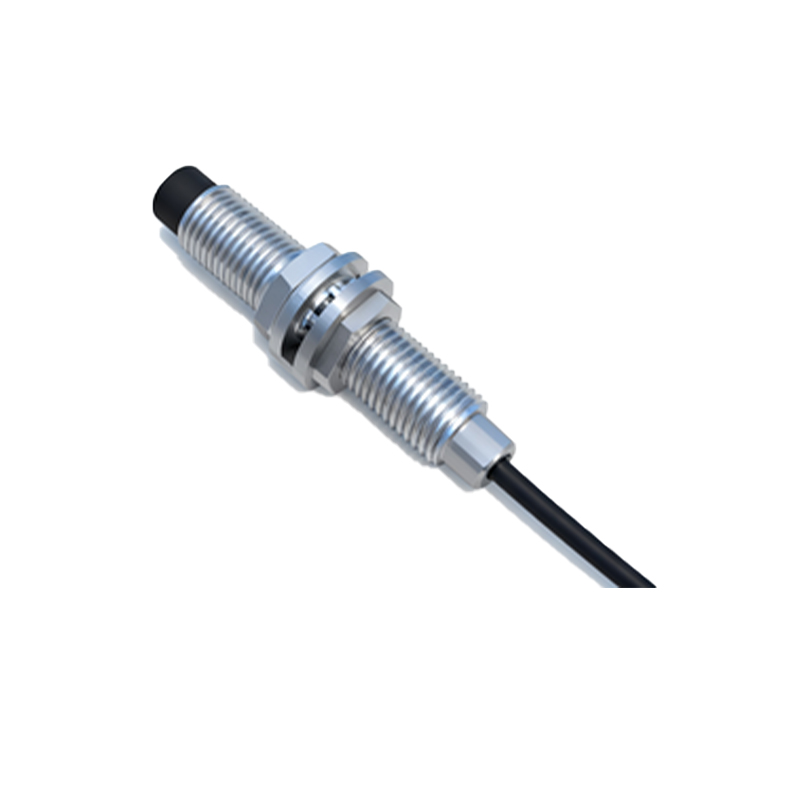
Mounting and physical dimensions are often overlooked but essential for integration. Consider the sensor's housing style (e.g., cylindrical threaded barrel, rectangular block) and size to fit the available space. Adjustable sensitivity via a potentiometer or teach-in function is highly beneficial for fine-tuning detection thresholds, especially when dealing with varying target materials or avoiding false triggers from background objects.
Applications for capacitive sensors are diverse. Typical uses include liquid level detection in transparent or opaque containers, material presence detection on conveyor belts, and monitoring fill levels of powders or granules. They are also effective for detecting non-metallic objects through thin non-metallic walls, enabling sealed system designs.
In summary, successful capacitive sensor selection requires a systematic evaluation of the target material, required sensing distance, output type, environmental conditions, and electrical compatibility. Always request detailed technical data from the manufacturer and consider performing tests with actual target materials under real operating conditions to validate sensor performance before finalizing the design.