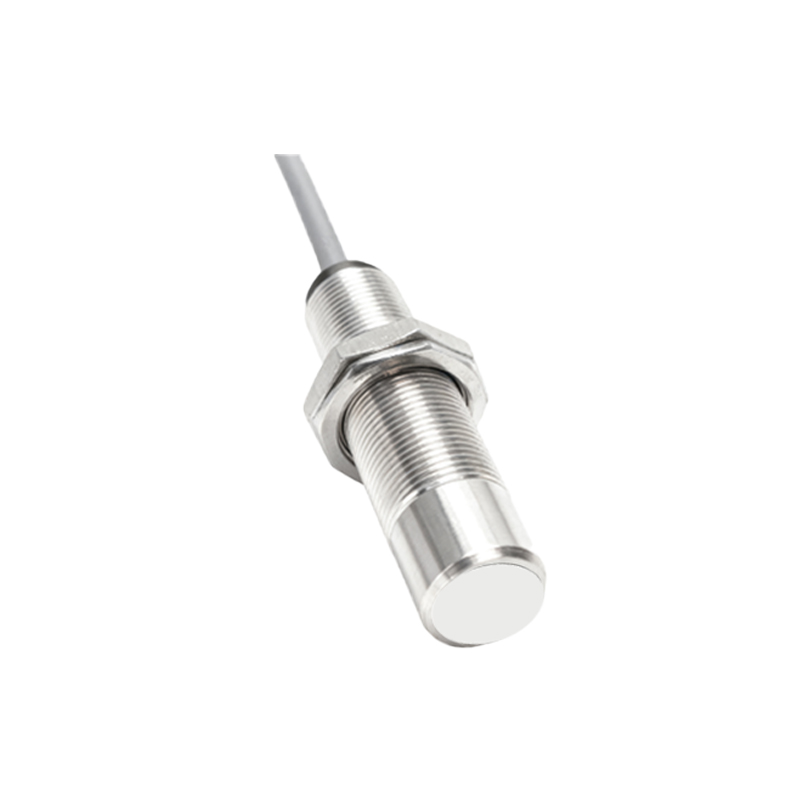
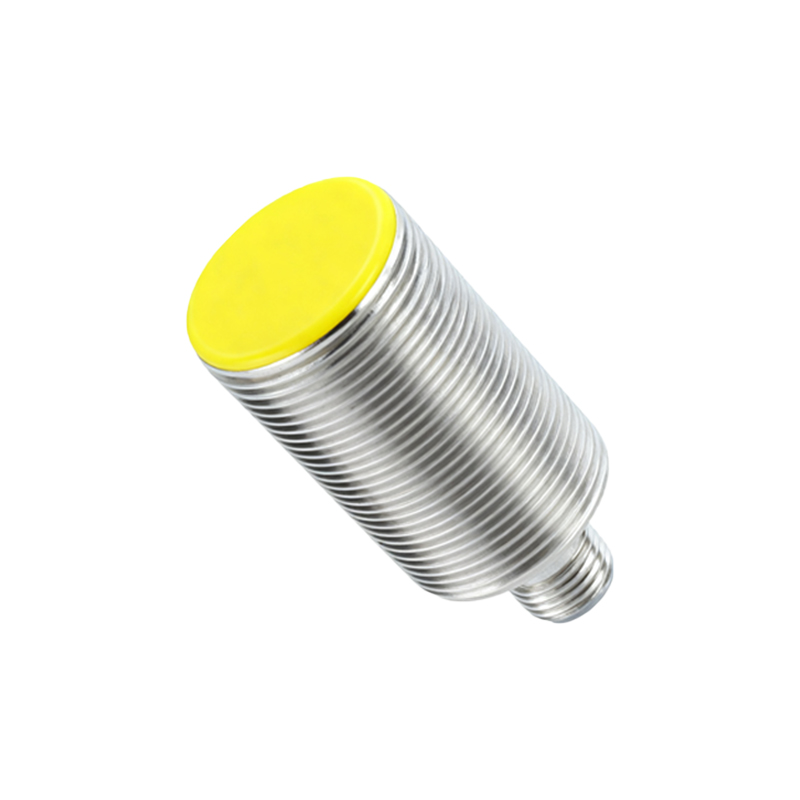
Proximity sensors have become indispensable components in modern industrial automation, particularly for non-contact speed measurement of rotating machinery. These sensors operate by detecting the presence or absence of a metallic target without physical contact, making them ideal for harsh environments where durability and reliability are paramount. The fundamental principle involves generating an electromagnetic field; when a metallic object enters this field, it induces eddy currents, causing a change in the sensor's oscillation amplitude. This change is converted into a digital signal, which can be used to calculate rotational speed.
In speed measurement applications, proximity sensors are typically mounted near a gear, sprocket, or a dedicated pulse wheel attached to a rotating shaft. Each passing tooth or notch triggers a pulse. By counting the number of pulses over a specific time interval, the rotational speed can be precisely determined using the formula: Speed (RPM) = (Pulse count per minute) / (Number of teeth or notches). For instance, a 60-tooth gear generating 3000 pulses per minute indicates a shaft speed of 50 RPM. Advanced systems employ high-frequency sensors capable of detecting rapid changes, suitable for high-speed machinery exceeding 10,000 RPM.
The selection of an appropriate proximity sensor depends on several factors. Inductive sensors are common for ferrous metals, while capacitive variants can handle non-metallic materials. Key specifications include sensing distance, response frequency, and environmental ratings. For example, a sensor with a 100 kHz response frequency can accurately measure speeds involving micro-second pulse intervals. Installation considerations, such as mounting alignment and clearance from the target, significantly impact measurement accuracy. Vibration and temperature fluctuations in industrial settings may also affect performance, necessitating sensors with robust housings and wide operating temperature ranges.
Integration with control systems is streamlined through programmable logic controllers (PLCs) or dedicated tachometers. The pulsed output is often wired to a high-speed counter input on a PLC, where ladder logic or structured text programming processes the data for real-time monitoring, logging, or triggering automated responses. This enables predictive maintenance, as abnormal speed variations can indicate issues like bearing wear or misalignment before catastrophic failure.
Despite their robustness, challenges exist. Electrical noise from motors or variable frequency drives can interfere with signal integrity, requiring shielded cables and proper grounding. Additionally, target material composition and size must be consistent to avoid signal strength variations. Regular calibration and maintenance are recommended to ensure long-term accuracy.
In summary, proximity sensors offer a reliable, non-intrusive method for rotational speed measurement in industries ranging from automotive manufacturing to wind turbine monitoring. Their adaptability and precision support enhanced operational efficiency and safety, underscoring their critical role in industrial automation. Future advancements may focus on miniaturization, enhanced noise immunity, and integration with Industrial Internet of Things (IIoT) platforms for smarter analytics.