Flat proximity sensors, a specialized category within the vast field of industrial sensing technology, have become indispensable components in modern automation systems. Characterized by their low-profile, rectangular housing, these sensors offer unique advantages in space-constrained applications where traditional cylindrical sensors cannot be installed. This article delves into the operational principles, key technologies, diverse applications, and critical selection criteria for these versatile devices.
At their core, most flat proximity sensors operate on the inductive principle. They generate a high-frequency electromagnetic field from an oscillator circuit within the sensor head. When a metallic target enters this active field, eddy currents are induced on the target's surface. This causes a change in the oscillation amplitude or frequency within the sensor, which is detected by a threshold circuit. The circuit then triggers a solid-state switch, changing the output state. This non-contact detection method ensures high reliability and long operational life, as there is no mechanical wear. Some advanced models utilize capacitive sensing for detecting non-metallic materials like plastics, wood, or liquids, though inductive types remain dominant for metal detection in industrial settings.
The defining feature of these sensors is their form factor. The flat, often rectangular, package allows for mounting in extremely tight spaces—behind thin metal panels, within machine frames, or on narrow conveyor guides. This design often incorporates multiple mounting options, such as through-holes or slots, providing flexibility for integration. The sensing face is typically on the broad side of the housing, offering a wider detection area compared to the narrow beam of a cylindrical sensor. This can be beneficial for detecting larger or misaligned targets. However, it's crucial to understand that the effective sensing distance, or nominal range (Sn), is generally specified for a standard mild steel target. This range is typically shorter than that of an equivalent cylindrical sensor due to the different field geometry. Factors like target material, size, shape, and installation conditions (flush or non-flush) significantly influence the actual usable sensing distance.
Modern flat proximity sensors incorporate several advanced features to meet complex application demands. Many offer embedded diagnostics, such as LED indicators for output status and stability, which aid in commissioning and troubleshooting. Short-circuit and overload protection are standard, safeguarding the sensor and the controller from wiring errors or fault conditions. Some models feature teach-in functionality or potentiometers for adjustable sensing ranges, allowing fine-tuning on-site. For demanding environments, sensors are available with high IP (Ingress Protection) ratings like IP67 or IP69K, providing resistance to dust, water jets, and high-pressure washdowns. They are also built to withstand mechanical shock, vibration, and exposure to oils or coolants commonly found in manufacturing plants.
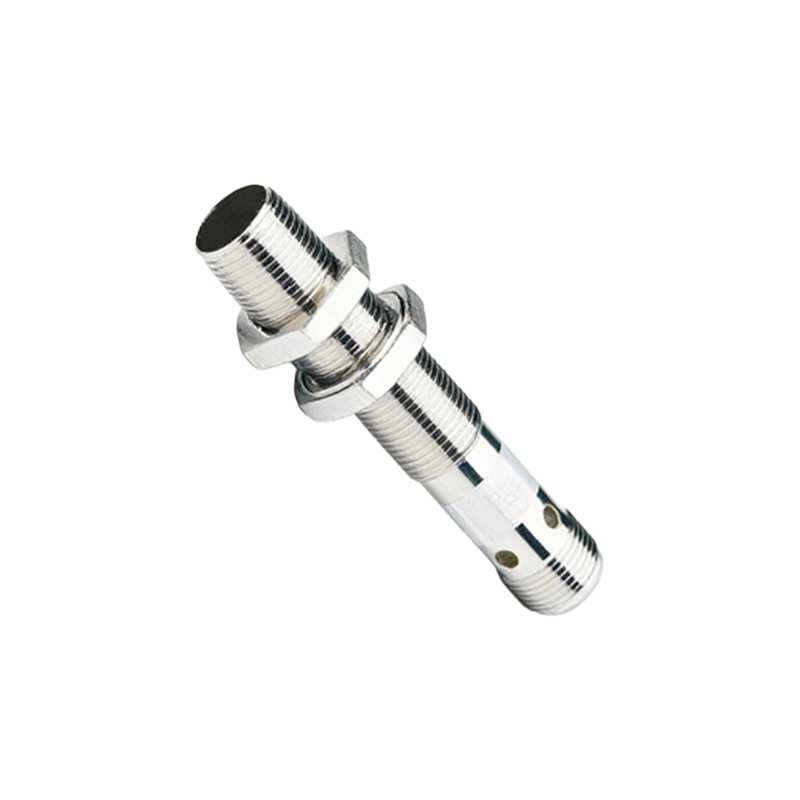
The applications for flat proximity sensors are extensive across various industries. In automotive assembly lines, they are used for precise end-of-stroke detection of cylinders, pallet positioning, and verifying the presence of components in welding and painting robots. In packaging machinery, they detect the presence of metallic foils, caps, or tools. They are ideal for monitoring slide positions, verifying door or guard closures for safety interlocking, and counting metallic parts on high-speed conveyors. Their slim profile makes them perfect for integration into linear actuators, grippers, and other compact automation modules.
Selecting the right flat proximity sensor requires careful consideration of several parameters. First, define the target material (steel, aluminum, brass, etc.), as different materials have different correction factors that reduce the effective sensing range. Second, determine the required sensing distance and ensure the selected sensor's nominal range provides a safe margin, typically using 60-80% of Sn to account for temperature drift and supply voltage variations. The housing material, often stainless steel or PBT plastic, must be compatible with the environmental conditions (chemical exposure, temperature extremes). Electrical characteristics are paramount: choose between PNP (sourcing) or NPN (sinking) output types to match your PLC input card. The operating voltage range (commonly 10-30V DC) and output current capacity must be verified. Finally, consider the connection method—pre-wired cables or quick-disconnect connectors—based on maintenance needs.
In conclusion, flat proximity sensors provide a robust and space-efficient solution for object detection in automated systems. Their reliability, durability, and adaptability make them a fundamental building block in the Industry 4.0 landscape. By understanding their operating principles, key features, and application-specific requirements, engineers and technicians can effectively deploy these sensors to enhance machine performance, ensure safety, and optimize production processes. As automation continues to evolve towards greater precision and miniaturization, the role of the flat proximity sensor will only grow in importance.