In the rapidly evolving landscape of industrial automation and electronic design, miniature proximity sensors have become indispensable components. These compact devices detect the presence or absence of objects without physical contact, enabling precise control and monitoring in space-constrained applications. This guide provides a thorough overview of the common names, types, and key characteristics of these sensors, tailored for engineers and procurement specialists in the electrical and automation industries.
Miniature proximity sensors are often categorized based on their sensing technology. The most prevalent types include Inductive Proximity Sensors, Capacitive Proximity Sensors, and Photoelectric Sensors. Each type has distinct naming conventions and operational principles.
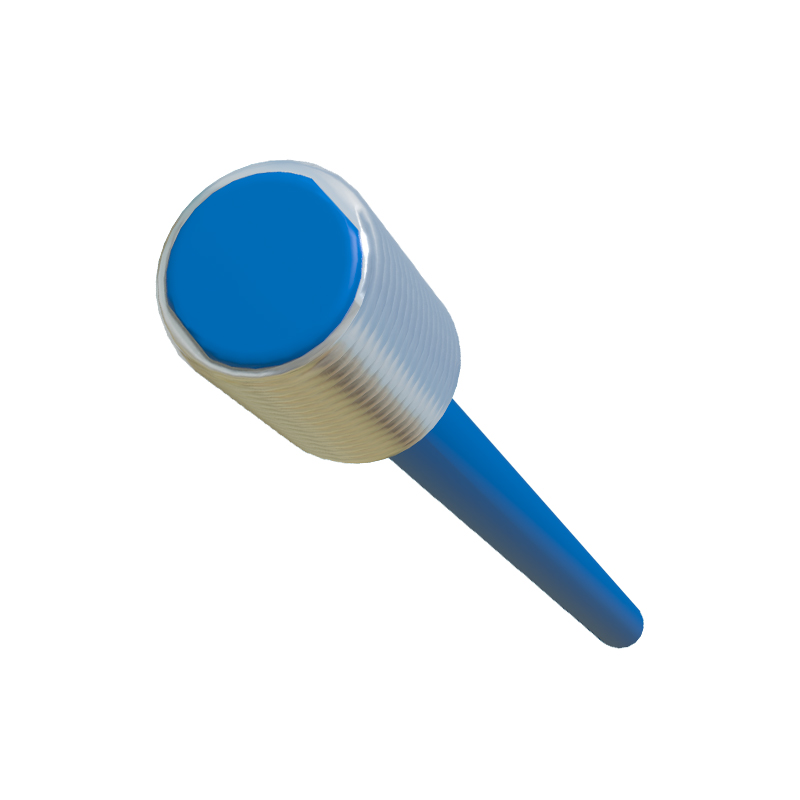
Inductive Proximity Sensors are primarily used for detecting metallic objects. Common industry names for these include "Inductive Proximity Switches," "Eddy Current Sensors," or simply "Metal Detection Probes." Miniature versions are frequently labeled with prefixes like "Mini," "Micro," or "Subminiature," followed by specifications such as sensing range (e.g., 2mm, 5mm) and output type (e.g., NPN, PNP). For instance, a product might be named "Micro Inductive Sensor, 3mm, NPN NO." They operate by generating an electromagnetic field; when a metal object enters this field, it causes a change in oscillation, triggering the sensor output. These sensors are renowned for their robustness, high switching frequency, and resistance to environmental factors like dust or oil, making them ideal for machinery and automotive assembly lines.

Capacitive Proximity Sensors can detect both metallic and non-metallic materials, such as liquids, plastics, or wood. They are often referred to as "Capacitive Sensors," "Capacitive Proximity Switches," or "Level Detection Sensors." In miniature form, they might be called "Mini Capacitive Probes" or "Compact Capacitive Sensors." Their names typically incorporate details about the sensing material and dielectric constant sensitivity. These sensors work by measuring changes in capacitance between the sensor and the target object. When an object approaches, it alters the dielectric constant, leading to a detectable change. This versatility makes them suitable for applications like liquid level control, material handling, and packaging systems where diverse materials are present.
Photoelectric Proximity Sensors use light beams to detect objects. They are widely known as "Photoelectric Sensors," "Optical Sensors," or "Photo Eyes." Miniature variants are often termed "Mini Photoelectric Sensors," "Fiber Optic Sensors," or "Micro Optical Switches." Names frequently specify the sensing mode: "Through-beam," "Retro-reflective," or "Diffuse-reflective." For example, a "Mini Diffuse Reflective Sensor" detects objects by bouncing light off their surface. These sensors excel in long-range detection and can identify small or transparent objects, commonly used in electronics manufacturing, conveyor systems, and security devices.
Beyond these primary categories, there are specialized miniature sensors. Magnetic Proximity Sensors, often called "Reed Switches" or "Hall Effect Sensors," detect magnetic fields and are used in position sensing for cylinders or valves. Ultrasonic Proximity Sensors, named "Ultrasonic Sensors" or "Sonar Probes," utilize sound waves for distance measurement, effective in challenging environments with dust or vapor.
When selecting a miniature proximity sensor, key naming elements in datasheets include size (e.g., M5, M8, M12 cylindrical housings), sensing distance, output configuration (digital or analog), housing material (stainless steel, plastic), and electrical connection (pre-wired, connector type). Industry standards from organizations like IEC and NEMA also influence naming, ensuring compatibility and safety.
In summary, understanding the names and types of miniature proximity sensors is crucial for optimal system integration. From inductive and capacitive to photoelectric variants, each offers unique advantages tailored to specific industrial needs. As technology advances, trends like miniaturization, enhanced sensitivity, and IoT connectivity continue to shape their development, driving efficiency in automation and smart manufacturing.