In the realm of industrial automation and control systems, proximity switch sensors operating on Alternating Current (AC) power supplies are fundamental components. These non-contact sensors detect the presence or absence of metallic objects without any physical contact, ensuring reliability and longevity in demanding environments. This article delves into the working principles, key characteristics, common applications, and critical selection criteria for AC-powered proximity sensors.
At its core, an AC proximity switch sensor generates an alternating electromagnetic field from its sensing face. This is achieved through an oscillator circuit powered by the AC supply, typically at voltages like 120VAC or 240VAC. When a metallic target enters this oscillating field, eddy currents are induced on the target's surface. These eddy currents cause a change in the oscillation amplitude or frequency within the sensor. This change is detected by a threshold circuit, which subsequently triggers a switching action in the output stage. The output, often a solid-state switch like a TRIAC, changes state to signal the object's detection. Unlike their DC counterparts, AC sensors do not require a separate polarity connection, simplifying wiring. However, they generally have a lower switching frequency and may produce more heat due to the nature of AC operation.
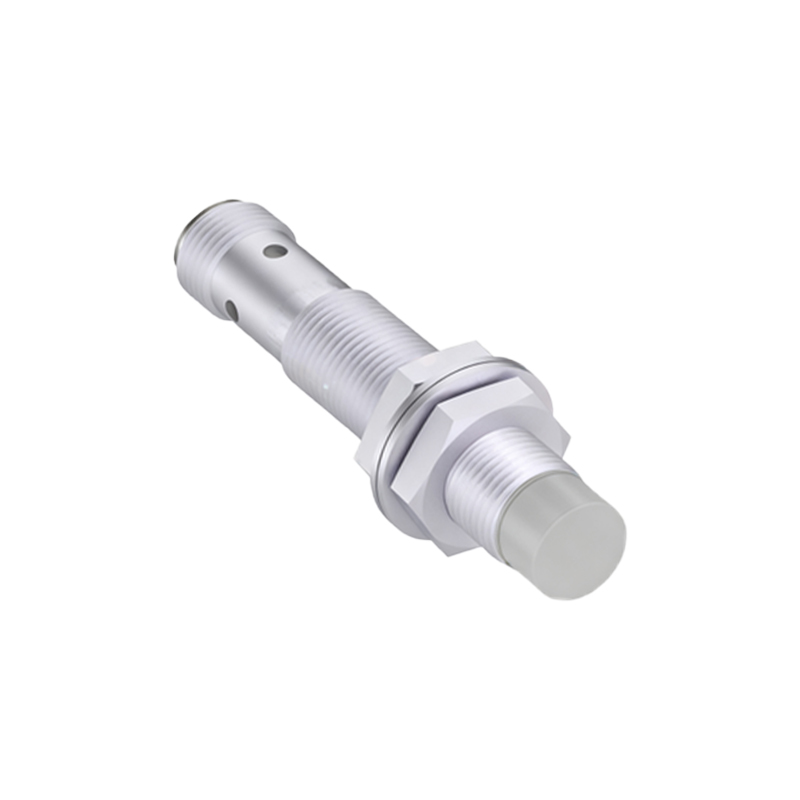
The performance of an AC proximity sensor is defined by several key parameters. The sensing range, or nominal range (Sn), is specified for a standard target (usually mild steel). Factors like target material, size, and shape can affect the actual sensing distance. For instance, stainless steel may reduce the range, while copper or aluminum reduces it further. The housing material is another critical consideration. Common options include nickel-plated brass, stainless steel, and various plastics like PBT or PPS, chosen based on the required mechanical strength and environmental resistance. Key electrical specifications include the operating voltage range (e.g., 90-250VAC), current consumption, and the rated operating current of the output switch. The output configuration is typically Normally Open (NO) or Normally Closed (NC). A vital protection feature is built-in short-circuit and overload protection, which is common in AC models to enhance durability. Furthermore, many industrial AC proximity sensors are designed to meet specific ingress protection (IP) ratings, such as IP67, making them resistant to dust and temporary immersion, suitable for harsh factory floors.
AC proximity sensors find extensive use across numerous industries. In material handling and packaging, they are employed for object counting, jam detection, and verifying the presence of items on conveyors. Machine tooling applications include monitoring tool position, detecting end-of-travel for moving parts, and confirming the presence of workpieces in fixtures. Within automotive assembly lines, these sensors control robotic sequences, verify component placement, and monitor door or panel positions. They are also integral to elevator systems for floor leveling and door safety. Their robustness makes them ideal for environments with significant vibration, coolant, or metal chips.
Selecting the right AC proximity sensor requires a careful analysis of the application. First, identify the power supply voltage and frequency (e.g., 120VAC 60Hz or 230VAC 50Hz). Next, determine the required sensing distance, adding a safety factor of approximately 20-30% to the nominal range to account for installation tolerances and target variations. The target material and size must be compatible; for non-standard materials, derating the sensor's specified range is necessary. The housing style—threaded barrel (e.g., M8, M12, M18, M30), rectangular, or limit-switch style—depends on the mounting constraints. The required IP rating should match the environmental conditions, considering exposure to washdowns, oils, or chemicals. For high-speed applications, verify the sensor's maximum switching frequency. Finally, consider the output type (2-wire AC, often with leakage current considerations) and whether a pre-wired connector or cable exit is needed.
In conclusion, AC-powered proximity switch sensors are versatile, rugged devices essential for modern industrial automation. Their non-contact operation ensures minimal wear and high reliability. Understanding their operating principle, key specifications, and application requirements is crucial for optimal system design and maintenance. By carefully matching the sensor's characteristics to the specific task—considering factors from power supply and sensing range to environmental sealing—engineers and technicians can ensure robust, fail-safe operation that enhances productivity and safety on the factory floor.