In the demanding environments of modern industry, from offshore oil platforms to chemical processing plants, the relentless battle against corrosion is a constant and costly challenge. Traditional methods of corrosion monitoring, such as visual inspections, ultrasonic thickness gauging, or coupon analysis, often provide only periodic, localized, or delayed data. This is where corrosion laser sensors emerge as a transformative technology, offering real-time, non-contact, and highly precise measurements for proactive asset integrity management. This article delves into the operational principles, key applications, and critical selection factors for these advanced sensing devices.
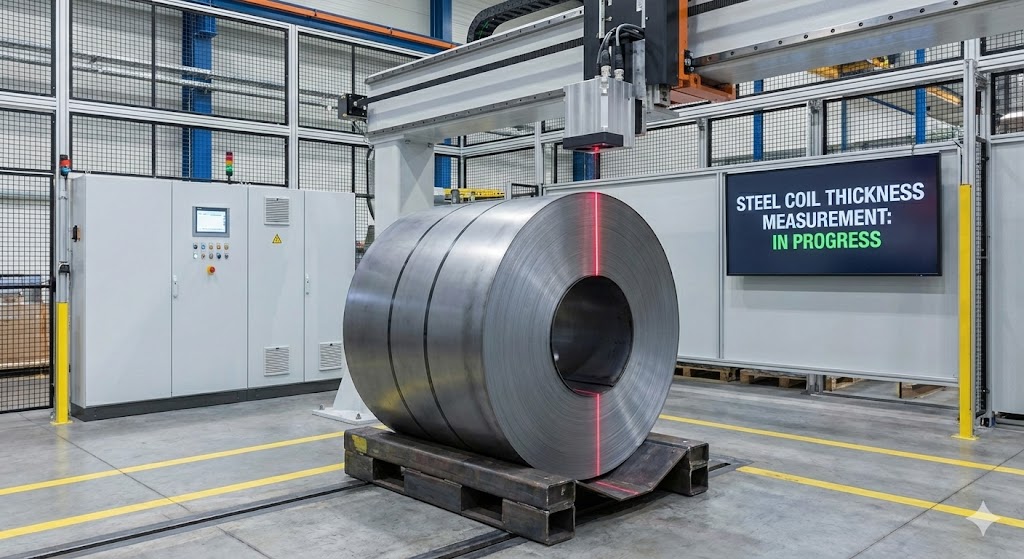
At its core, a corrosion laser sensor operates on the principle of laser triangulation or, in more advanced systems, confocal chromatic measurement. In a typical triangulation setup, a laser diode projects a focused beam onto the target surface—be it a pipe wall, tank interior, or structural beam. The diffuse reflection from this point is captured by a high-resolution CMOS or CCD sensor positioned at a known angle. As corrosion (pitting, general material loss, or surface roughening) alters the surface profile, the position of the reflected laser spot shifts on the receiver. This displacement is calculated with micron-level accuracy to determine the exact distance to the surface. By scanning or taking multiple point measurements, the sensor can map surface topography and quantify material loss over time. More sophisticated confocal sensors use polychromatic light and spectral analysis to achieve even higher precision, immune to surface reflectivity variations common in corroded areas.
The advantages of this technology over conventional methods are substantial. Firstly, it is entirely non-contact, eliminating the need for direct coupling or surface preparation, which is crucial for hot, coated, or hazardous surfaces. Secondly, it provides real-time data, enabling continuous monitoring and early warning of corrosion rates that exceed acceptable thresholds. This facilitates a shift from schedule-based maintenance to predictive condition-based strategies. Furthermore, the high spatial resolution allows for the detection of localized pitting corrosion, which can be more detrimental than uniform thinning and is often missed by broad-area ultrasonic scans.
Industrial applications for corrosion laser sensors are vast and growing. In the oil and gas sector, they are deployed for subsea pipeline monitoring, topside structural scanning on platforms, and internal corrosion mapping in vessels and separators. In chemical and petrochemical plants, they monitor reactor vessels, heat exchanger tubes, and critical piping networks exposed to aggressive media. Power generation facilities use them to assess boiler tubes, condenser walls, and flue gas desulfurization systems. Infrastructure applications include monitoring the underside of bridges, the interior of water tanks, and reinforced concrete elements. Often integrated into robotic crawlers or drones, these sensors can access confined or dangerous spaces, automating inspections that would otherwise pose significant safety risks.

Selecting the appropriate corrosion laser sensor requires careful consideration of several technical and environmental parameters. Measurement range and stand-off distance must be suited to the application geometry. Resolution and accuracy, often in the micrometer range, must be fine enough to detect meaningful material loss. The laser class (typically Class 2 or safe for incidental viewing) and wavelength must be chosen for the target material's reflectivity; some sensors offer blue lasers for better performance on dark, oxidized surfaces. Robustness is non-negotiable; the sensor housing must have an appropriate Ingress Protection (IP) rating (e.g., IP67 or higher) and corrosion resistance (often stainless steel or specialized coatings) to survive the very environment it is measuring. Compatibility with data acquisition systems, communication protocols (4-20mA, Ethernet, Modbus), and intrinsic safety certifications (ATEX, IECEx) for hazardous areas are also critical integration factors.
Despite their power, challenges remain. Deposits, heavy scale, or moisture films on the surface can interfere with laser reflection, potentially requiring periodic cleaning or advanced signal processing algorithms. Initial system calibration and setup require expertise. However, ongoing advancements in sensor miniaturization, data analytics through AI for trend prediction, and integration with Industrial Internet of Things (IIoT) platforms are rapidly overcoming these hurdles. The data generated is increasingly used to feed digital twin models, providing a dynamic, virtual representation of asset health.
In conclusion, corrosion laser sensors represent a significant leap forward in industrial condition monitoring. By delivering precise, real-time, and quantitative data on material degradation, they empower engineers and asset managers to make informed decisions, optimize maintenance budgets, prevent catastrophic failures, and ultimately extend the service life of critical infrastructure. As the technology matures and becomes more accessible, its role as a cornerstone of predictive maintenance and asset integrity programs is set to become indispensable across heavy industries worldwide.