In the realm of industrial automation and control systems, proximity sensors stand as fundamental components, enabling machines to "sense" the presence or absence of objects without physical contact. These non-contact devices are pivotal for enhancing efficiency, safety, and reliability across countless applications. This article delves into the core principles, primary types, key applications, and essential selection criteria for proximity sensors.
At their essence, proximity sensors detect the presence of a target object within a specified sensing range. They achieve this by emitting an electromagnetic field, beam, or ultrasonic waves and then monitoring for changes in the return signal or field. The absence of mechanical contact eliminates wear and tear, ensuring a long operational life and high reliability. The target can be metallic or non-metallic, depending on the sensor technology employed.
The industrial landscape primarily utilizes four major types of proximity sensors, each with distinct operating principles and ideal use cases.
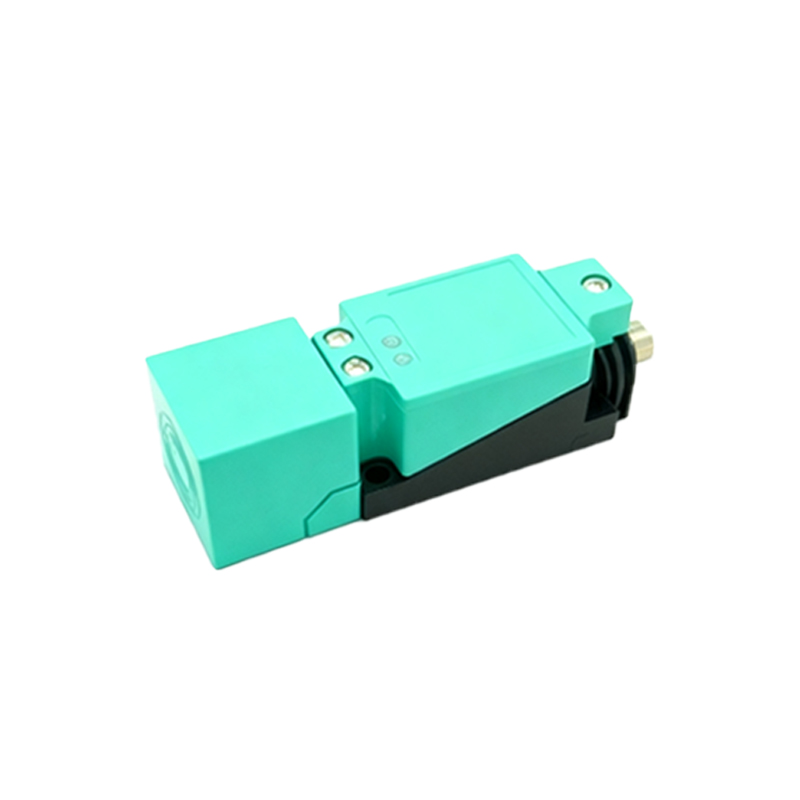
1. Inductive Proximity Sensors: These are the workhorses for detecting metallic objects. They operate on the principle of electromagnetic induction. The sensor generates an oscillating electromagnetic field from its active face. When a conductive metal target enters this field, it induces eddy currents within the target, which in turn dampens the oscillation amplitude of the sensor's internal circuit. This change triggers a switching signal. Inductive sensors are robust, resistant to environmental factors like dust and oil, and are excellent for detecting ferrous and non-ferrous metals at short ranges, typically up to 60mm.
2. Capacitive Proximity Sensors: These sensors can detect both metallic and non-metallic materials, including liquids, plastics, glass, and wood. They function by generating an electrostatic field. Any object that enters this field alters the sensor's capacitance relative to ground. Once this change reaches a predetermined threshold, the sensor activates its output. Capacitive sensors are ideal for level detection in tanks (liquids or granules), material handling, and detecting non-metallic objects. Their sensing range is generally similar to inductive types but can be influenced by the target material's dielectric constant.
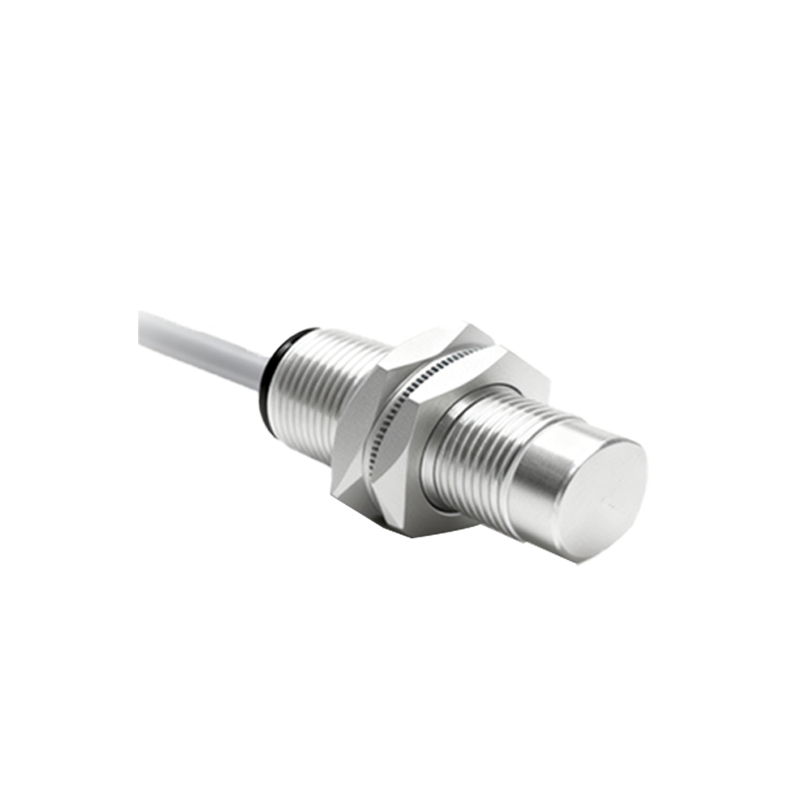
3. Ultrasonic Proximity Sensors: Utilizing sound waves beyond the human hearing range, these sensors measure the time taken for an emitted ultrasonic pulse to bounce back from a target. They are true all-rounders, capable of detecting solids, liquids, and granular materials regardless of color, transparency, or material composition. They offer the longest sensing distances among standard proximity sensors, often several meters. Common applications include distance measurement, object profiling, and level sensing in challenging environments with dust or vapor.
4. Photoelectric Sensors: While often categorized separately, photoelectric sensors are a crucial proximity sensing technology. They use a light emitter (usually LED or laser) and a receiver. The presence of an object is detected by either the interruption (through-beam) or reflection (retro-reflective, diffuse) of the light beam. They offer very long ranges and can detect tiny objects. Diffuse reflective photoelectric sensors, where the sensor detects light reflected directly from the target, function as proximity sensors for a wide variety of materials.
The applications for proximity sensors are vast and integral to modern manufacturing. They are used for precise object positioning on conveyor lines, counting products, monitoring rotational speed by detecting gear teeth, ensuring safety in automated machinery by confirming guard doors are closed, controlling robotic arm end-effectors, and managing inventory through bin level detection. In packaging, they ensure correct cap placement; in automotive assembly, they verify part presence before a weld cycle.
Selecting the appropriate proximity sensor requires careful consideration of several parameters. First, identify the target material (metal, plastic, liquid). This immediately narrows the choice to inductive, capacitive, or ultrasonic. Next, determine the required sensing distance, always factoring in a safety margin, as environmental conditions and target specifics can affect nominal ranges. The sensor's housing is critical; cylindrical (threaded) barrels are common, but rectangular housings exist for specialized mounts. The housing material (often nickel-plated brass or stainless steel) and ingress protection (IP) rating must withstand the operational environment—be it washdown conditions, metal chips, or chemical exposure.
Electrical characteristics are equally important. The output type (NPN sinking or PNP sourcing for DC models; NO/NC contacts for AC) must match the control system's input card. The operating voltage range (e.g., 10-30V DC) and output current capacity must be compatible. Finally, consider special features like short-circuit protection, reverse polarity protection, and built-in timers or logic functions for advanced control tasks.
In conclusion, proximity sensors are indispensable enablers of automated, intelligent systems. From simple presence detection to complex positioning tasks, their non-contact operation provides a reliable and maintenance-free solution. A thorough understanding of the different technologies—inductive for metals, capacitive for versatile material detection,