In the realm of precision measurement, laser distance sensor modules have emerged as indispensable tools across a vast spectrum of industries. These compact, sophisticated devices harness the fundamental properties of light to deliver non-contact, high-accuracy distance data with remarkable speed and reliability. Unlike traditional mechanical measurement methods, laser sensors eliminate physical contact, thereby preventing damage to both the sensor and the target object, a critical advantage in delicate manufacturing or inspection processes.
The core operational principle of most laser distance sensor modules is based on either time-of-flight (ToF) or triangulation. Time-of-flight sensors calculate distance by measuring the time it takes for a laser pulse to travel to a target and back. Given the constant speed of light, this elapsed time translates directly into a precise distance measurement. This method excels in longer-range applications, often spanning several meters to hundreds of meters, and is commonly found in construction, forestry, and unmanned vehicle navigation.
Conversely, laser triangulation sensors are the champions of short-range, high-precision tasks. In this setup, a laser diode projects a visible or infrared spot onto the target surface. The reflected light is focused onto a position-sensitive detector (like a CCD or CMOS array) at a known angle. As the target distance changes, the position of the reflected spot shifts on the detector. Using simple geometric trigonometry, the sensor's internal processor calculates the exact distance. This technology is paramount in applications requiring micron-level resolution, such as semiconductor wafer alignment, precision thickness gauging, and robotic pick-and-place systems.
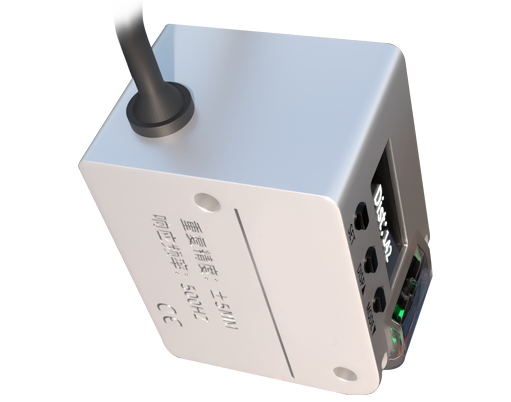
Modern laser distance sensor modules are engineering marvels of miniaturization and integration. A typical module integrates the laser emitter, the optical receiving system, a high-speed signal processing unit, and often a digital interface (like UART, I2C, or analog output) into a single, robust housing. This integration simplifies integration for engineers and developers, allowing them to incorporate precise distance sensing into products ranging from consumer drones to industrial automation cells without deep expertise in optics.

The applications for these modules are virtually limitless. In industrial automation, they are deployed for object detection, positioning, and profiling on fast-moving assembly lines. In robotics, they provide essential data for navigation, obstacle avoidance, and bin-picking. The consumer electronics sector utilizes them in smartphones for camera autofocus and augmented reality features. Furthermore, they play crucial roles in logistics for volume measurement of packages, in agriculture for monitoring crop growth, and in smart buildings for people counting and space utilization.
Selecting the appropriate laser distance sensor module requires careful consideration of several key parameters. Measuring Range defines the minimum and maximum distances the sensor can reliably detect. Accuracy and Resolution indicate the smallest detectable change in distance; sub-millimeter accuracy is now commonplace. Measurement Rate or sampling speed is vital for dynamic applications, with some sensors capable of thousands of measurements per second. The Laser Class (typically Class 1 or Class 2) is a critical safety designation, with Class 1 being inherently safe under all conditions of normal use. Finally, environmental factors like ambient light, target color, reflectivity, and surface texture can significantly impact performance, making sensor selection and testing under real-world conditions essential.
Looking ahead, the evolution of laser distance sensor modules points toward even smaller form factors, lower power consumption, and enhanced intelligence. The integration of multi-pixel ToF sensors (like LiDAR arrays) is enabling 3D mapping and scene understanding for autonomous systems. Simultaneously, advancements in signal processing algorithms are improving performance on difficult surfaces, such as transparent glass or black, absorbent materials.
In conclusion, laser distance sensor modules represent a mature yet rapidly advancing technology that translates the abstract property of light into concrete, actionable data. Their ability to provide fast, precise, and reliable distance measurements without contact has solved countless engineering challenges and continues to enable innovation across diverse fields. For anyone involved in design, manufacturing, or research, understanding the capabilities and selection criteria of these modules is a step toward building smarter, more efficient, and more capable systems.