In the realm of industrial automation and control systems, proximity sensors stand as fundamental components, silently enabling precision, safety, and efficiency. But what exactly are proximity sensors used for? At their core, these non-contact electronic devices are designed to detect the presence or absence of an object within a specific range without any physical contact. They achieve this by emitting an electromagnetic field or a beam of radiation and then monitoring for changes in the field or return signal. The primary function is to provide a reliable switching signal to a controller, such as a PLC (Programmable Logic Controller), triggering subsequent actions in a machine or process line.
The applications are vast and critical across numerous industries. In manufacturing and assembly lines, proximity sensors are indispensable for object detection, counting, and positioning. For instance, they can detect a metal part on a conveyor belt, signaling a robotic arm to pick it up for the next assembly stage. They ensure parts are correctly positioned before a machining operation like drilling or welding, preventing costly errors and damage. In automated packaging machinery, sensors verify the presence of a product before filling or sealing, ensuring no empty boxes proceed down the line.
Another crucial application is in the domain of safety and machine guarding. Safety-rated proximity sensors, often part of interlock systems, can detect if a safety door or gate is properly closed. If the sensor does not detect the door in the closed position, it prevents the potentially hazardous machine from starting, thereby protecting personnel. They are also used as limit switches to detect the end-of-travel position of moving parts like cylinders or lifts, preventing over-travel and mechanical failure.
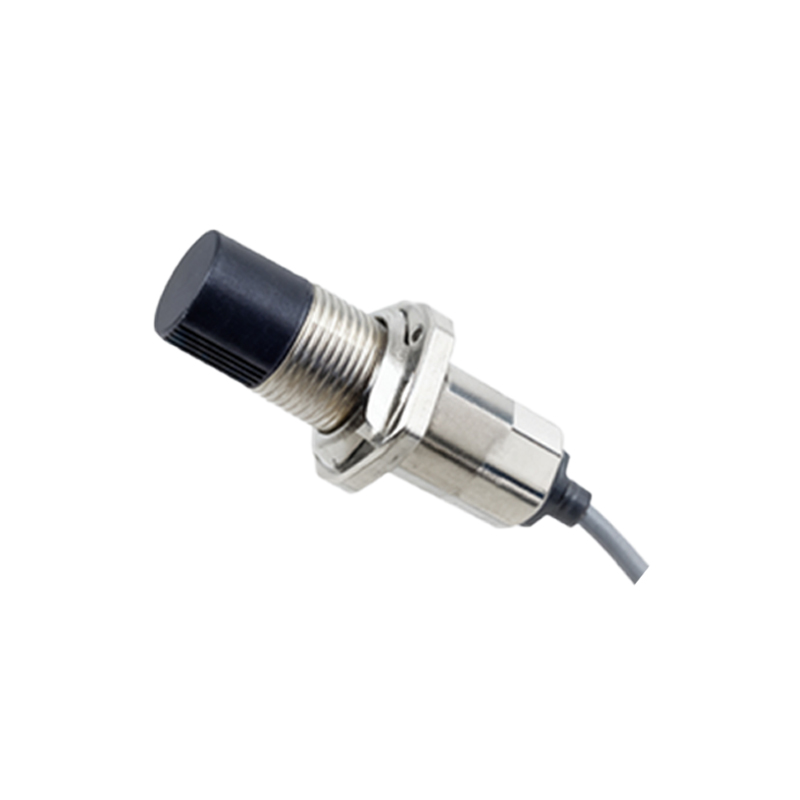
The type of sensor is selected based on the target material and environmental conditions. Inductive proximity sensors are the most common in industrial settings, used exclusively for detecting metallic objects. They generate an oscillating electromagnetic field. When a metal target enters this field, it induces eddy currents, causing the oscillation to dampen. The sensor's circuitry detects this change and switches its output state. These sensors are robust, resistant to dirt, dust, and moisture, making them ideal for harsh manufacturing environments.
For detecting non-metallic objects—such as plastic, wood, glass, or liquids—capacitive proximity sensors are employed. They can also detect metals. These sensors generate an electrostatic field. Any object with a dielectric constant different from air (which is nearly all materials) will alter the capacitance of the sensor's field, triggering detection. This makes them versatile for applications like liquid level detection in tanks, presence detection of plastic bottles, or monitoring material levels in hoppers.
Ultrasonic proximity sensors use sound waves beyond human hearing. They emit high-frequency acoustic pulses and measure the time it takes for the echo to return. By calculating this time-of-flight, they can determine both the presence and the distance to an object. This makes them excellent for applications requiring precise distance measurement or for detecting objects with complex surfaces, regardless of color or material, such as in stack height control or transparent bottle detection.
Finally, photoelectric sensors, which use light beams (visible, infrared, or laser), are another major category. While often considered distinct, they serve a similar proximity detection function. Through-beam sensors have a separate emitter and receiver; an object is detected when it breaks the beam. Retro-reflective sensors bounce light off a reflector, and diffuse sensors detect light reflected directly from the target itself. They are perfect for long-range detection and sensing small or non-metallic objects.
The advantages of using proximity sensors are manifold. Their non-contact nature means no wear and tear on the sensor or the target, leading to exceptionally long service life and minimal maintenance. They offer high switching speeds, capable of detecting objects at rates far exceeding mechanical limit switches. They are highly reliable and repeatable, providing consistent performance unaffected by surface conditions like oil or grime (particularly inductive types). This reliability translates directly into reduced downtime, improved product quality, and enhanced overall equipment effectiveness (OEE).
In summary, proximity sensors are the unseen workhorses of modern industry. Their primary use is to provide accurate, non-contact detection of objects to enable automation, ensure precise control, enhance safety, and optimize processes. From ensuring a car door is fully closed before assembly proceeds to counting pills in a pharmaceutical plant or safeguarding an operator near a robotic cell, the functionality of proximity sensors is a cornerstone of intelligent, efficient, and safe industrial operations.