Laser ranging target sensors represent a critical advancement in precision measurement technology, widely adopted across industrial automation, construction, robotics, and surveying. These sensors operate on the principle of emitting a focused laser beam toward a target surface and calculating distance based on the time-of-flight (ToF) or phase-shift measurement of the reflected signal. Unlike traditional contact-based measurement tools, laser sensors offer non-contact, high-speed, and accurate readings, minimizing human error and enhancing operational efficiency in dynamic environments.
The core components of a laser ranging target sensor include a laser diode, optical lens system, photodetector, and signal processing unit. The laser diode generates coherent light, typically in the visible red or infrared spectrum, which is directed through the lens to form a narrow beam. Upon striking the target, the beam reflects back to the sensor, where the photodetector captures the returned light. Advanced algorithms within the signal processing unit analyze the time delay or phase difference between emission and reception to compute distance with sub-millimeter precision. This process occurs within milliseconds, enabling real-time monitoring and control in fast-paced applications such as conveyor belt systems, automated guided vehicles (AGVs), and robotic assembly lines.
Key advantages of laser ranging target sensors include their exceptional accuracy, long-range capability, and adaptability to various surface types. Modern sensors can measure distances from a few centimeters up to several hundred meters, with accuracy levels often within ±1 mm. They perform reliably on diverse materials, including metal, plastic, wood, and even transparent or reflective surfaces, thanks to adjustable sensitivity settings and filtering technologies that reduce interference from ambient light or environmental factors. Additionally, these sensors are designed for durability, with rugged housings that withstand harsh conditions like dust, moisture, and temperature fluctuations, making them suitable for outdoor use in construction or mining.
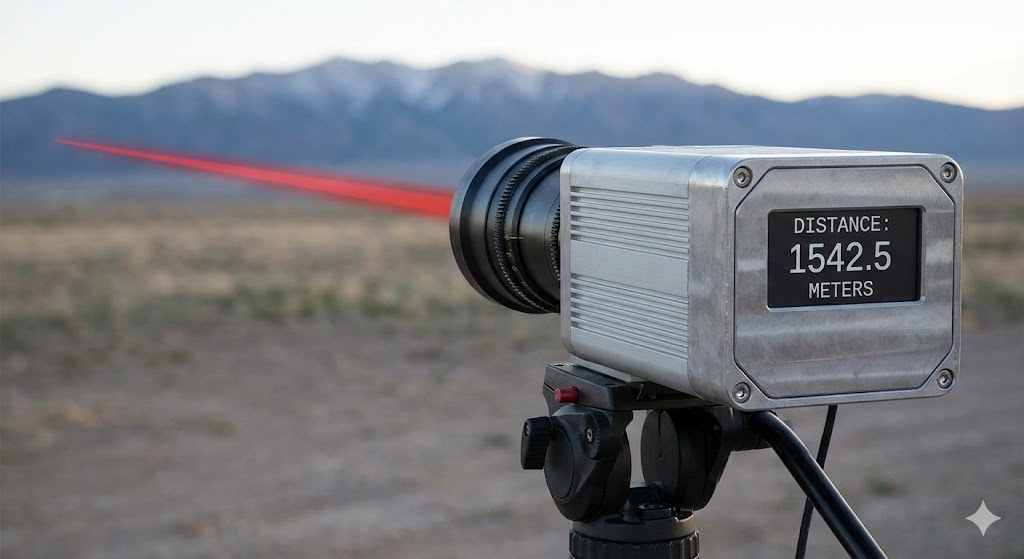
In industrial automation, laser ranging target sensors play a pivotal role in quality control, positioning, and object detection. For instance, in manufacturing, they verify component dimensions, align machinery parts, and monitor fill levels in containers without physical contact, thereby reducing wear and maintenance costs. In robotics, sensors provide precise feedback for navigation and manipulation, allowing robots to interact safely with their surroundings. Surveying and mapping applications benefit from their ability to capture detailed topographic data quickly, improving project planning and execution. Emerging trends, such as integration with IoT platforms and AI-driven analytics, further enhance their functionality by enabling predictive maintenance and data-driven decision-making.
Despite their benefits, selecting the right laser ranging target sensor requires consideration of factors like measurement range, resolution, response time, and environmental compatibility. Users must also account for potential challenges, such as signal degradation in foggy or dusty atmospheres, which can be mitigated through specialized models with enhanced filtering. Regular calibration and adherence to safety standards, including laser class regulations (e.g., Class 1 or 2 for eye safety), are essential to ensure reliable and safe operation.
As technology evolves, laser ranging target sensors continue to advance with features like miniaturization, wireless connectivity, and multi-target detection. These innovations expand their applicability in fields like autonomous vehicles, smart infrastructure, and precision agriculture, driving efficiency and innovation. By understanding their principles and applications, professionals can leverage these sensors to optimize processes, reduce costs, and achieve higher levels of accuracy in an increasingly automated world.