In the industrial automation and electronics sectors, proximity sensors are indispensable components for non-contact detection, playing critical roles in positioning, counting, and safety applications. A common and practical query from procurement specialists, design engineers, and maintenance teams is: "How much does a proximity sensor cost?" The answer is not a single figure but a spectrum influenced by a complex interplay of technological, commercial, and application-specific factors. Understanding these variables is key to making informed purchasing decisions that balance performance, reliability, and budget.
The primary determinant of price is the underlying sensing technology. Inductive proximity sensors, used for detecting metallic objects, are generally the most cost-effective, with basic shielded barrel-style models starting as low as $15 to $30 USD. Capacitive sensors, capable of detecting both metallic and non-metallic materials like liquids or plastics, typically command a higher price point, often ranging from $30 to $60 for standard units. Photoelectric sensors, offering the longest sensing ranges and versatile detection capabilities, present a wider price band. Simple diffuse-reflective models may begin around $40, while advanced models with background suppression, fiber optic cables, or precise alignment features can easily exceed $150. Ultrasonic sensors, used for distance measurement and level detection, and specialized magnetic (reed or Hall effect) sensors also occupy higher price tiers, frequently from $50 to several hundred dollars.
Beyond the core technology, specifications dramatically impact cost. Sensing range is a major factor; a sensor with a 2mm range will be significantly less expensive than an otherwise identical model with a 15mm range. The housing material also plays a role; sensors with robust stainless steel housings for harsh environments (e.g., IP67, IP69K ratings) are priced higher than those with nickel-plated brass or PBT plastic housings for light-duty applications. Output configuration (PNP vs. NPN, NO vs. NC, analog vs. discrete) and connection type (pre-wired cable, quick-disconnect, or M12/M8 connector) add further cost layers. Brand reputation and associated services form another critical pricing axis. Established global manufacturers like Siemens, Omron, Schneider Electric, and Pepperl+Fuchs often price their sensors at a premium, justified by extensive R&D, rigorous quality control, global supply chains, and comprehensive technical support. In contrast, many competitive brands and generic suppliers offer functionally similar sensors at lower prices, sometimes 30-50% less, though potentially with longer lead times or more limited warranty terms.
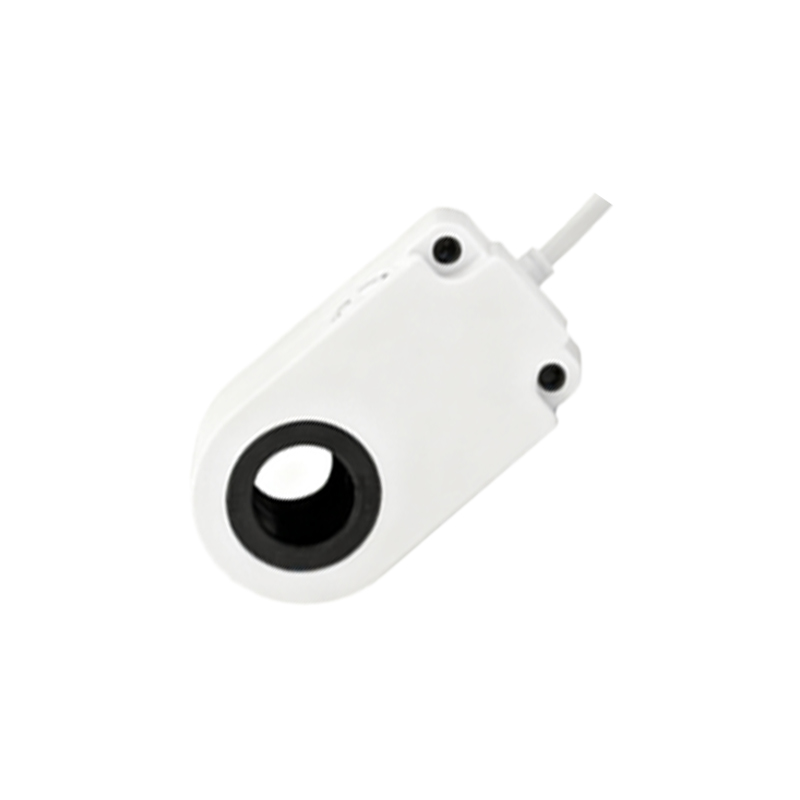
The procurement channel is equally influential. Purchasing directly from an authorized distributor or the manufacturer typically ensures authenticity, full warranty, and access to datasheets but may not offer the lowest unit price, especially for small quantities. Online industrial marketplaces and component suppliers can provide competitive pricing and fast shipping for standard models. For large-volume OEM projects, negotiating directly with manufacturers or their major distributors is essential to secure substantial volume discounts, which can reduce unit costs dramatically.
To conduct an effective price inquiry, one must first define the application requirements precisely: target material, required sensing distance, environmental conditions (temperature, washdown, chemicals), electrical specifications, and housing size. With these parameters, one can generate a shortlist of suitable models from 2-3 different brand tiers. The next step is to solicit quotes from multiple suppliers, clearly stating the required quantity (both for initial purchase and estimated annual usage). It is crucial to compare the total cost of ownership, not just the unit price. This includes factors like reliability (downtime costs), ease of installation, compatibility with existing systems, and long-term availability. For non-critical applications or prototyping, a cost-effective sensor from a reliable generic brand may be optimal. For mission-critical processes in high-volume manufacturing, the investment in a premium, field-proven sensor from a top-tier supplier often pays off through reduced failures and maintenance.
In summary, the market for proximity sensors is diverse, with prices spanning from under $20 to over $500. A diligent approach to price querying involves a clear technical specification, a multi-source quotation process, and a strategic evaluation of value versus cost. By focusing on the application's true needs and the total cost of ownership, buyers can navigate this complex landscape to source the optimal sensor that ensures both operational efficiency and economic sense.
