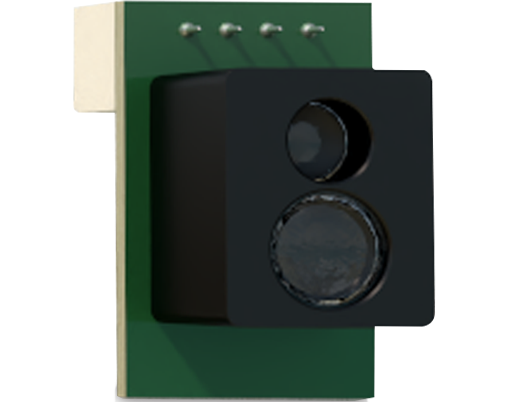
In the rapidly evolving landscape of automation, robotics, and smart technology, laser radar (LiDAR) sensors have emerged as a cornerstone technology. Companies specializing in the sale and development of these sophisticated sensors are not merely component suppliers; they are pivotal enablers of the autonomous future. This article explores the ecosystem of laser radar sensor companies, their technological offerings, market strategies, and the critical role they play across diverse industries.
At its core, a laser radar sensor is a remote sensing method that uses pulsed laser light to measure variable distances to the Earth or to objects. It generates precise, three-dimensional information about the shape of the target and its surface characteristics. The companies operating in this space range from established industrial giants to agile, innovative startups, each carving out their niche. The primary applications driving demand are autonomous vehicles (AVs), advanced driver-assistance systems (ADAS), industrial automation, robotics, smart city infrastructure, and surveying.
Leading companies like Velodyne Lidar, a pioneer in the field, have set high standards with their rotating and solid-state LiDAR units. Their sensors are renowned for long-range detection and high-resolution point clouds, making them a historical favorite for automotive testing and mapping. However, the market has dramatically expanded. Innoviz and Luminar Technologies, for instance, have focused on developing high-performance, automotive-grade solid-state LiDAR. This design, with no moving parts, promises greater reliability, smaller form factors, and lower cost at scale—key factors for mass adoption in consumer vehicles.
The sales strategy for these companies extends far beyond hardware. It encompasses a complete solution package. A successful laser radar sensor company today must provide robust perception software, development kits (SDKs), and extensive support for sensor fusion—the integration of LiDAR data with camera and radar inputs. This holistic approach is crucial because the raw point cloud data is meaningless without sophisticated algorithms to interpret it in real-time. Companies like Aeva are pushing boundaries by offering "4D LiDAR" that measures velocity along with distance, adding a critical temporal dimension to perception.
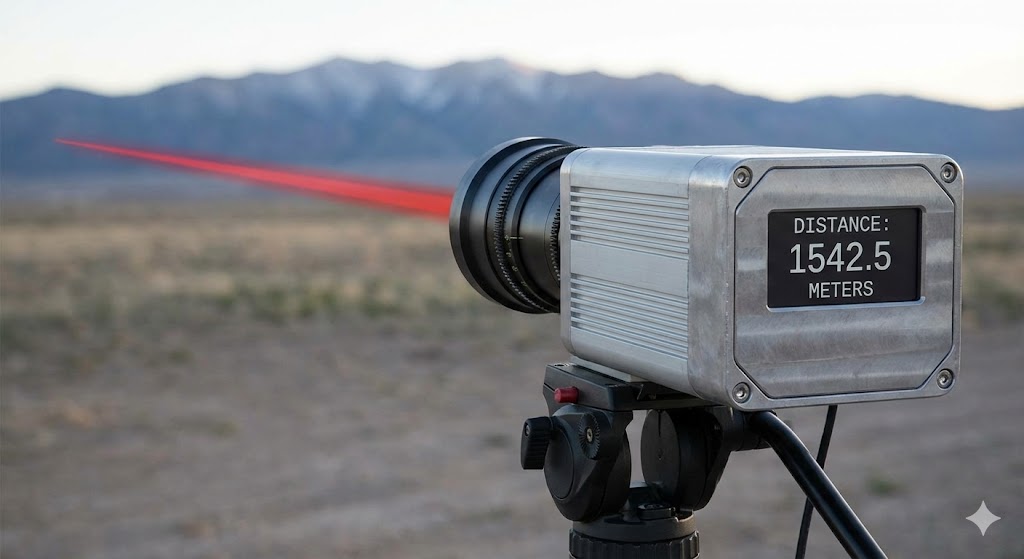
The industrial and robotics sector presents another massive growth avenue. Companies like SICK AG and OMRON, with deep roots in industrial automation, sell LiDAR sensors tailored for different challenges. Here, the focus is on reliability in harsh environments, precise object detection for collision avoidance in warehouses, and guidance for autonomous mobile robots (AMRs). The sales pitch emphasizes durability, safety certifications (e.g., SIL, PL), and seamless integration with existing manufacturing execution systems.
Market challenges are significant. Despite technological advancements, cost remains a primary barrier for mass-market automotive applications. Sales companies are engaged in a relentless pursuit of design simplification and manufacturing innovation to drive down prices. Another challenge is the ongoing debate on sensor suites: while most argue for a combination of LiDAR, radar, and cameras for redundancy and robustness, some high-profile automakers bet on a vision-only approach. This keeps sales and marketing teams on their toes, constantly demonstrating LiDAR's irreplaceable value in poor lighting and weather conditions where cameras struggle.
Looking ahead, the trajectory for companies selling laser radar sensors is exceptionally promising. The evolution is towards more compact, intelligent, and cost-effective sensors. Emerging trends include the integration of artificial intelligence directly at the sensor level (edge AI) for faster processing and the development of frequency-modulated continuous-wave (FMCW) LiDAR, which offers superior performance regarding interference immunity and direct velocity measurement. As industries from agriculture to security increasingly adopt autonomous solutions, the companies that can provide reliable, scalable, and intelligent LiDAR systems will not just sell sensors; they will be selling the very eyes of the intelligent machines shaping our future.