In the realm of precision measurement and industrial automation, laser displacement sensors have emerged as indispensable tools. These non-contact devices provide high-accuracy, high-speed measurements of distance, position, thickness, and vibration, making them critical for quality control, process monitoring, and research across numerous sectors. This article delves into the operational principles, key technologies, diverse applications, and essential factors for selecting the right sensor for specific industrial needs.
At its core, a laser displacement sensor operates on the principle of optical triangulation. The sensor projects a focused laser beam onto the target surface. The reflected or scattered light from this point is then collected by a receiving lens and focused onto a position-sensitive detector, typically a CMOS or CCD linear array. The position of the light spot on this detector changes precisely with the distance to the target. By calculating this positional shift, the sensor's internal processor determines the exact displacement value with remarkable resolution, often in the micrometer or even sub-micrometer range. This fundamental principle allows for measurements that are immune to the wear and tear associated with contact probes and unaffected by the material's electromagnetic properties.
Several technological variations exist within this category. The most common is the diffuse reflection type, suitable for most surfaces. For highly reflective or transparent materials, specialized models using confocal or spectral interferometry principles are employed. Confocal sensors use a pinhole aperture to achieve exceptional resolution and are ideal for measuring thin films, transparent substrates, or mirror-like surfaces. Furthermore, advancements have led to the development of 2D laser profile sensors and 3D scanners, which use a laser line instead of a single point to capture cross-sectional profiles or full surface topographies at high speeds.
The applications of laser displacement sensors are vast and continually expanding. In the automotive industry, they are used to measure critical gaps and flushness between body panels, inspect brake disc thickness, and monitor tire tread depth. In electronics manufacturing, they ensure the precise placement of components on printed circuit boards (PCBs) and measure the coplanarity of BGA (Ball Grid Array) solder balls. The metal processing sector relies on them for thickness gauging of sheets, vibration analysis of rollers, and dimensional inspection of machined parts. They are also pivotal in robotics for precise guidance and positioning, and in civil engineering for monitoring structural deformations and settlements.
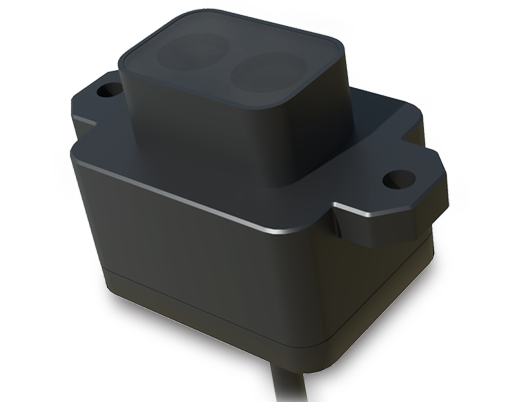
Selecting the appropriate laser displacement sensor requires careful consideration of several key parameters. First is the measurement range, which defines the minimum and maximum distances over which the sensor can operate accurately. The reference distance, or stand-off, is the optimal working distance from the sensor head to the target. Resolution and linearity are critical accuracy specifications; resolution indicates the smallest detectable change, while linearity defines the maximum deviation from a perfect straight-line response across the measurement range. Spot size is another crucial factor, as a smaller spot allows for measurement on edges or small features but may be affected by surface roughness. The sampling speed, or response frequency, must be matched to the target's speed or vibration frequency. Finally, environmental conditions such as ambient light, temperature fluctuations, and the presence of dust or vapors must be considered, often necessitating sensors with robust housings and specific ingress protection (IP) ratings.
Integration of these sensors into automated systems is typically straightforward, with outputs including analog voltage/current, digital interfaces like Ethernet/IP or PROFINET, and serial communication. This facilitates real-time data acquisition and closed-loop process control. As Industry 4.0 and smart factory concepts advance, the role of laser displacement sensors as key data-generating nodes in the Internet of Things (IoT) ecosystem is becoming increasingly significant, enabling predictive maintenance and enhanced production analytics.
In conclusion, laser displacement sensors represent a mature yet rapidly evolving technology that is fundamental to modern precision engineering. Their ability to deliver fast, accurate, and reliable non-contact measurements solves complex challenges across manufacturing and research. A thorough understanding of their working principles, types, and specification parameters is essential for engineers and technicians to leverage their full potential, driving improvements in product quality, production efficiency, and operational safety.