In the realm of industrial automation, the integration of sensing technology with visual indicators has become a cornerstone for efficiency and safety. Illuminated proximity sensors, a sophisticated evolution of standard proximity switches, represent this fusion perfectly. These devices not only detect the presence or absence of an object without physical contact but also provide immediate, clear visual feedback through built-in LED indicators. This dual functionality addresses critical needs in modern manufacturing, logistics, and machinery operations.
The core technology behind these sensors remains based on electromagnetic, capacitive, or inductive principles. An inductive proximity sensor, for instance, generates an oscillating electromagnetic field. When a metallic target enters this field, it causes a change in oscillation amplitude, which the sensor detects, triggering an output signal. The innovation lies in incorporating a high-brightness LED, typically in colors like red, green, yellow, or blue, which illuminates based on the sensor's state—often indicating power-on, target detection, or fault conditions. This visual cue is invaluable in high-speed or complex systems where quick status verification is essential. Operators and maintenance personnel can instantly assess machine status from a distance, reducing diagnostic time and preventing errors. For example, a steady green light might signify normal operation and object detection, while a flashing red light could indicate a misalignment or sensor error, enabling prompt intervention.
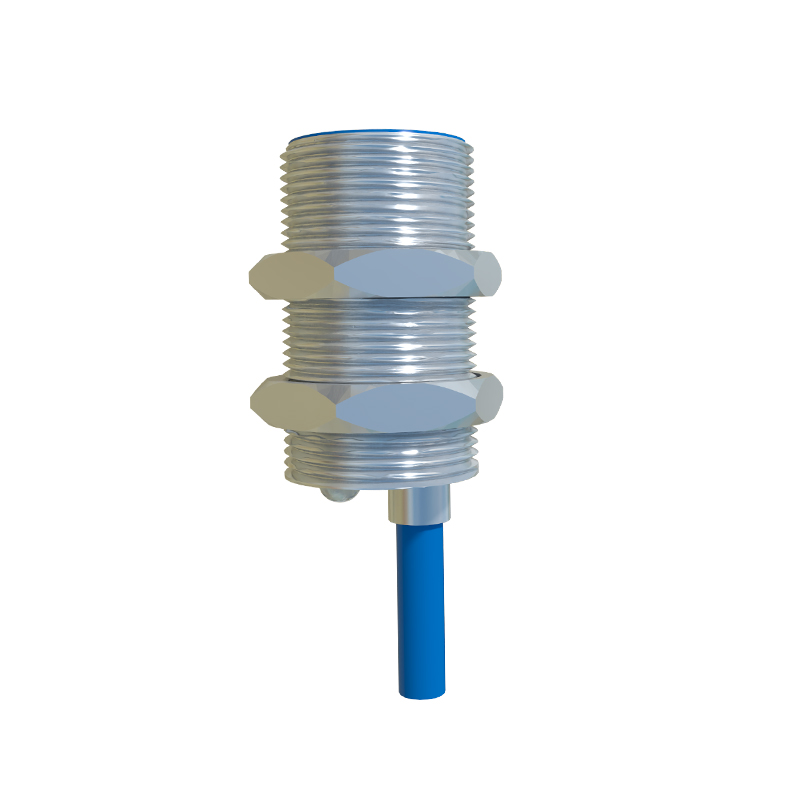
From an engineering perspective, the design considerations for illuminated proximity sensors are multifaceted. Housing materials, such as nickel-plated brass, stainless steel, or PBT plastic, are selected for durability against industrial hazards like coolant, oil, dust, and mechanical impact. The LED is integrated with robust, long-life components to ensure reliability over millions of cycles. Many models feature selectable light modes—such as light-on-detect or light-on-power—allowing customization for specific applications. Furthermore, these sensors are available in various form factors (e.g., cylindrical, rectangular) and sensing ranges, from a few millimeters to several tens of millimeters, catering to diverse installation requirements.
The applications are extensive across industries. In automotive assembly lines, illuminated sensors monitor robotic arm positions and part presence, with lights providing at-a-glance confirmation that components are correctly positioned before welding or painting. In packaging machinery, they ensure precise product counting and alignment, where a visual alert can signal a jam without needing to check a control panel. In safety systems, such as on guard doors or hazardous area monitoring, the immediate visual feedback enhances operational safety by clearly showing whether a zone is secure.
Moreover, the compatibility with industrial networks and protocols, like IO-Link, adds a layer of intelligence. IO-Link enabled illuminated sensors can transmit detailed diagnostic data—such as temperature, signal strength, or operating hours—to a control system while using the LED for local indication. This facilitates predictive maintenance, reducing downtime. For instance, if the LED begins to flicker in a specific pattern indicating wear, maintenance can be scheduled proactively before a failure occurs.
Choosing the right illuminated proximity sensor involves evaluating factors like sensing distance, target material, environmental conditions, output type (PNP/NPN, analog, or digital), and required light functions. It is crucial to consult technical datasheets to ensure the sensor meets electrical specifications, such as supply voltage (commonly 10-30V DC) and current consumption, and environmental ratings like IP67 or IP69K for water and dust resistance.
In summary, illuminated proximity sensors are more than mere detection devices; they are integral components for enhancing operational transparency, efficiency, and safety in automated systems. By providing immediate visual status, they bridge the gap between machine logic and human operators, fostering a more responsive and reliable industrial environment. As automation advances toward greater interconnectivity and smart manufacturing, the role of these intuitive, dual-function sensors is set to expand, driving productivity and reducing operational risks through clear, instantaneous communication.