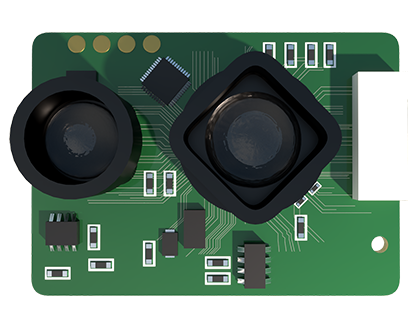
As a seasoned electrical engineer with over 15 years of hands-on experience in industrial automation and sensing technology, I frequently encounter a range of questions regarding laser sensors. These precision devices are pivotal in countless applications, from manufacturing and robotics to safety systems and quality control. Understanding their operation, selection, and integration is crucial for optimal performance. Below, I address some of the most common and critical inquiries from professionals and enthusiasts alike.
First and foremost, many ask: What exactly is a laser sensor, and how does it differ from other optical sensors? A laser sensor is a device that uses a focused beam of coherent light (laser) to detect, measure, or profile objects. Unlike standard LED-based photoelectric sensors, laser sensors offer a highly concentrated, small-diameter spot, enabling exceptional precision for tasks like edge detection, minute displacement measurement, and high-resolution profiling. The coherence and low divergence of the laser beam allow for long sensing distances and stable detection even in challenging environments with ambient light interference.

A prevalent technical question concerns the working principle. Most industrial laser sensors operate on time-of-flight (ToF), triangulation, or confocal measurement principles. Time-of-flight sensors calculate distance by measuring the round-trip time of a laser pulse. They are excellent for long-range applications, such as level monitoring in large silos. Triangulation sensors, often used for precise displacement and thickness measurement, use a laser point projected onto a target; a receiver lens at a known angle captures the reflected light, and the position on the receiver element determines the distance. Confocal chromatic sensors use white light split into a spectrum, offering ultra-high resolution for surface inspection and transparent material measurement. Choosing the right principle depends entirely on the required accuracy, range, target material, and environmental conditions.
Integration challenges are a common theme. Engineers often inquire about the key factors for successful installation. Environmental considerations are paramount. Dust, steam, intense ambient light, or highly reflective surfaces can significantly impact performance. Selecting a sensor with an appropriate IP rating for dust and water ingress is essential. For vibrating machinery, models with robust housings and stable mounting are necessary. Electrical integration involves ensuring correct power supply (typically 12-24V DC), selecting the right output type (digital switch, analog 4-20mA/0-10V, or serial communication like IO-Link), and proper wiring to avoid electromagnetic interference. Many modern sensors feature advanced diagnostics and teach-in functions via software or pushbuttons, simplifying setup and troubleshooting.
Another frequent area of confusion is the distinction between laser sensors for measurement versus those for presence detection. Measurement sensors (like laser distance sensors or micrometers) provide a continuous analog output corresponding to the measured value. They are used for precise dimensional control. Presence detection sensors (laser photoelectric switches) provide a simple on/off signal when an object breaks or reflects the beam, used for counting, positioning, or jam detection. It's critical not to substitute one for the other, as their internal electronics and calibration differ substantially.

Maintenance and calibration queries are also standard. Laser sensors are generally low-maintenance. The primary upkeep involves keeping the lens clean from contaminants using appropriate cleaning methods. Calibration is typically factory-set and stable. However, for high-precision measurement sensors, periodic verification against a known standard is recommended, especially after physical shock or extreme temperature exposure. Many premium models feature automatic compensation for temperature drift.
Finally, a forward-looking question: What are the emerging trends? The integration of Industrial IoT (IIoT) capabilities is significant. Sensors with IO-Link and Ethernet connectivity provide not just data but rich diagnostic information, enabling predictive maintenance. Furthermore, advancements in CMOS receiver technology and laser diode efficiency are leading to smaller, more energy-efficient, and even more accurate sensors. The use of blue laser diodes is growing for applications involving red or hot objects, as blue light offers better contrast and less absorption.
In summary, laser sensors are versatile and powerful tools. Their successful deployment hinges on a clear understanding of the application requirements, environmental factors, and the specific technology inside the device. When selected and integrated correctly, they deliver unparalleled reliability and precision, forming the backbone of modern automated systems.