In the rapidly evolving landscape of industrial automation and precision measurement, Time-of-Flight (ToF) laser sensors have emerged as a cornerstone technology. These sophisticated devices, which utilize laser light to measure distance and map environments with exceptional accuracy, are revolutionizing processes across manufacturing, robotics, logistics, and beyond. Unlike traditional ultrasonic or simple infrared sensors, ToF laser sensors offer a unique combination of high speed, long range, and micron-level precision, making them indispensable for modern smart factories and autonomous systems.
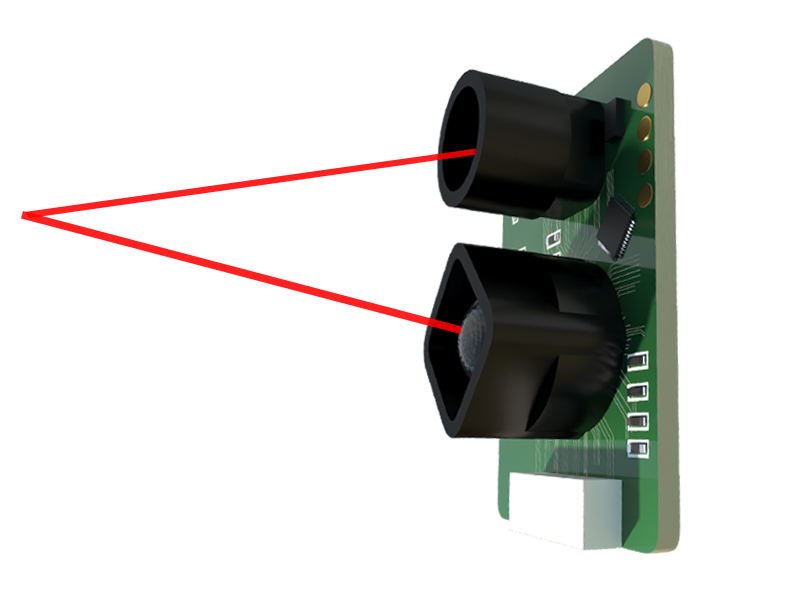
At its core, the principle of a ToF laser sensor is elegantly straightforward yet powerful. The sensor emits a short, modulated pulse of laser light towards a target object. This light travels through the air, reflects off the object's surface, and returns to a photodetector within the sensor. An internal high-precision clock measures the exact time elapsed between the emission and the reception of the light pulse. Since the speed of light (c) is a known constant (approximately 3×10^8 m/s), the distance (d) to the target can be calculated using the fundamental equation: d = (c × t) / 2, where 't' is the measured time of flight. This direct time measurement distinguishes ToF from phase-shift or triangulation methods, offering advantages in simplicity and robustness for dynamic, real-time applications.
Modern ToF laser sensors are predominantly built around two technological implementations: direct Time-of-Flight (dToF) and indirect Time-of-Flight (iToF). dToF sensors, often using Single Photon Avalanche Diodes (SPADs) or Avalanche Photodiodes (APDs), measure the direct round-trip time of a single or multiple laser pulses. They excel in long-range measurements, often exceeding 100 meters, and are ideal for applications like LiDAR in autonomous vehicles or large-scale warehouse inventory drones. Conversely, iToF sensors work by emitting a continuous wave of amplitude-modulated laser light. They measure the phase difference between the emitted and reflected wave. This method provides superior resolution at shorter to medium ranges and is widely used in consumer electronics (like smartphone face ID), robotics for obstacle avoidance, and detailed 3D scene reconstruction. The choice between dToF and iToF hinges on the specific requirements for range, resolution, power consumption, and cost.
The industrial applications of ToF laser sensors are vast and growing. In automated guided vehicles (AGVs) and autonomous mobile robots (AMRs), these sensors create detailed 3D maps of their surroundings, enabling safe navigation, pallet detection, and collision avoidance in dynamic warehouse environments. On production lines, they perform critical non-contact tasks such as precise height profiling of components on a conveyor belt, verifying fill levels in bottles or containers, and ensuring robotic arms accurately pick and place items by providing real-time distance feedback. Furthermore, in logistics, ToF-based volumetric dimensioning systems quickly and accurately measure the size of packages for optimal storage, shipping cost calculation, and load planning. The technology's immunity to ambient light variations and its ability to work on a wide variety of surfaces—from shiny metal to dark, non-reflective materials—make it exceptionally reliable in harsh industrial settings.
Looking ahead, the future of ToF laser sensor technology is geared towards greater integration, intelligence, and miniaturization. The development of solid-state LiDAR, which uses ToF principles without moving mechanical parts, promises more compact, affordable, and durable sensors for mass-market adoption in automotive and consumer robotics. Advances in semiconductor manufacturing are leading to higher-resolution sensor arrays, enabling not just distance measurement but full 3D imaging with rich point cloud data. The integration of artificial intelligence and machine learning at the sensor's edge is another pivotal trend. Future "smart" ToF sensors will be capable of on-device object classification, gesture recognition, and predictive analytics, reducing the computational load on central systems and enabling faster, more autonomous decision-making. As power efficiency improves and costs continue to decline, we can expect ToF laser sensing to become ubiquitous, embedded in everything from smart home appliances and agricultural drones to advanced human-machine interfaces and next-generation industrial IoT platforms.
In conclusion, Time-of-Flight laser sensors represent a critical enabling technology for the fourth industrial revolution. By providing fast, accurate, and reliable spatial data, they form the "eyes" of intelligent machines. For engineers and system integrators, understanding the operational principles, key differentiators between dToF and iToF, and the expanding application landscape is essential for designing the efficient, flexible, and intelligent automated systems that will define the future of industry.
