In the realm of industrial automation and machine safety, proximity sensors are indispensable components for non-contact object detection. While their operation with metallic targets is well-understood and highly reliable, sensing non-metallic materials presents a distinct set of challenges and requires specific technological approaches. This article delves into the principles, sensor types, and practical considerations for effectively measuring distance to non-metallic objects.
The fundamental challenge with non-metallics lies in their physical properties. Standard inductive proximity sensors, which generate an electromagnetic field to detect the eddy currents induced in conductive metals, are ineffective for materials like plastic, wood, glass, ceramic, or most liquids. These materials do not significantly disturb an inductive field. Therefore, alternative sensing principles must be employed.
The primary technology for this task is the capacitive proximity sensor. Operating on a different principle, a capacitive sensor generates an electrostatic field. Any object that enters this field alters its capacitance. Since all materials have a dielectric constant (permittivity) different from air, they cause a detectable change. Materials with higher dielectric constants, such as water, wood, or plastics, produce a stronger signal change compared to air, enabling detection. The sensing distance for a capacitive sensor depends heavily on the target material's dielectric constant, its size, and the sensor's sensitivity setting. For instance, water (εr ~80) can be sensed from a much greater distance than a dry plastic like PVC (εr ~3-4). A key advantage is the ability to detect through certain non-metallic barriers, such as thin plastic or glass walls, which is invaluable for level sensing in tanks.
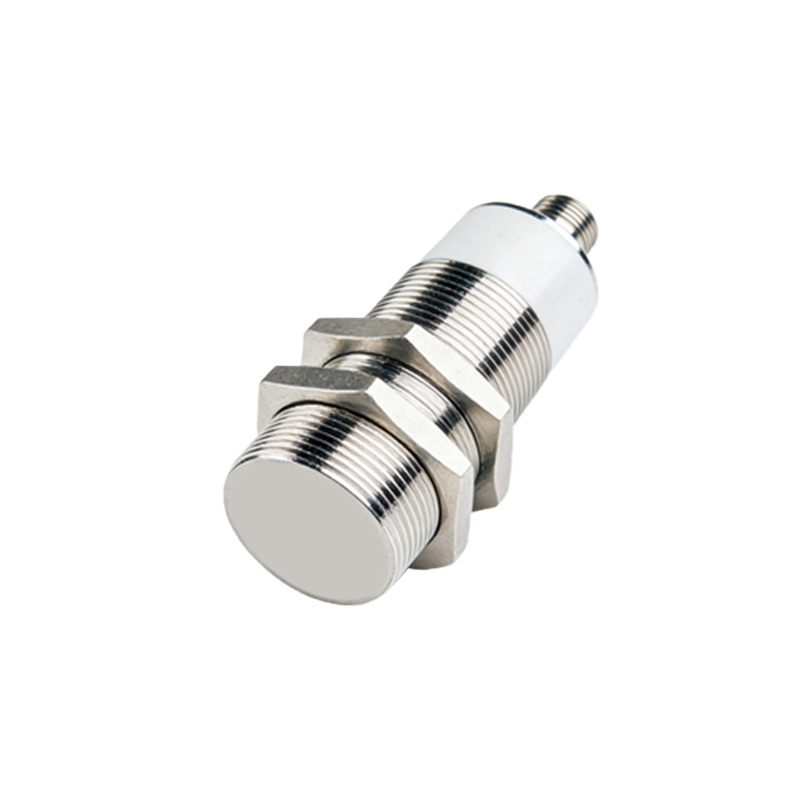
Another critical technology is the ultrasonic sensor. These sensors work by emitting high-frequency sound pulses and measuring the time for the echo to return from a target. The distance is calculated based on the speed of sound in air. Ultrasonic sensors are largely material-agnostic; they can detect virtually any solid or liquid object regardless of color, transparency, or material composition, as long as the surface is sufficiently sound-reflective. They excel at longer ranges and are ideal for bulk material level detection, transparent object detection, and applications where the target material varies. However, factors like temperature (affecting sound speed), air turbulence, and very soft or absorbent surfaces can influence performance.
Photoelectric sensors, particularly diffuse or retro-reflective types, are also widely used for non-metallic detection. They rely on light (visible, infrared, or laser) being reflected from the target's surface. While effective for most solid non-metallics, their performance can be compromised by the target's color (dark absorbs light), transparency, surface finish (glossy vs. matte), and environmental contaminants like dust or fog. Background suppression and fixed-field background suppression variants help by defining a precise sensing window, ignoring objects beyond a set distance.
When selecting a sensor for distance measurement to non-metallics, several application-specific factors must be analyzed. First, define the exact material and its properties (dielectric constant, color, surface texture). Second, determine the required sensing range and the required resolution or repeatability. Third, consider the environmental conditions: temperature extremes, humidity, dust, vapors, or potential coating buildup on the sensor face. For capacitive sensors, false triggers from environmental humidity changes or contamination are a known risk, often mitigated by models with compensation or shielding. Ultrasonic sensors may struggle in vacuum environments or with steep temperature gradients.
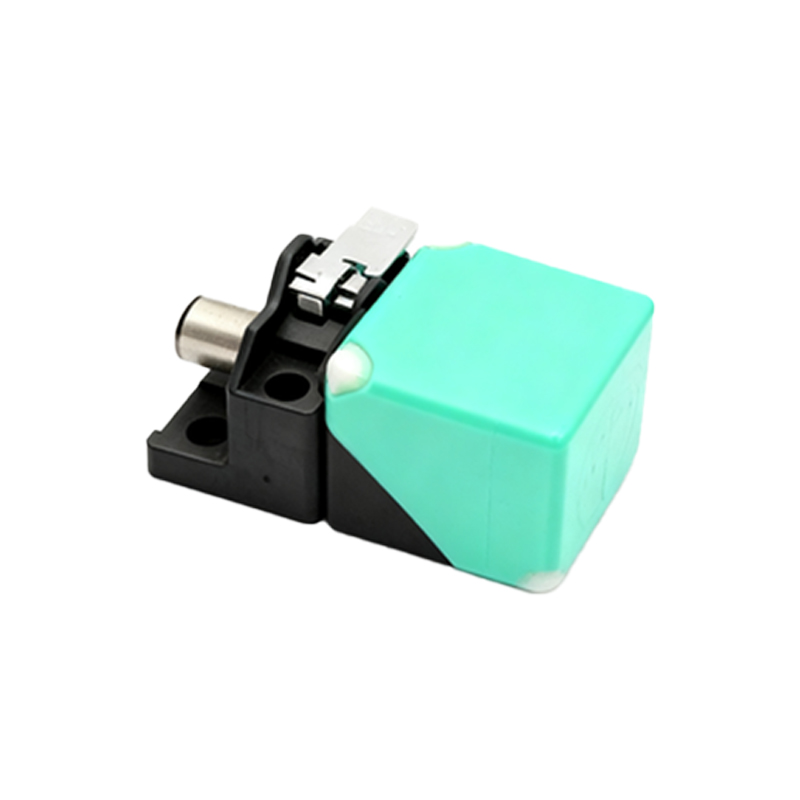
Calibration and setup are paramount. Capacitive sensors typically feature a sensitivity potentiometer or teach-in function to be calibrated for the specific target material at the desired switching distance, while ignoring the container or background. Ultrasonic sensors often require configuration of the sound cone and echo processing parameters to filter out false echoes from mechanical parts or walls.
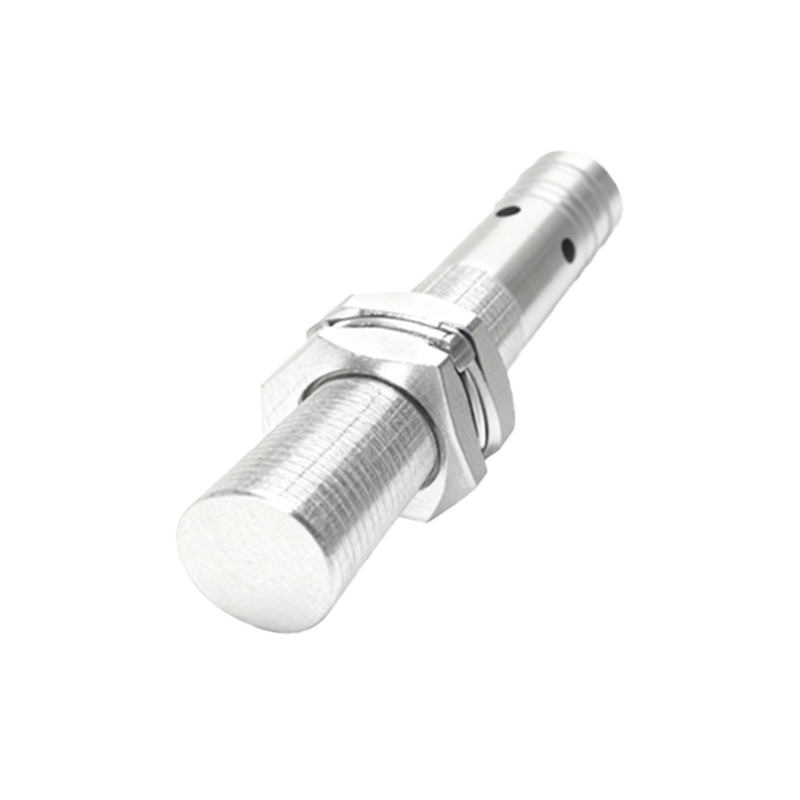
In practice, these sensors enable countless applications: monitoring the fill level of plastic granules in a silo (capacitive or ultrasonic), detecting the presence of a glass bottle on a conveyor (photoelectric or capacitive), ensuring a wooden panel is in position before machining (photoelectric), or controlling the distance of a robotic gripper to a cardboard box (ultrasonic). The choice is rarely singular; it involves a careful trade-off between reliability, cost, environmental robustness, and precision.
In conclusion, distance sensing for non-metallic materials is a sophisticated field leveraging capacitive, ultrasonic, and photoelectric technologies. Success hinges on a deep understanding of the target material's properties, the operating environment, and the precise functional requirements of the application. By matching the correct sensing principle to the challenge, engineers can achieve reliable and accurate non-contact detection, driving efficiency and safety in modern automated systems.