In the realm of industrial automation and motion control, the reliable detection of position, speed, and presence is paramount. Two prevalent technologies employed for these tasks are gear tooth sensors and proximity switches. While both serve the fundamental purpose of non-contact sensing, their operational principles, design considerations, and optimal application areas differ significantly. This article provides a technical comparison to guide engineers in selecting the appropriate sensor for their specific requirements.
Gear tooth sensors, a specialized type of magnetic sensor, are designed explicitly for detecting the rotation of ferrous gear wheels. They typically employ a Hall-effect or magnetoresistive element integrated with a permanent magnet. As a gear tooth passes the sensor face, it alters the magnetic flux density, which is converted by the sensing element into a digital pulse signal. The output is a clean, square-wave pulse train directly corresponding to the gear's rotation. Key performance characteristics include high resolution, allowing for precise speed measurement down to zero RPM, and excellent accuracy even in the presence of oil, dirt, and other contaminants common in harsh environments like transmissions or engine blocks. Their primary function is dynamic rotational sensing—measuring speed, direction, and position of rotating shafts.
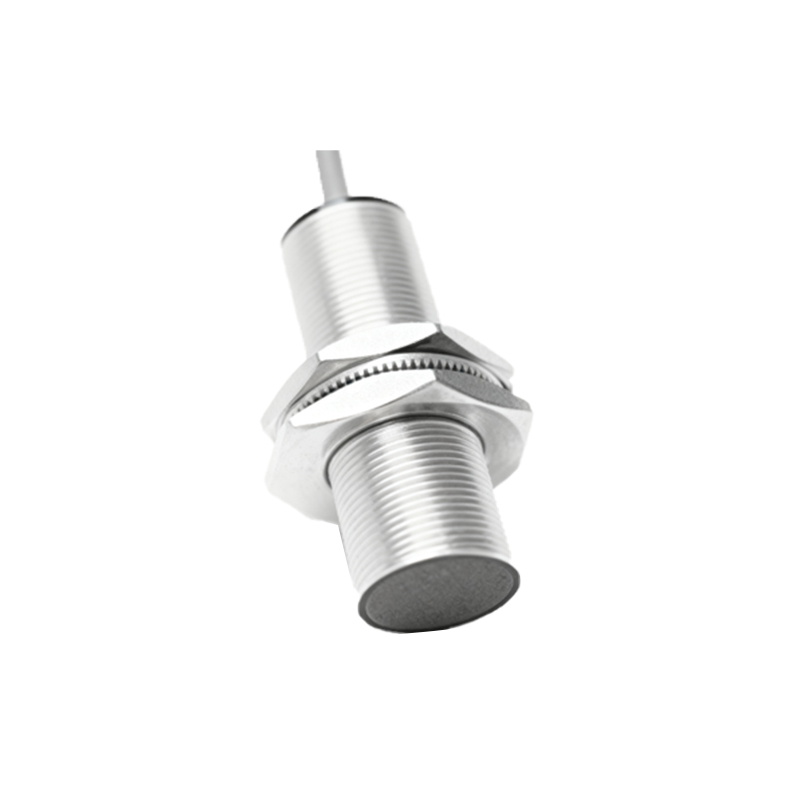
Proximity switches, also known as proximity sensors, operate on different principles, primarily inductive, capacitive, or ultrasonic. Inductive proximity switches, the most common for metallic target detection, generate an electromagnetic field. When a metallic object enters this field, it causes a change in oscillation amplitude, which is detected by the sensor's circuit, triggering a switch output. They are fundamentally presence detectors. Their output is typically a simple ON/OFF signal indicating whether a target is within the specified sensing range. These sensors excel in applications requiring the detection of the presence or absence of an object, such as part counting, limit switching, or confirming the position of a machine component. They are generally not suitable for precise speed measurement of gears due to their wider sensing field and lack of fine edge discrimination.
The choice between the two technologies hinges on the application's core need. For speed sensing on gear wheels or tone rings, especially in automotive (crankshaft, camshaft), heavy machinery, or precision manufacturing, the gear tooth sensor is the unequivocal choice. Its design ensures consistent performance regardless of gear tooth profile variations and air gap changes within tolerance. It provides the necessary signal integrity for critical control systems. Conversely, proximity switches are the versatile workhorses for general-purpose object detection. Use them to sense the passage of metal parts on a conveyor, detect the open/closed position of a metal door, or as a non-contact limit switch on a linear actuator. They are simpler to integrate when precise gear alignment is not a concern.
Environmental robustness is another consideration. Both types are built for industrial durability, but gear tooth sensors are often engineered to withstand higher temperatures, intense vibration, and exposure to fluids typical in powertrain applications. Proximity switches come in various housing materials and ratings (e.g., IP67) for diverse environments but may have more limited temperature ranges depending on the model.
In summary, the distinction is clear: a gear tooth sensor is a specialized, high-performance device for rotational kinematics, translating physical gear movement into a precise electronic signal for control systems. A proximity switch is a versatile presence detector for a wide array of metallic or non-metallic objects. Misapplying a standard inductive proximity switch to a gear speed sensing task can lead to inconsistent signals, missed pulses, and system failure. Therefore, a thorough analysis of the sensing objective—precise rotational data versus binary presence detection—is the first and most critical step in the selection process, ensuring reliability and accuracy in any automated system.