Proximity sensors are fundamental components in modern industrial automation, enabling non-contact detection of objects within a defined range without physical interaction. These devices are widely utilized across manufacturing, robotics, automotive assembly, and safety systems due to their reliability, durability, and precision. The core principle behind proximity sensors involves generating an electromagnetic field or beam of radiation and detecting changes in that field or return signal when an object enters its sensing zone. Depending on the technology employed, proximity sensors can be categorized into several types, each with distinct operating mechanisms.
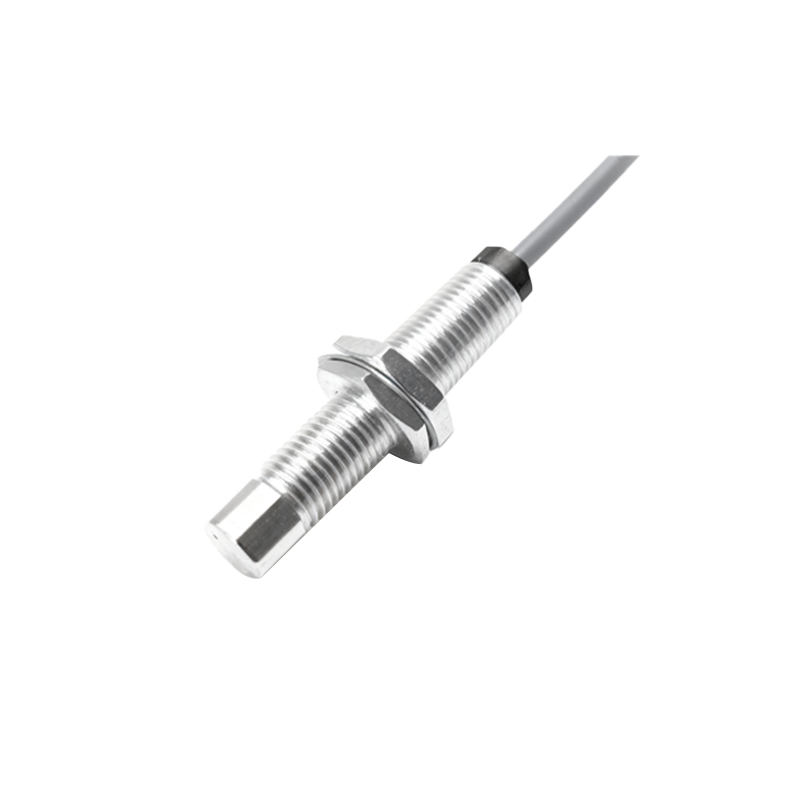
Inductive proximity sensors are among the most common types, primarily used for detecting metallic objects. They operate based on the principle of electromagnetic induction. Inside the sensor, an oscillator generates a fluctuating magnetic field around the active face. When a metallic target enters this field, eddy currents are induced on the surface of the object, causing a change in the oscillation amplitude. This alteration is detected by a threshold circuit, which subsequently triggers an output signal, such as switching a relay or sending a digital signal to a controller. Inductive sensors are highly effective in harsh environments, resistant to dust, moisture, and vibrations, making them ideal for machinery and automotive applications.
Capacitive proximity sensors, on the other hand, can detect both metallic and non-metallic materials, including liquids, plastics, and wood. These sensors function by measuring changes in capacitance. The sensor forms one plate of a capacitor, with the target object acting as the other plate. As the object approaches, the capacitance between the sensor and the target increases. An internal circuit monitors this capacitance, and when it exceeds a preset threshold, the sensor activates its output. This versatility allows capacitive sensors to be used in level detection, material handling, and packaging industries, where diverse materials must be sensed.
Ultrasonic proximity sensors utilize sound waves beyond the human hearing range, typically above 20 kHz. They emit ultrasonic pulses and measure the time taken for the echo to return after reflecting off an object. By calculating the time-of-flight, the sensor determines the distance to the target. These sensors are effective for detecting objects of various compositions and are less affected by color or transparency, making them suitable for applications like liquid level monitoring, obstacle detection in robotics, and conveyor belt systems. However, factors like temperature and air turbulence can influence their accuracy.
Photoelectric proximity sensors rely on light beams, usually infrared or laser, to detect objects. They consist of an emitter that projects light and a receiver that captures the reflected or transmitted light. When an object interrupts or reflects the beam, the receiver detects the change, triggering an output. Photoelectric sensors are further divided into through-beam, retro-reflective, and diffuse-reflective types, each offering different sensing ranges and environmental tolerances. They excel in high-speed counting, packaging, and cleanroom environments but may be sensitive to ambient light or dirty conditions.
Magnetic proximity sensors detect the presence of magnetic fields, commonly from permanent magnets. They use reed switches or Hall effect sensors to sense magnetic flux changes. When a magnet approaches, the switch closes or the Hall effect sensor generates a voltage, producing an output signal. These sensors are often employed in position sensing, such as in cylinder position feedback or door closure detection, due to their simplicity and low power consumption.
In summary, proximity sensors operate on diverse physical principles—electromagnetic induction, capacitance, ultrasonic waves, light, and magnetism—to enable non-contact detection. Their selection depends on factors like target material, sensing distance, environmental conditions, and application requirements. By providing accurate, maintenance-free operation, proximity sensors enhance efficiency, safety, and automation in industrial processes, underscoring their critical role in the evolving landscape of smart manufacturing and IoT integration.