In the realm of industrial automation and smart systems, optical distance proximity sensors have emerged as a cornerstone technology, enabling precise, non-contact detection and measurement. These sophisticated devices operate on the fundamental principles of light emission and reception, offering unparalleled reliability in diverse and demanding environments. Unlike mechanical switches or capacitive sensors, optical variants provide rapid response times, high accuracy, and immunity to many environmental factors that plague other sensing methodologies.
At its core, an optical proximity sensor consists of a light emitter, typically a Light Emitting Diode (LED) or a laser diode, and a photodetector. The emitter projects a beam of light—often infrared to avoid interference with ambient visible light—towards a target. The photodetector then analyzes the reflected light. The technology bifurcates primarily into two operational modes: diffuse reflective and through-beam. In the diffuse reflective mode, the emitter and detector are housed in the same unit. The sensor detects the target when the emitted light reflects off the object's surface and returns to the detector. The intensity or the time-of-flight of this reflected signal is analyzed to determine presence or distance. Through-beam sensors, also known as opposed-mode sensors, feature separate units for the emitter and receiver, aligned opposite each other. Detection occurs when the target object interrupts the light beam traveling between them. This configuration generally offers longer sensing ranges and higher reliability for clear object detection.
The advent of advanced technologies like Time-of-Flight (ToF) and triangulation has revolutionized distance measurement capabilities. ToF sensors measure the time interval between the emission of a light pulse and the reception of its reflection. Given the constant speed of light, this time delay is directly proportional to twice the distance to the target, allowing for highly accurate distance calculations. Triangulation-based sensors, on the other hand, use a different geometric principle. The emitted light spot on the target is viewed from an angle by the position-sensitive detector. As the target distance changes, the position of the light spot on the detector shifts, enabling precise distance determination. This method is exceptionally effective for short to medium ranges with high precision requirements.
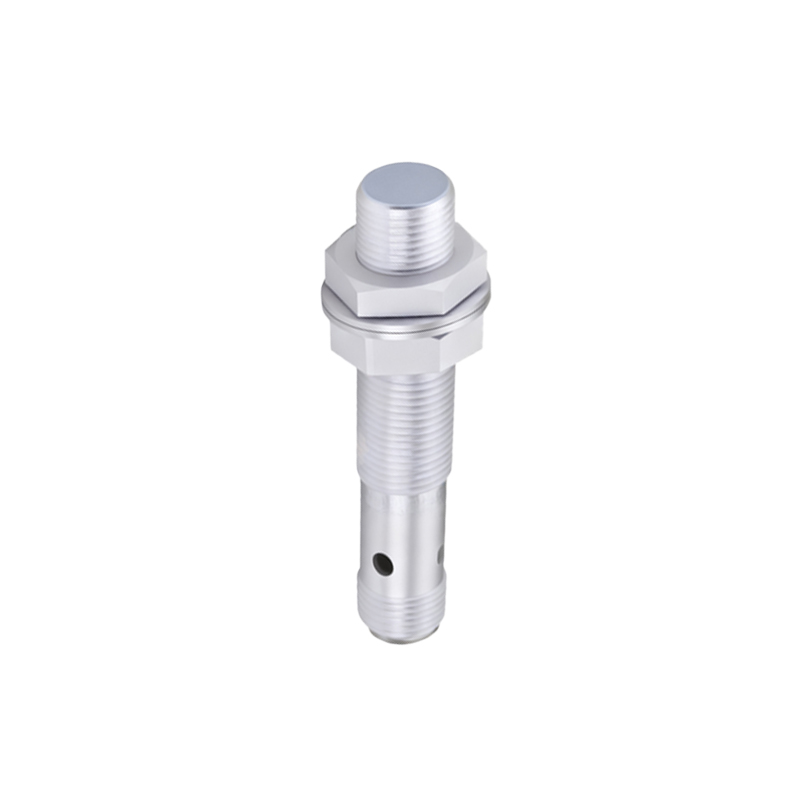
The applications of optical distance proximity sensors are vast and critical across numerous sectors. In manufacturing and packaging lines, they are indispensable for object counting, jam detection, and precise positioning on conveyor belts. Robotic arms utilize these sensors for accurate pick-and-place operations, ensuring delicate components are handled without physical contact. In the automotive industry, they contribute to assembly line automation, part verification, and even in advanced driver-assistance systems (ADAS) for obstacle detection. Consumer electronics represent another major frontier; smartphones integrate miniature optical proximity sensors to disable the touchscreen during calls, conserving battery and preventing accidental inputs. Furthermore, they are pivotal in AGVs (Automated Guided Vehicles) for navigation and collision avoidance, and in logistics for palletizing and dimensioning systems.
Selecting the appropriate optical sensor necessitates a careful evaluation of several key parameters. The sensing range is paramount and must match the application's physical constraints. Response time, the speed at which the sensor can detect a change, is crucial for high-speed automation. Environmental factors pose significant challenges; ambient light, dust, fog, or the target object's color and surface texture (e.g., shiny, dark, transparent) can dramatically affect performance. Modern sensors incorporate sophisticated compensation algorithms and modulated light signals to mitigate interference from ambient light. For harsh environments, sensors with high Ingress Protection (IP) ratings are essential to withstand dust and water exposure. The choice of output type—digital (PNP/NPN) or analog (4-20 mA, 0-10V)—must align with the control system's requirements.
The future trajectory of optical proximity sensing is geared towards greater miniaturization, enhanced intelligence, and network integration. The development of MEMS-based sensors and advanced CMOS imaging chips is driving down size and cost while improving performance. Integration with Industrial Internet of Things (IIoT) platforms is becoming standard, allowing sensors to not only provide raw data but also communicate diagnostic information, enabling predictive maintenance and smarter system-level decisions. Furthermore, the fusion of optical sensing data with other sensor modalities, like inertial measurement units (IMUs), is opening new avenues in robotics and autonomous systems for environmental perception and interaction.
In conclusion, optical distance proximity sensors are a dynamic and essential technology that bridges the physical and digital worlds in automated systems. Their ability to provide fast, accurate, and reliable non-contact sensing makes them a versatile solution for countless industrial and commercial challenges. As technology continues to evolve, these sensors will undoubtedly become even more intelligent, robust, and integral to the next generation of automated and intelligent systems, pushing the boundaries of what is possible in precision measurement and control.