In the realm of industrial automation and robotics, the ability to detect the presence, absence, or proximity of an object without physical contact is paramount. Among the diverse array of non-contact sensing technologies, pneumatic proximity sensors, often termed air sensors or air jet sensors, offer a unique and robust solution, particularly in challenging environments where electrical or optical sensors may falter. This article delves into the operational principles, key characteristics, and typical applications of pneumatic proximity sensors.
The fundamental principle of a pneumatic proximity sensor is based on the behavior of a compressed air jet in the presence of an object. The core system typically consists of a constant air supply, a precision nozzle (the emitter), and a pressure detection mechanism (the receiver). In a common configuration known as the through-beam or opposed mode, an air jet is continuously emitted from a nozzle. A pressure sensor or a simple diaphragm is positioned opposite the emitter. When an object interrupts this air jet, the backpressure at the receiver changes. This change in pressure is detected and converted into a switching signal. Another prevalent design is the reflective or diffuse mode. Here, a single unit houses both the emitter nozzle and the pressure receiver. The emitted air jet, when it strikes a target object within its sensing range, is reflected back to the receiver, causing a detectable pressure increase. The sensor's electronics or a pneumatic relay then triggers an output.
The key performance parameters of these sensors include sensing distance, repeatability, response time, and the minimum detectable object size. Sensing distance is generally shorter than that of inductive or capacitive sensors, often ranging from a few millimeters to several centimeters, depending on the air pressure and nozzle design. Their response time, while adequate for many industrial processes, is typically slower than electronic sensors due to the time required for air pressure to build or decay. However, their strengths lie in other critical areas.
One of the most significant advantages of pneumatic proximity sensors is their exceptional resilience. They are inherently immune to electrical interference (EMI/RFI), making them ideal for use in areas with strong electromagnetic fields, such as near welding equipment or large motors. They are also unaffected by ambient light, dust, smoke, and vapors that commonly plague optical sensors. Their operation is not influenced by the color, material, or surface finish of the target object; they can detect transparent materials like glass or clear plastic, shiny metals, and dark, non-metallic objects with equal reliability. This material independence is a decisive advantage. Furthermore, the sensing medium is clean, dry air, which means they can be used in sterile environments (e.g., food, pharmaceutical) or where sparks from electrical devices are a hazard (explosive atmospheres), provided the exhaust air is managed appropriately.
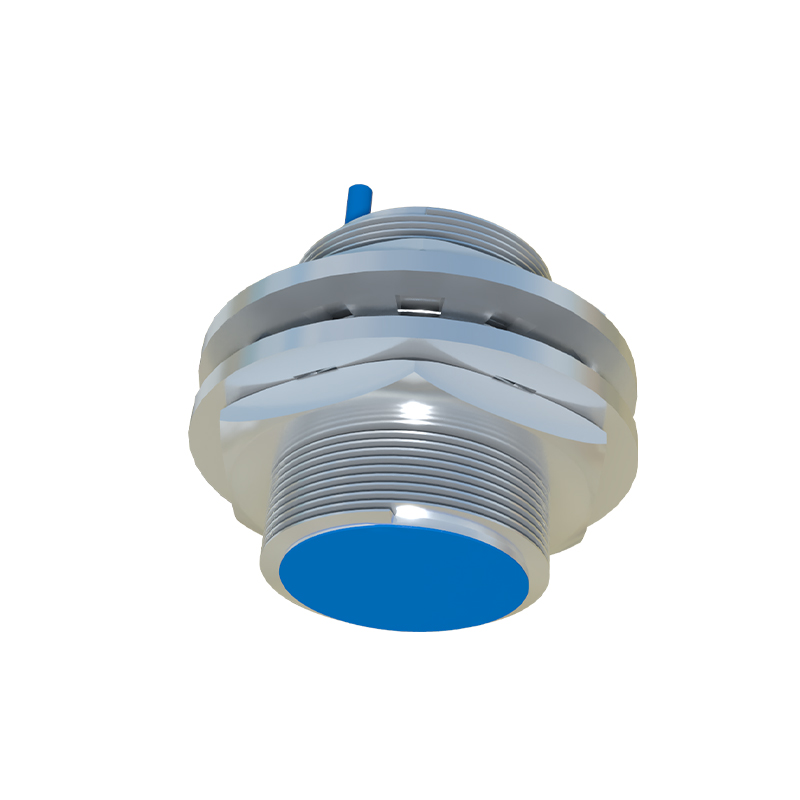
The applications for pneumatic proximity sensors are vast and varied. In the automotive industry, they are used to verify the presence of components on assembly lines, such as checking if a rubber gasket has been placed on an engine block, regardless of its color or reflectivity. In packaging machinery, they detect the presence of transparent films, bottles, or labels. In metalworking, they can sense the position of hot forgings or metal sheets where high temperatures would damage other sensor types. They are also extensively used in woodworking and paper processing to detect warped boards or paper sheet breaks. In robotics, they can serve as a simple, reliable collision detection or part-present verification system on grippers.
When selecting a pneumatic proximity sensor, engineers must consider factors such as the required sensing distance, the size and nature of the target object, the available air supply pressure and cleanliness, the required response speed, and the environmental conditions (temperature, contaminants). Regular maintenance involves ensuring a clean, dry air supply and keeping the emitter nozzle free of obstructions.
In conclusion, while they may not boast the long range or high speed of some electronic counterparts, pneumatic proximity sensors fill a crucial niche in industrial sensing. Their simplicity, robustness, material independence, and safety in harsh or hazardous conditions make them an indispensable tool in the automation engineer's arsenal. Their operation, based on the reliable physics of fluid dynamics, continues to provide elegant solutions to complex detection challenges across countless industries.