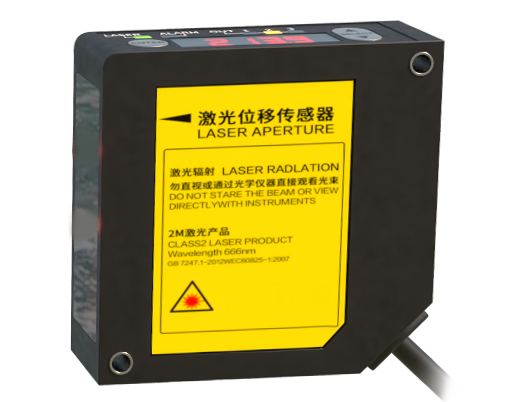
In the realm of modern electrical engineering, laser wireless sensors have emerged as a pivotal technology, revolutionizing how we measure, monitor, and manage various systems. These sensors utilize laser beams to detect physical parameters such as distance, displacement, vibration, and temperature without the need for physical contact or wired connections. The core principle involves emitting a focused laser beam toward a target; the reflected light is then analyzed to derive precise measurements based on changes in properties like intensity, phase, or time-of-flight. This non-contact nature makes laser wireless sensors ideal for applications in harsh or inaccessible environments, where traditional sensors might fail due to wear, contamination, or installation constraints.
One of the key advantages of laser wireless sensors is their high accuracy and resolution. For instance, in industrial automation, they enable micron-level precision in alignment and positioning tasks, enhancing manufacturing quality and efficiency. In structural health monitoring, these sensors can detect minute vibrations or deformations in bridges, buildings, or machinery, allowing for predictive maintenance and reducing downtime. The wireless aspect further amplifies their utility by eliminating cabling costs and complexities, facilitating easier deployment in large-scale or remote setups, such as in smart grids or environmental sensing networks.
The technology behind laser wireless sensors often incorporates advanced components like laser diodes, photodetectors, and signal processing units. Common types include laser distance sensors, which use time-of-flight or triangulation methods, and laser Doppler vibrometers, which measure velocity based on frequency shifts in reflected light. Integration with wireless communication protocols, such as Wi-Fi, Bluetooth, or LoRa, enables real-time data transmission to control systems or cloud platforms, supporting IoT (Internet of Things) applications. This connectivity allows for continuous monitoring and analytics, empowering industries to optimize operations and respond proactively to anomalies.

However, challenges persist in the adoption of laser wireless sensors. Environmental factors like ambient light, dust, or fog can interfere with laser beams, potentially affecting reliability. Engineers must consider these limitations during design, often implementing filters, adaptive algorithms, or redundant systems to mitigate risks. Additionally, power management is crucial for wireless devices; energy-efficient designs or energy-harvesting techniques may be employed to extend battery life in field deployments. Despite these hurdles, ongoing research in areas like quantum sensing and miniaturization promises to enhance performance and broaden applicability.
In conclusion, laser wireless sensors represent a transformative tool in electrical engineering, offering unparalleled precision and flexibility. As industries increasingly embrace automation and digitalization, their role in enabling smart, connected systems will only grow. By understanding their principles, benefits, and limitations, professionals can leverage this technology to drive innovation and efficiency across sectors, from manufacturing and energy to healthcare and beyond.