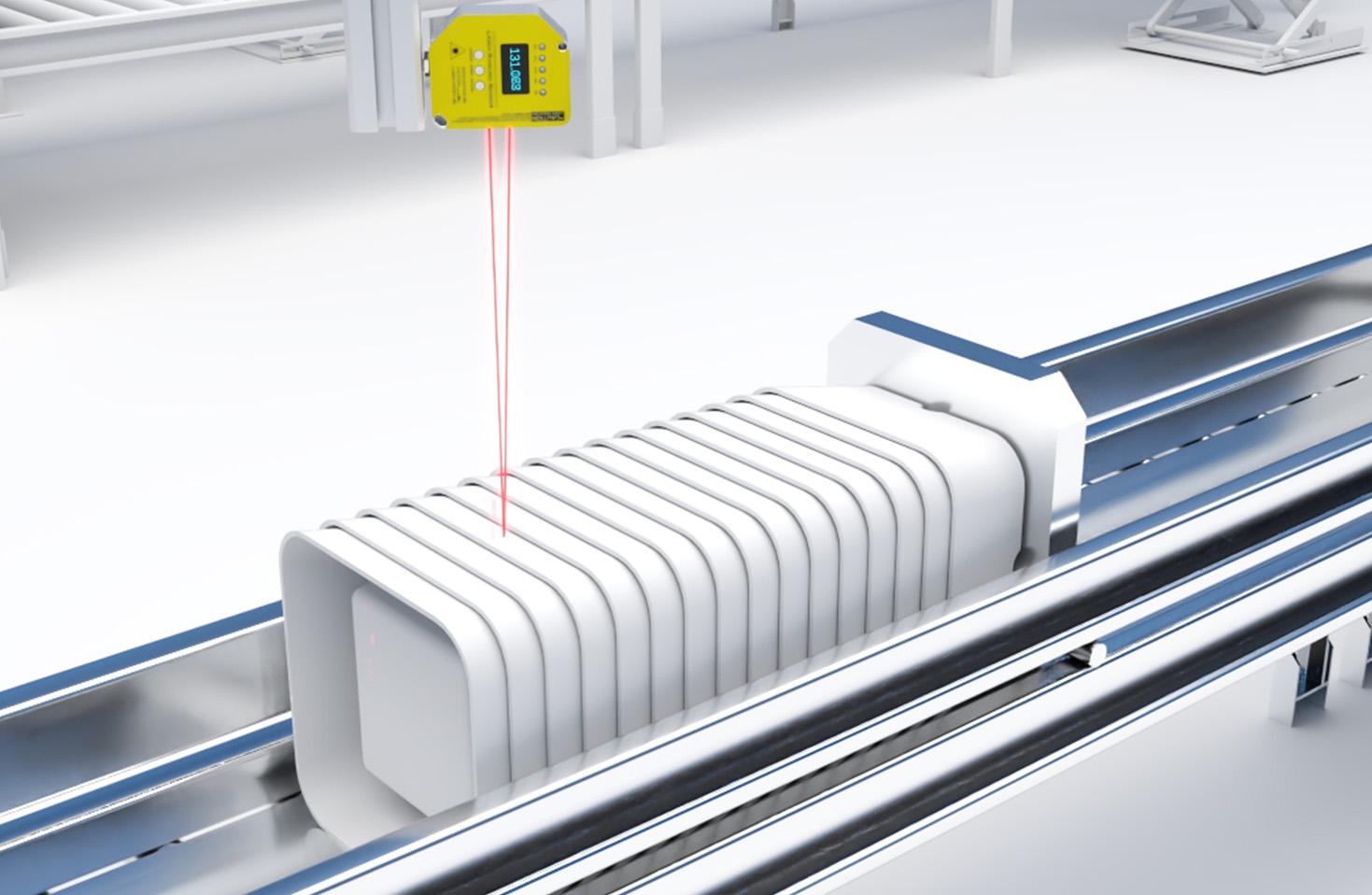
In the realm of high-precision industrial measurement, German-engineered displacement laser sensors stand as a benchmark for accuracy, reliability, and innovation. These sophisticated devices, often referred to as laser triangulation sensors, utilize a focused laser beam to measure distance, position, or displacement with micron-level precision. The core principle involves projecting a laser spot onto a target surface; the reflected light is captured by a receiving lens at a specific angle, and the position of this light spot on a detector (typically a CCD or PSD array) is analyzed. Through precise triangulation calculations, the sensor determines the exact distance to the target. This non-contact method is crucial for applications where physical touch could damage delicate surfaces or introduce measurement errors.
The German engineering philosophy, renowned for its rigorous quality control and deep integration of advanced optics, electronics, and software, is evident in every aspect of these sensors. Leading manufacturers from Germany invest heavily in research and development to push the boundaries of what is possible. Key performance parameters include measuring range, resolution, linearity error, and spot size. For instance, high-end models can achieve sub-micron resolution over ranges of several millimeters or even centimeters, with exceptional linearity ensuring that measurements are consistently accurate across the entire working range. The stability of these sensors under varying environmental conditions—such as temperature fluctuations and ambient light interference—is a critical focus, often addressed through sophisticated compensation algorithms and robust mechanical housing.
Applications for German displacement laser sensors are vast and span numerous high-tech industries. In automotive manufacturing, they are indispensable for measuring component thickness, checking gap dimensions on car bodies, and monitoring runout on brake discs. The semiconductor industry relies on them for wafer alignment, bump height inspection, and precise stage positioning. In precision machining, they control tool wear and part dimensions in real-time. Furthermore, they play a vital role in quality control for electronics assembly, medical device production, and even in research laboratories for material testing and development. The ability to provide high-speed, real-time data makes them integral to automated production lines and Industry 4.0 smart factories, where they feed critical measurement data into control systems for closed-loop process optimization.
When selecting a displacement laser sensor, several factors must be considered beyond basic specifications. The material, color, and surface finish of the target object significantly influence performance. Highly reflective or transparent materials present challenges that German sensor manufacturers often overcome with specialized models featuring adjustable laser power, advanced filter systems, or proprietary signal processing techniques. Integration is another key consideration; modern sensors offer a variety of digital and analog interfaces (e.g., EtherCAT, PROFINET, IO-Link, 0-10V) for seamless connectivity with PLCs and industrial networks. Software suites provided by manufacturers enable easy configuration, data visualization, and advanced analysis, simplifying setup and diagnostics.
The future trajectory of this technology from Germany points towards even greater miniaturization, higher speeds, and enhanced intelligence. The integration of embedded intelligence for edge computing, allowing for preliminary data analysis directly within the sensor, is a growing trend. Furthermore, the fusion of laser measurement data with other sensor inputs, like vision systems, is creating more comprehensive inspection solutions. In conclusion, displacement laser sensors from Germany represent the pinnacle of measurement technology. Their unparalleled precision, robust construction, and adaptability make them a cornerstone of modern industrial automation, driving quality, efficiency, and innovation across the global manufacturing landscape. For engineers and system integrators demanding the utmost in measurement performance, German laser sensors remain the definitive choice.