In the evolving landscape of industrial automation and machine safety, proximity sensing technology continues to be a cornerstone. Among the latest advancements, the toroidal inductive proximity switch, often referred to as a ring-shaped or annular sensor, is garnering significant attention for its unique capabilities in non-contact object detection. Unlike traditional cylindrical inductive sensors, this innovative design features a central aperture, allowing objects to pass directly through the sensor's core. This architecture unlocks novel applications and solves long-standing challenges in high-speed automation and precision control.
The fundamental operating principle remains based on electromagnetic induction. The sensor generates a high-frequency oscillating electromagnetic field within its toroidal core. When a metallic target object passes through the aperture, it disturbs this field, inducing eddy currents within the target. This disturbance causes a change in the oscillation amplitude or frequency, which is detected by the sensor's internal circuitry, triggering a solid-state output signal. The key differentiator is the sensing field's configuration: it is concentrated within the central opening, creating a highly defined and consistent detection zone. This makes it exceptionally effective for detecting small metallic parts, fast-moving objects like screws or bolts on a conveyor, or verifying the presence of components on a shaft or wire.
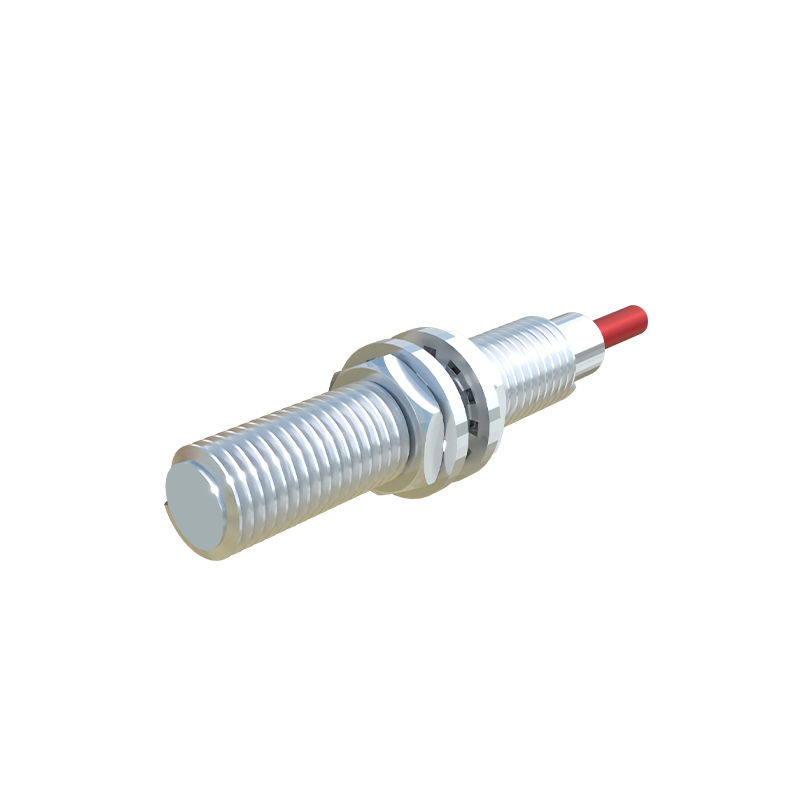
The advantages of the toroidal proximity sensor are multifaceted. First and foremost is its ability for true "pass-through" detection without requiring a lateral approach. This is invaluable in applications involving wires, cables, rods, or fast-moving small parts where side-mounted sensors are impractical. It enables 100% inspection without impeding the production flow. Secondly, its detection is remarkably precise and repeatable, largely immune to environmental factors like dust, oil, or non-metallic debris that might accumulate on the sensor face of a standard model. The focused field minimizes false triggers from nearby metallic structures. Furthermore, these sensors are capable of detecting objects at very high speeds, making them ideal for counting or sorting applications in packaging, assembly, and electronics manufacturing.
Typical industrial applications are diverse. In the automotive sector, they are deployed to verify the presence of piston pins or valve springs on production lines. In wire drawing and cable manufacturing, they monitor the passage of wire to detect breaks or ensure continuous feed. They are indispensable in high-speed bottling and canning lines for cap or lid presence verification. Within electronic component assembly, these sensors accurately count tiny connectors or leads. Another critical use is in safety interlocking systems, where they can detect whether a tool or mandrel is correctly positioned before initiating a machine cycle, preventing costly damage or accidents.
When selecting a toroidal inductive sensor, engineers must consider several key specifications. The internal diameter (aperture size) is paramount and must accommodate the maximum dimension of the target object with sufficient clearance. Sensing distance, typically a fraction of the aperture diameter, defines the effective detection zone within the hole. The choice of output type (PNP/NPN, NO/NC) and supply voltage must align with the control system. Environmental ratings, such as IP67 or IP69K for washdown environments, are crucial for food, pharmaceutical, or harsh industrial settings. Additionally, the switching frequency must be high enough to handle the maximum expected object passage speed without missing counts.
Looking ahead, the integration of smart features is the next frontier. Modern toroidal sensors are beginning to incorporate IO-Link communication, enabling parameterization, real-time monitoring of signal strength, and diagnostic data transmission for predictive maintenance. This digital layer transforms the sensor from a simple switch into a intelligent node within the Industrial Internet of Things (IIoT) ecosystem. Material science advancements may also lead to sensors capable of discriminating between different metal types or alloys, adding another layer of process intelligence.
In conclusion, the toroidal inductive proximity switch represents a significant specialization within sensor technology. Its unique pass-through design addresses specific, high-value challenges in automation that conventional sensors cannot. By offering reliable, high-speed, and precise detection in demanding environments, it enhances both operational efficiency and system safety. As industries strive for greater precision, speed, and connectivity, the role of this innovative annular sensor is poised to expand, solidifying its place as a critical component in the advanced manufacturing toolkit.