Laser sensors represent a cornerstone of modern measurement and detection technology. Operating on the principle of emitting a focused beam of coherent light, these devices measure physical parameters by analyzing how the laser light interacts with a target. The fundamental process involves the emission, reflection, or scattering of the laser beam, with the sensor's receiver detecting changes in the beam's properties, such as time-of-flight, phase shift, or intensity. This allows for exceptionally precise, non-contact measurements of distance, displacement, position, and even the presence or profile of an object.
The landscape of laser sensors is diverse, categorized primarily by their operating principle. Laser triangulation sensors are renowned for high-resolution measurements at short to medium ranges. They work by projecting a laser spot onto the target; the reflected light is focused onto a position-sensitive detector, and the spot's position shifts proportionally to the target's distance. Conversely, time-of-flight (ToF) sensors calculate distance by measuring the time it takes for a laser pulse to travel to the target and back. These are ideal for longer ranges, though typically with slightly lower resolution than triangulation methods. Confocal chromatic sensors use white light, filtered to a specific wavelength by a lens, to achieve nanometer-level accuracy for thickness and distance measurements on challenging surfaces like glass or mirrors. Laser Doppler vibrometers, a more specialized type, measure velocity and displacement by detecting the frequency shift in laser light scattered from a vibrating surface.
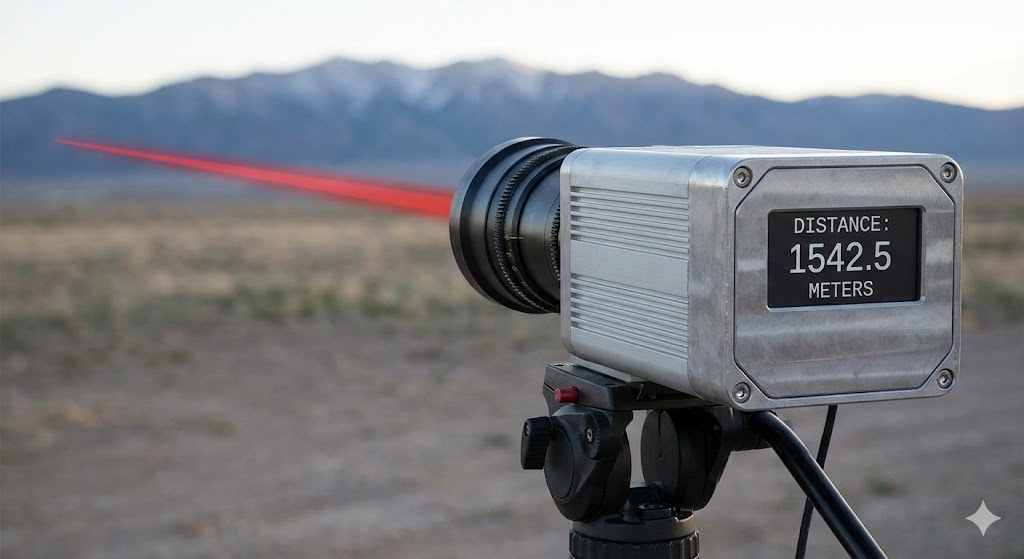
The advantages of laser sensors are compelling. They offer unparalleled accuracy and resolution, often down to the sub-micron level. Their non-contact nature eliminates wear on the sensor and prevents damage to delicate targets. They provide fast response times, capable of thousands of measurements per second, which is crucial for dynamic processes and high-speed automation. Furthermore, many laser sensors are immune to ambient light interference and can perform reliably on a wide variety of surface materials and colors, though highly reflective or absorptive surfaces can pose challenges that specific sensor types are designed to overcome.
Applications for laser sensors span virtually every industrial and scientific field. In manufacturing and automation, they are indispensable for precise positioning, robotic guidance, part inspection, and thickness control. The automotive industry relies on them for assembly line verification, gap and flush measurement, and as a key component in LiDAR systems for autonomous vehicles. In electronics, they measure wafer warpage, component placement, and solder paste height. Beyond industry, laser sensors enable topographic mapping, structural health monitoring of bridges and buildings, and even medical diagnostics and surgical guidance. Their role in research and development is equally vital, facilitating experiments in physics, materials science, and biomechanics.
Selecting the appropriate laser sensor requires careful consideration of several parameters. Key specifications include measuring range, resolution, repeatability, linearity error, and spot size. The target's properties—its material, surface finish, color, and possible movement—must be evaluated against the sensor's capabilities. Environmental factors like temperature fluctuations, dust, or humidity can also influence performance and dictate the need for protective housings or specific laser classes for safety. Understanding the required output signal, whether analog voltage, current, or digital communication protocols like IO-Link or Ethernet, is essential for system integration.

In conclusion, laser sensors are a transformative technology enabling precision, speed, and reliability where mechanical or other optical methods fall short. From the factory floor to cutting-edge laboratories, their ability to deliver accurate, non-contact data drives innovation, enhances quality control, and automates complex tasks. As laser and detector technologies continue to advance, future generations of sensors will offer even greater capabilities, further expanding their integral role in an increasingly automated and data-driven world.