In the dynamic landscape of industrial automation, proximity sensors stand as fundamental components, enabling non-contact detection of objects. A clear classification chart is essential for engineers and technicians to select the optimal sensor for a specific application. This article delineates the primary categories of proximity sensors, their operating principles, and typical use cases, providing a structured overview for informed decision-making.
The taxonomy of proximity sensors is primarily based on their underlying detection technology. The most prevalent categories include Inductive, Capacitive, Ultrasonic, Photoelectric, and Magnetic (Reed Switch or Hall Effect) sensors. Each type possesses distinct characteristics, advantages, and limitations.
1. Inductive Proximity Sensors
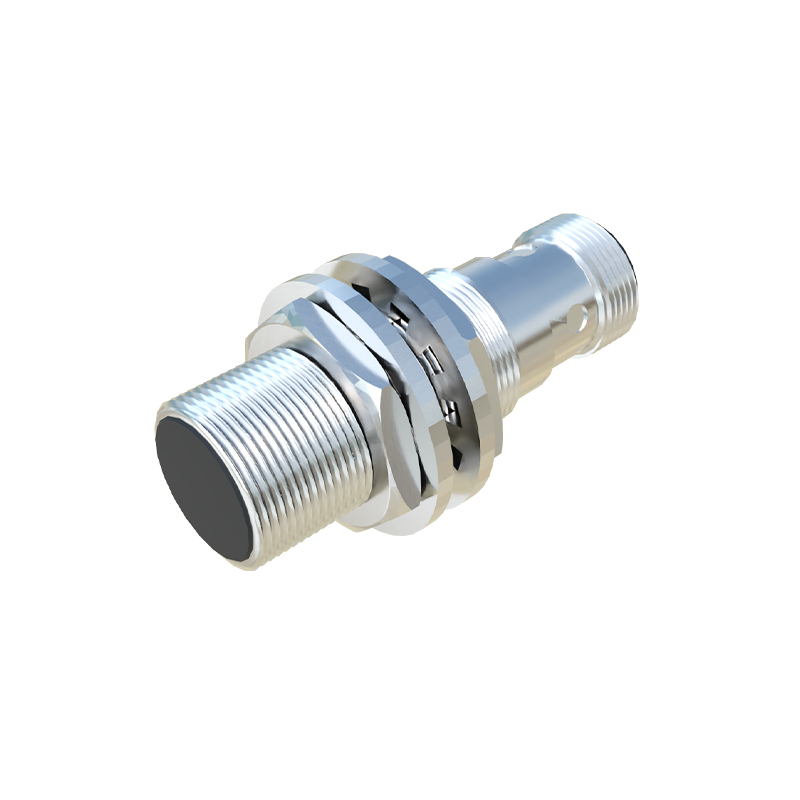
These sensors generate an electromagnetic field and detect the eddy currents induced in a metallic target. They are exclusively for detecting ferrous and non-ferrous metals. Key sub-classifications include:
Shielded (Flush-mountable): The sensing face is surrounded by a metal shield, allowing flush installation in metal without affecting performance. Ideal for tight spaces.
Unshielded (Non-flush-mountable): Offers a longer sensing range but requires a non-metallic surrounding area for installation.
Common applications involve position sensing of machine parts, limit switching, and metal object counting. They are renowned for robustness, high switching frequency, and resistance to environmental contaminants like dust or oil.
2. Capacitive Proximity Sensors
Capacitive sensors can detect both metallic and non-metallic materials (liquids, plastics, wood, granules) by measuring changes in capacitance. The sensor forms one plate of a capacitor, the target object forms the other (or alters the dielectric constant), and the air gap is the dielectric. They are further classified by design:
Standard Sensing Face: For general-purpose detection.
Cylindrical and Rectangular Housings: For varied mounting requirements.
These sensors are pivotal in level detection of liquids or bulk materials, presence detection of non-metallic objects, and touch-sensitive control panels. Sensitivity is often adjustable to ignore certain materials or container walls.
3. Photoelectric Sensors
Operating on light beam principles, these offer the longest sensing ranges and are highly versatile. Their classification is based on the light beam's operation mode:
Through-beam (Opposed): Consists of separate emitter and receiver units. An object is detected when it interrupts the light beam. Offers high reliability and long range.
Retro-reflective: Uses a single unit and a reflector. Detection occurs when the object breaks the beam to the reflector. Easier alignment than through-beam.
Diffuse (Proximity) Reflective: The sensor emits light and detects the reflection from the target object itself. Sensing distance depends on the target's color and surface texture.
They are indispensable in packaging, material handling, and assembly lines for detecting objects irrespective of material, color sensing, and transparent object detection.
4. Ultrasonic Proximity Sensors
These sensors evaluate the time-of-flight of high-frequency sound waves (echo) to determine the presence or distance of an object. They are largely immune to color, transparency, or material (except sound-absorbing surfaces). Classifications include:
Proximity Mode: Simple presence/absence detection within a set window.
Ranging Mode: Provides continuous analog or digital distance measurement.
Primary applications are in challenging environments with dust, fog, or varying light, such as bulk solid level control, distance measurement, and transparent bottle detection on conveyors.
5. Magnetic Proximity Sensors
These detect the presence of a permanent magnet. The two main types are:
Reed Switch Sensors: A sealed glass tube with ferromagnetic reeds that close in the presence of a magnetic field. Simple, low-cost, but with limited switching speed.
Hall Effect Sensors: A semiconductor device that changes its output voltage in response to a magnetic field. Offers faster switching, higher precision, and durability.
They are extensively used for cylinder position feedback, door/window security systems, and speed sensing via magnetic encoders.
Selection Criteria & Classification Chart
A practical classification chart for engineers would map these sensor types against critical selection parameters:
Target Material: Metal only (Inductive), All materials (Capacitive, Ultrasonic, Photoelectric), Magnet only (Magnetic).
Sensing Range: Short (Inductive, Capacitive), Medium to Long (Photoelectric, Ultrasonic).
Environmental Robustness: High (Inductive, Ultrasonic), Medium (Capacitive, Photoelectric).
Output Type: Digital (PNP/NPN), Analog (4-20mA, 0-10V), IO-Link for smart sensors.
Key Application Focus: Position (Ind