In the realm of industrial automation and electrical engineering, proximity sensors are indispensable components for non-contact object detection. Among the various form factors and specifications, the M3 size proximity sensor holds a significant position, particularly in applications demanding compactness and precision. This article delves into the technical aspects, operational principles, and application considerations of M3 proximity sensors, providing a detailed guide for professionals in the field.
An M3 proximity sensor refers to a sensor with an M3 threaded cylindrical housing, typically 3mm in diameter. This miniature size is a key defining characteristic. Despite their small footprint, these sensors are engineered to deliver reliable performance. They are predominantly available in two sensing technologies: inductive and capacitive. Inductive M3 sensors are the most common, designed to detect metallic objects, primarily ferrous metals like iron and steel. They operate on the principle of electromagnetic induction. The sensor generates an oscillating electromagnetic field from its face. When a metallic target enters this field, eddy currents are induced on the target's surface, causing a change in the oscillation amplitude. The sensor's internal circuitry detects this change and triggers a switching output. Capacitive M3 sensors, while less common in this size, can detect both metallic and non-metallic materials (plastics, liquids, wood) by sensing changes in capacitance caused by the target material altering the electrostatic field.
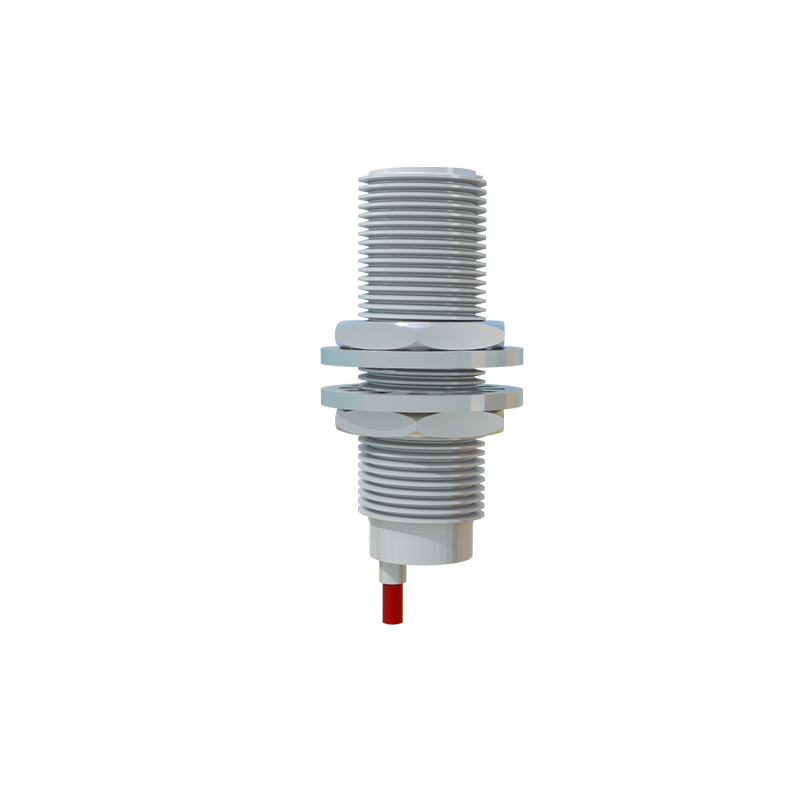
The output configuration is a critical specification. M3 sensors commonly feature a 2-wire or 3-wire DC design. Three-wire versions are prevalent, offering separate wires for power supply positive (brown), power supply negative/ground (blue), and the switched output signal (black). The output can be either NPN (sinking) or PNP (sourcing), a selection that must align with the controller's input module requirements. The sensing range for an M3 inductive sensor is relatively short, usually between 0.5mm to 1.5mm, due to its miniature coil size. This makes target positioning accuracy paramount. Key performance parameters include repeat accuracy, which can be in the micron range, response frequency (often up to several kHz), and switching hysteresis to prevent output chatter.
The selection of an M3 proximity sensor must be driven by the application's specific demands. The primary advantage is their ability to fit into extremely tight spaces where larger sensors cannot be mounted. Common applications include precision assembly machines, small robotic grippers, semiconductor manufacturing equipment, and miniature parts counting or positioning on high-speed conveyors. They are ideal for detecting tiny components like screws, pins, or specific features on a small metal part. When integrating an M3 sensor, engineers must pay close attention to the mounting environment. Flush-mounted (shielded) models allow for side-by-side installation without mutual interference, whereas non-flush (unshielded) models offer a slightly longer sensing range but require metallic-free zones around the sensing face. Material compatibility is also crucial; for inductive sensors, the target material's properties (e.g., stainless steel has a reduced sensing range compared to mild steel) must be accounted for in the design.
Environmental robustness is another consideration. Many M3 sensors are built to IP67 standards, making them resistant to dust ingress and temporary immersion in water, suitable for harsh industrial environments. Electrical characteristics such as supply voltage (commonly 10-30V DC), output current rating (typically around 100mA), and protection against short-circuit, reverse polarity, and overload are standard features that enhance reliability.
Installation and wiring require careful handling due to the sensor's small size. Over-tightening during installation can damage the housing or threads. Proper alignment with the target is essential to achieve the rated sensing distance. For wiring, using pre-crimped connectors with appropriate gauge wires is recommended to ensure a secure and reliable connection. Diagnostic LEDs, often integrated into the sensor body, provide visual confirmation of power status and output switching, which is invaluable for troubleshooting.
In summary, the M3 proximity sensor is a specialized tool for precision detection in confined spaces. Its selection involves a careful balance of size constraints, sensing technology, output type, electrical requirements, and environmental factors. For electrical engineers designing compact automated systems, a thorough understanding of these miniature workhorses is essential for ensuring system reliability, accuracy, and efficiency. As miniaturization trends continue in manufacturing and robotics, the role of the M3 proximity sensor is likely to become even more prominent, pushing the boundaries of what is possible in precise, non-contact detection.