Proximity sensors are indispensable components in modern industrial automation, providing non-contact detection of objects within a specific range. Their ability to function without physical contact makes them ideal for harsh environments, high-speed applications, and scenarios where object preservation is critical. The core principle behind their operation is the detection of changes in a physical field or the emission and reception of a signal. This article delves into the primary detection principles of the most common types of proximity sensors: inductive, capacitive, and photoelectric.
Inductive proximity sensors are the workhorses for detecting metallic objects. Their operation is based on the principle of electromagnetic induction. The sensor contains a coil that is part of an oscillator circuit, generating a high-frequency electromagnetic field at its active face. When a metallic object enters this field, eddy currents are induced on the surface of the object. These eddy currents draw energy from the oscillator, causing a reduction in its oscillation amplitude. An evaluation circuit within the sensor monitors this amplitude change. Once the amplitude drops below a predetermined threshold, the sensor's output state switches, signaling the presence of the target. The sensing distance depends on the type of metal; ferrous metals like iron and steel are detected at the nominal sensing distance, while non-ferrous metals like aluminum or copper typically have a reduced sensing range due to differences in conductivity and permeability. Inductive sensors are renowned for their robustness, high switching frequency, and immunity to environmental factors like dust, oil, and moisture, making them perfect for machine tool positioning, part counting on conveyor belts, and limit switching.
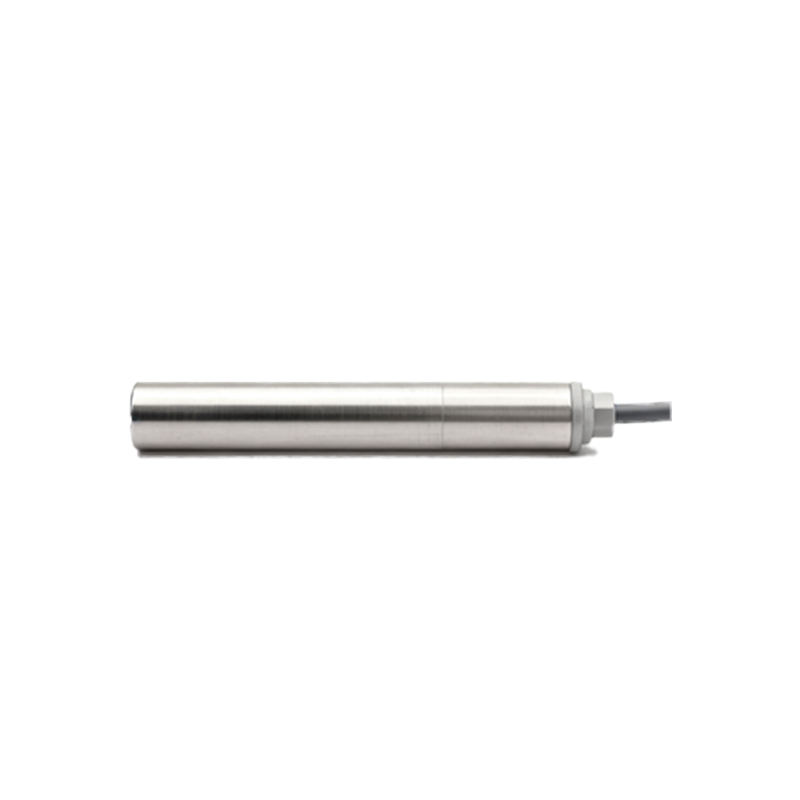
Capacitive proximity sensors, in contrast, can detect both metallic and non-metallic materials, including liquids, powders, plastics, and wood. They operate by generating an electrostatic field. The sensor's active face acts as one plate of a capacitor, with the target object acting as the other plate. The internal oscillator circuit is tuned so that it does not oscillate without a target present. When any material with a dielectric constant different from air approaches the sensing face, it alters the capacitance of the system. This change in capacitance increases the oscillation amplitude. The evaluation circuit detects this increase and triggers an output switch once a certain amplitude level is reached. A sensitivity adjustment potentiometer is often provided to fine-tune the sensor for different materials or to ignore interfering backgrounds, such as a container wall. This versatility makes capacitive sensors ideal for level detection of liquids or granular materials, presence detection of non-metallic parts, and touch control interfaces.
Photoelectric sensors represent a broad category that uses light for detection. They consist of a light emitter (usually an LED) and a receiver. The three main operating modes are through-beam, retro-reflective, and diffuse reflective. In through-beam mode, the emitter and receiver are separate units facing each other. An object is detected when it interrupts the light beam. This mode offers the longest sensing range and highest reliability. Retro-reflective mode uses a single housing containing both emitter and receiver, along with a reflector. The sensor detects an object when it blocks the light beam reflected back from the reflector. Diffuse reflective (or proximity) mode also uses a single unit, but it detects the light reflected directly off the target object itself. The detection is based on the intensity of the reflected light. Advanced versions use background suppression or time-of-flight principles to ensure detection is based on distance rather than reflectivity or color. Photoelectric sensors excel in long-range detection, small part recognition, and transparent object sensing, finding applications in packaging, material handling, and assembly automation.
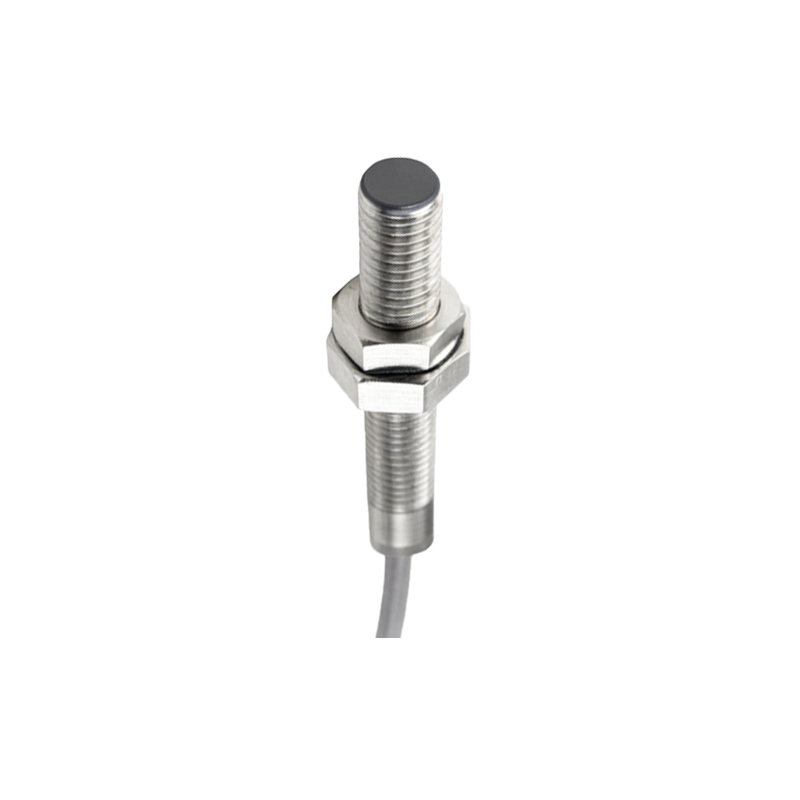
Ultrasonic proximity sensors operate on a principle similar to sonar. They emit high-frequency sound pulses and measure the time it takes for the echo to return from a target. The distance to the object is calculated based on the speed of sound. They are excellent for detecting objects regardless of color, transparency, or material, and are commonly used for liquid level control, distance measurement, and presence detection of irregularly shaped objects.
In conclusion, the selection of a proximity sensor hinges on the specific application requirements: target material, required sensing distance, environmental conditions, switching speed, and cost. Inductive sensors are optimal for metals in tough environments. Capacitive sensors handle diverse materials, including non-solids. Photoelectric sensors provide versatility and long range for precise detection. Understanding these fundamental detection principles empowers engineers to design more efficient, reliable, and intelligent automated systems, ensuring optimal performance in everything from simple presence detection to complex robotic guidance.