In the realm of industrial automation, precision and reliability are paramount. Laser guided sensors have emerged as a cornerstone technology, enabling advanced control, measurement, and detection tasks across diverse sectors such as manufacturing, logistics, and robotics. These sophisticated devices operate by emitting a focused beam of coherent light—a laser—and analyzing the reflected signal to determine critical parameters like distance, presence, position, or profile of an object. Unlike traditional photoelectric sensors, laser sensors offer significantly higher accuracy, resolution, and range, making them indispensable in applications demanding micron-level precision.
The core principle behind laser guided sensors involves time-of-flight (ToF), triangulation, or phase-shift measurement techniques. In a typical ToF configuration, the sensor calculates the distance to a target by measuring the time interval between the emission of a laser pulse and the reception of its reflection. This method is highly effective for long-range sensing, often exceeding several meters, and is commonly used in automated guided vehicles (AGVs) for navigation and obstacle avoidance. Triangulation-based sensors, on the other hand, are preferred for short-range, high-accuracy measurements. Here, a laser diode projects a spot onto the target surface, and a receiving lens focuses the reflected light onto a position-sensitive detector. Any change in the target's distance causes a shift in the spot position on the detector, allowing for precise displacement calculation. This technique is vital in quality control inspections, wafer alignment in semiconductor fabrication, and thickness monitoring.
Key advantages of laser sensors include their exceptional beam quality, which remains narrow and coherent over long distances, minimizing interference from ambient light or environmental factors. Many models incorporate advanced features such as background suppression, which allows them to ignore objects beyond a set distance, and teach-in functionality for easy configuration. Furthermore, the advent of Class 1 and Class 2 laser products ensures safety, as they are designed to be eye-safe under normal operating conditions, complying with international standards like IEC 60825.
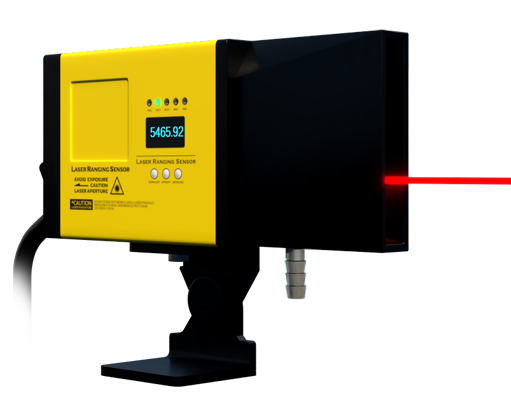
Applications are vast and varied. In automotive assembly lines, laser sensors perform precise gap and flush measurements between body panels. In packaging machinery, they detect minute defects on labels or verify fill levels in transparent containers with high reliability. Warehousing and logistics leverage laser-guided AGVs and forklifts for autonomous material handling, where sensors create real-time maps and navigate complex environments. Robotics integration is another critical area; laser sensors provide accurate feedback for arm positioning, pick-and-place operations, and collaborative robot safety zones.
Selecting the appropriate laser sensor requires careful consideration of several factors. The required measurement range, resolution, response time, and environmental conditions (e.g., dust, temperature, vibrations) must be evaluated. For instance, in dirty or humid environments, sensors with higher ingress protection (IP) ratings are necessary. Connectivity options, such as IO-Link, Ethernet/IP, or PROFINET, also play a role in seamless integration into modern Industrial Internet of Things (IIoT) networks, enabling predictive maintenance and data analytics.
Despite their robustness, challenges persist. Highly reflective or absorbent surfaces can affect measurement accuracy, necessitating sensor tuning or the use of specialized models. Regular calibration is recommended to maintain performance over time. Looking ahead, trends point toward miniaturization, increased intelligence with embedded edge computing, and enhanced multi-sensor fusion capabilities. The integration of artificial intelligence will further empower these sensors to perform complex pattern recognition and adaptive decision-making autonomously.
In conclusion, laser guided sensors represent a transformative force in industrial automation. Their unparalleled precision, speed, and versatility drive efficiency, quality, and safety in modern production ecosystems. As technology evolves, these sensors will continue to push the boundaries of what is possible in automated systems, solidifying their role as essential components in the smart factories of the future. Engineers and technicians are encouraged to stay abreast of these developments to fully leverage the potential of laser sensing technology in optimizing operational workflows.