Laser distance sensors have become indispensable tools across numerous industrial sectors due to their precision, speed, and versatility. These devices operate on the principle of measuring the time-of-flight or phase shift of a laser beam reflected from a target object. Understanding their core characteristics is essential for selecting the right sensor for a specific application.
One of the primary characteristics is measurement range. Sensors are available for short-range (a few centimeters), medium-range (up to several meters), and long-range (hundreds of meters) applications. The required range dictates the laser type and power. Accuracy and resolution are equally critical. High-end industrial sensors offer sub-millimeter accuracy and micrometer-level resolution, enabling tasks like precise component alignment or thickness measurement. The choice often involves a trade-off; higher accuracy and resolution may come at a higher cost or with a reduced measurement range.
Measurement speed, or sampling rate, is vital for dynamic processes. Sensors can achieve sampling rates from a few hundred to over a hundred thousand measurements per second. This allows for real-time monitoring on high-speed production lines, such as checking fill levels in bottling plants or profiling moving objects.

The type of laser used is a defining feature. Most industrial sensors employ visible red lasers or Class 1 or 2 infrared lasers, which are eye-safe. Red lasers are advantageous for simple alignment as the spot is visible. Infrared lasers are often used for longer ranges or where the visible beam might be distracting. Laser class (safety rating) must always be considered for the operational environment.
Environmental robustness is a non-negotiable trait. Industrial sensors are typically housed in rugged enclosures with high Ingress Protection (IP) ratings (e.g., IP67) to withstand dust, moisture, oils, and mechanical vibrations. Operating temperature range is also specified, allowing deployment in harsh conditions from freezing cold storage to hot manufacturing cells.
The output interface and connectivity determine how the sensor integrates into a control system. Common outputs include analog (4-20 mA, 0-10 V), digital (RS-232, RS-485), and industrial Ethernet protocols (EtherNet/IP, PROFINET). Some advanced sensors offer integrated switching outputs or IO-Link for smart sensor communication and parameterization.
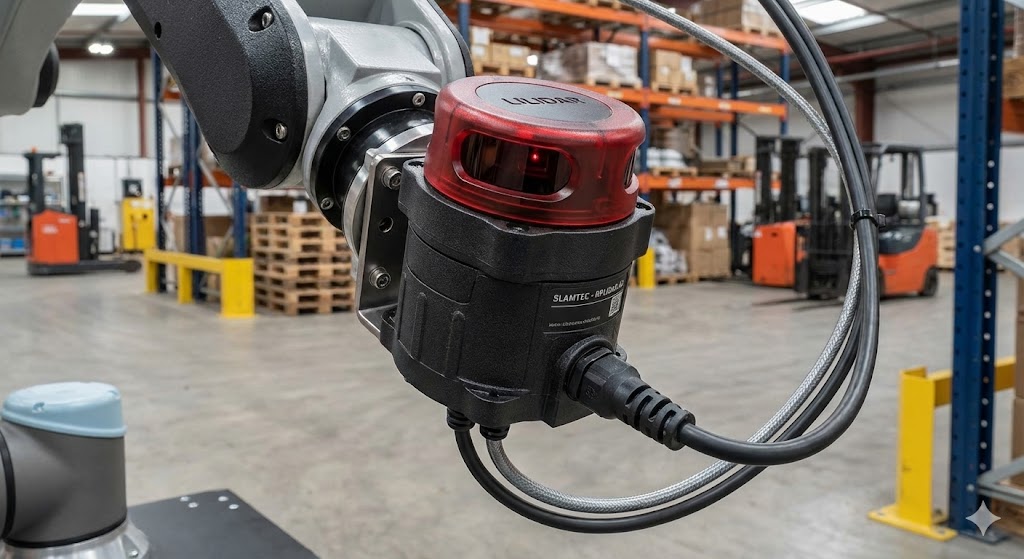
Beam characteristics, such as spot size and divergence, affect measurement capability on different surfaces. A small, focused spot is excellent for measuring small objects or edges, while a larger spot can average measurements on rough or granular surfaces. Some sensors feature a visible line laser instead of a point, useful for profile scanning.
Applications are vast and varied. In logistics and warehousing, they measure package dimensions for automated sorting and storage. In automotive assembly, they ensure precise gap and flushness between body panels. In robotics, they provide critical feedback for navigation, pick-and-place operations, and bin picking. In construction and civil engineering, they are used for leveling, monitoring structural deformation, and machine control. In the metals industry, they measure roll gap, strip thickness, and coil diameter.
When integrating a laser distance sensor, factors like target surface properties (color, reflectivity, texture), ambient light conditions, and potential obstructions must be evaluated. Dark, matte, or transparent surfaces can challenge some sensors, requiring models with higher laser power or specialized algorithms. Many modern sensors feature automatic background suppression and teach-in functions to adapt to different targets.
In summary, the selection of a laser distance sensor hinges on a detailed analysis of its key characteristics—range, accuracy, speed, robustness, and output—against the specific demands of the industrial application. Their ability to deliver non-contact, high-speed, and reliable distance data continues to drive automation, quality control, and efficiency improvements, solidifying their role as a cornerstone of modern industrial measurement technology.