In the realm of industrial automation and control systems, proximity sensors are indispensable components. They are non-contact sensors designed to detect the presence or absence of an object within a specific sensing range without any physical contact. This capability makes them ideal for harsh environments, high-speed counting, positioning, and safety applications where reliability and durability are paramount. Understanding the various types of proximity sensors, their operating principles, advantages, and typical use cases is crucial for selecting the right sensor for a given application. This guide provides a detailed overview of the primary proximity sensor technologies utilized across industries.
The most fundamental categorization of proximity sensors is based on their underlying detection technology. The four main types are Inductive, Capacitive, Ultrasonic, and Photoelectric sensors. Each type interacts with the target object in a distinct manner.
Inductive Proximity Sensors are arguably the most common type found in industrial settings. They operate on the principle of electromagnetic induction. The sensor generates an oscillating electromagnetic field from its active face. When a metallic object (ferrous or non-ferrous, though with varying sensing distances) enters this field, eddy currents are induced in the object. This causes a change in the oscillation amplitude within the sensor's coil, which is detected by the internal circuitry, triggering a solid-state output switch. Inductive sensors are exceptionally robust, resistant to dirt, dust, and moisture (often rated IP67 or higher), and are perfect for detecting metal parts in machinery, such as in CNC machines, conveyor systems, and robotic arms. Their key limitation is that they only detect metallic targets.
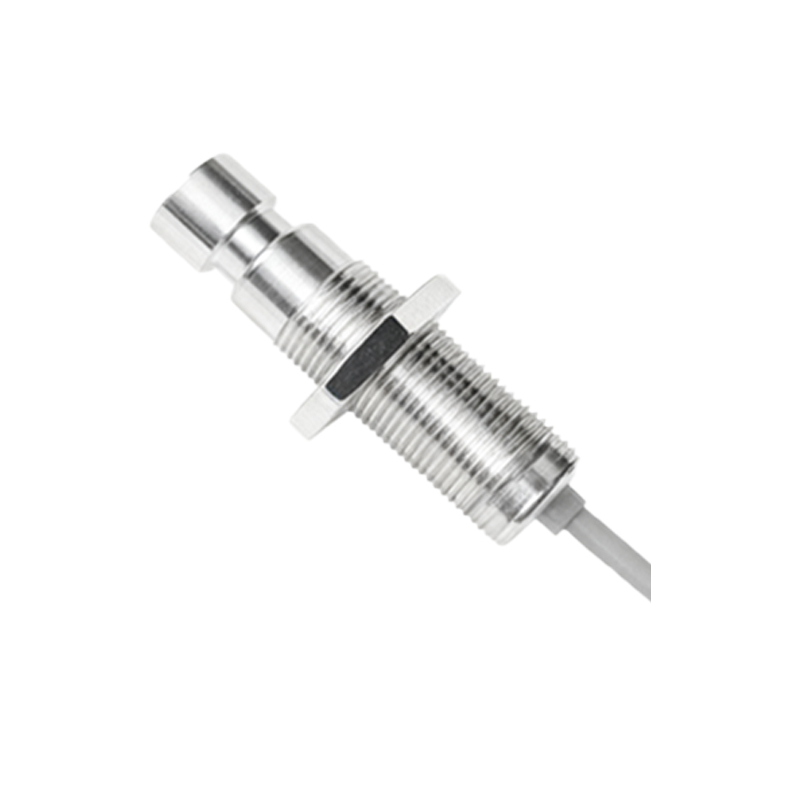
Capacitive Proximity Sensors function by detecting changes in capacitance. The sensor face acts as one plate of a capacitor, with the target object acting as the other plate. The sensor generates an electrostatic field. When any object—be it metal, plastic, wood, glass, liquid, or granules—enters this field, it alters the dielectric constant and thus the capacitance of the system. This change is measured, and the sensor switches its output. This makes capacitive sensors incredibly versatile for detecting non-metallic materials. Common applications include level detection for liquids or powders in tanks, material handling for plastic or paper products, and presence detection of filled containers. They can be sensitive to environmental factors like humidity and require careful tuning to ignore unwanted background objects.
Ultrasonic Proximity Sensors utilize sound waves beyond the human hearing range (typically 20 kHz to 200 kHz). They operate on the time-of-flight principle. The sensor emits a burst of ultrasonic pulses and then listens for the echo reflected from a target object. By calculating the time difference between the emission and reception of the echo, the sensor can determine the distance to the object. This allows them to function effectively as both a simple presence detector and a precise distance-measuring device. They are excellent for detecting objects of virtually any material, shape, or color, and are unaffected by dust, smoke, or light conditions. Applications include pallet detection, loop control, height discrimination, and liquid level sensing in transparent containers. However, they can be affected by temperature variations (which affect sound speed) and soft, sound-absorbing materials.
Photoelectric Sensors, while sometimes categorized separately, are a vital class of proximity sensors. They use light beams (visible red, infrared, or laser) to detect objects. There are three main sub-types used for proximity sensing: Through-beam, Retro-reflective, and Diffuse (proximity mode). The Diffuse type, or proximity sensor, is most relevant here. It houses both the light emitter and receiver in a single unit. It detects an object when the emitted light is reflected directly back from the target's surface. The sensing range depends on the target's color, reflectivity, and surface texture. Photoelectric sensors offer long sensing ranges and can detect small objects. They are widely used for packaging, material handling, and assembly line automation. Their performance can be compromised by highly reflective backgrounds, ambient light interference, or dirty lenses.
Beyond these core types, specialized variants exist. Magnetic Proximity Sensors (Reed switches or Hall-effect sensors) detect permanent magnets, often used for cylinder position sensing. Eddy-Current Sensors offer high precision for displacement measurement of conductive metals.
Selection criteria for the appropriate sensor involve several factors: Target material (metal, plastic, liquid), required sensing distance, environmental conditions (temperature, contaminants, washdown requirements), output type (PNP/NPN, analog, IO-Link), switching frequency, and physical size. For instance, an inductive sensor is the default choice for detecting a steel gear tooth, while a capacitive sensor is necessary to sense the fill level of a plastic bottle containing shampoo.
In conclusion, the diverse family of proximity sensors provides engineers with a powerful toolkit for object detection. From the metal-only detection of